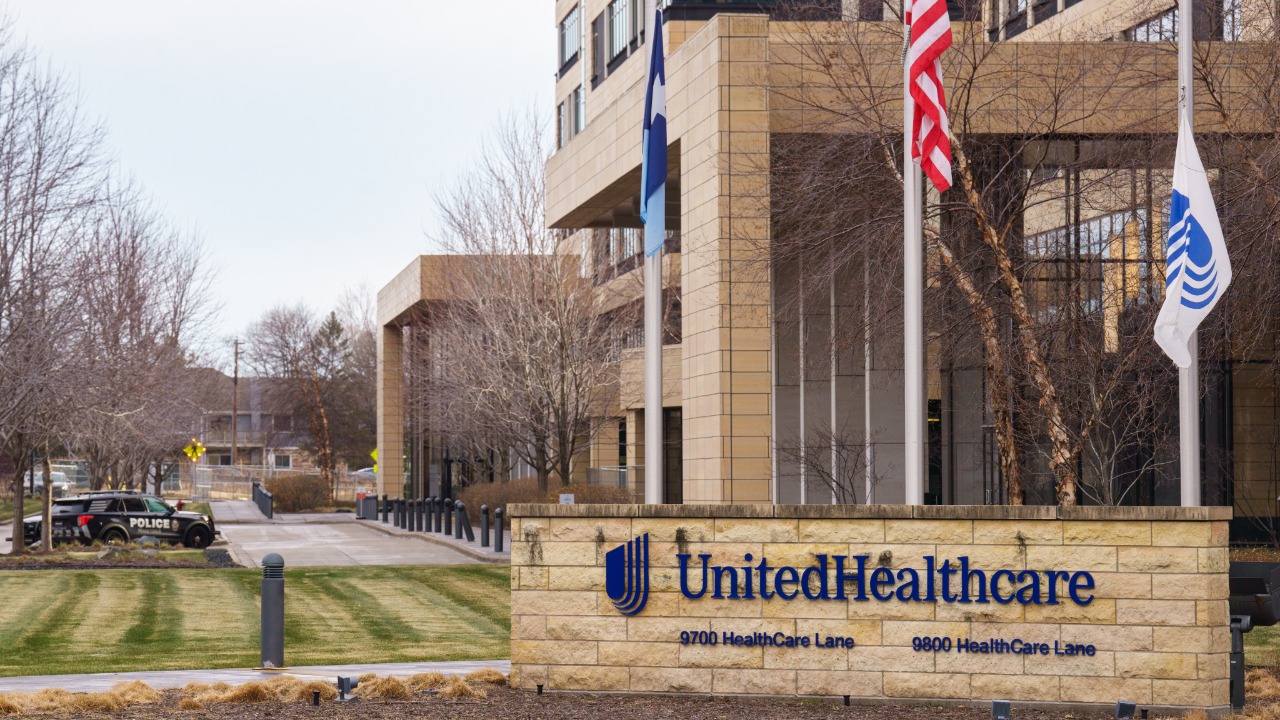
Image Credit: Chad Davis from Minneapolis, United States - CC BY 2.0/Wiki Commons
UnitedHealth Group’s latest warning landed like a shock in one of the market’s most closely watched corners of healthcare. On Jan. 27, the company told investors it expects 2026 revenue to come in at more than $439 billion, down from the $447.6 billion it reported for 2025, a rare reversal for a business that had spent decades expanding across insurance, care delivery, and pharmacy services.
Wall Street responded immediately. Shares of UnitedHealth Group fell about 20% after the report, a steep one-day drop for a company that had long been treated as one of the more dependable large-cap stories in the sector. For investors, the selloff was not just about one weak forecast. It was about what that forecast suggested: the company’s growth engine is no longer moving with the same consistency that once defined it.
Key figure
Reported / Projected
Full-year 2025 revenue
$447.6 billion
2026 revenue outlook
More than $439.0 billion
Implied year-over-year change
About -2%
Adjusted 2025 EPS
$16.35
Stock move after the announcement
About -20%
A snapshot of the numbers that drove the market reaction after UnitedHealth issued its 2026 outlook.
What UnitedHealth actually told investors
In its Jan. 27 Form 8-K filing, UnitedHealth said its 2026 outlook calls for revenue of more than $439.0 billion, earnings from operations of more than $24.0 billion, and adjusted earnings of more than $17.75 per share. The most jarring number in that outlook was the revenue figure, which implies a decline from the company’s reported 2025 revenue of $447.6 billion.
The company did not leave investors guessing entirely about the broad cause. In the same materials, UnitedHealth said the projected decline reflects “planned right-sizing across the enterprise,” while also pointing to pricing discipline, Medicare funding pressure, and elevated medical cost trends. Those factors help explain why the market treated the guidance as more than a one-quarter stumble.
A break from one of healthcare’s longest growth runs
The significance of the warning goes beyond the raw dollar amount. Reuters reported that the forecast would mark UnitedHealth’s first annual revenue decline in nearly four decades. Bloomberg similarly described it as the first annual contraction in more than 30 years.
That history matters because UnitedHealth has not been valued like a cyclical or unpredictable business. It has been valued like a company with scale, pricing power, and enough diversification to keep growing even when one part of the healthcare system comes under pressure. A projected revenue decline disrupts that long-running assumption and forces investors to revisit what kind of company they are actually owning at this stage of its development.
The company’s own segment results show why the warning attracted so much scrutiny. UnitedHealthcare’s full-year 2025 revenue rose 16% to $344.9 billion, but operating earnings fell sharply. At Optum Health, revenue declined 3% to $102.0 billion, while earnings swung deeply lower. In its release, UnitedHealth said Optum Health’s deterioration reflected continued reimbursement pressure tied to Medicare funding reductions and elevated medical cost trends. Those details make clear that the slowdown is not an abstract concern. It is already visible inside the operating numbers.
The charges made the story harder to dismiss
The revenue outlook was the headline driver, but it was not the only reason investors recoiled. UnitedHealth also disclosed a wide-ranging fourth-quarter charge that weighed heavily on reported results. According to the company’s earnings materials, the total impact to earnings before income taxes was about $2.9 billion, including final cyberattack costs, portfolio divestitures, restructuring actions, loss contract assessments, real estate rationalization, and workforce reductions.
That matters because large charges can change how investors interpret management’s outlook. When a company cuts expectations but can point to one narrow, temporary issue, the market often looks through it. When a company cuts expectations while also recording major charges tied to restructuring, divestitures, and business exits, the message is different. It suggests management is still resetting the business, not simply navigating a short-term bump.
The Wall Street Journal reported that UnitedHealth’s adjusted earnings per share for 2025 came in at $16.35 and that the company’s 2026 revenue outlook trailed analyst expectations. That combination, together with the charges and the implied contraction in sales, gave investors several reasons to question whether the company’s recovery will take longer than hoped.
Why the stock fell so hard
A 20% drop in a single session is unusual for a company of UnitedHealth’s size, but the reaction becomes easier to understand when the market’s prior assumptions are taken into account. Investors had grown used to thinking of UnitedHealth as a defensive giant with multiple levers for steady growth. Once that steady-growth narrative broke, the stock was vulnerable to a rapid repricing.
The pressure was also arriving in an industry already under strain. Reuters noted that the company’s outlook came against a backdrop of worries about Medicare Advantage payment rates and whether insurers would be able to sustain the earnings growth that investors had expected. That backdrop made UnitedHealth’s warning feel less like an isolated stumble and more like a sign that broader pressures are intensifying.
In practical terms, investors were not just reacting to a lower revenue number. They were reacting to the possibility that the company’s scale and diversification may no longer be enough to offset rising medical costs, reimbursement pressure, and strategic retrenchment in weaker lines of business. For a stock that had long been treated as a core holding in healthcare portfolios, that change in perception was bound to be painful.
What investors will be watching next
The next major checkpoint is already on the calendar. UnitedHealth said in a Business Wire announcement that it plans to report first-quarter 2026 results on April 21. That update should give investors a better sense of whether January’s warning marked a one-year reset or the start of a more prolonged period of slower expansion.
Several questions now matter more than they did a few months ago. Investors will want to know how much of the expected revenue decline is tied to deliberate business exits versus weaker demand or pricing. They will want clearer evidence that repricing efforts are improving margins without damaging enrollment. And they will want to see whether Optum Health can stabilize after a year in which pressure from Medicare funding changes and cost trends hit results hard.
For now, the market has made one thing clear: when a company with UnitedHealth’s reputation warns that revenue is set to decline, investors are no longer willing to give it the benefit of the doubt automatically. The company may yet show that this is a difficult transition year rather than a lasting break in the business model. But after Jan. 27, that case will have to be proven in the numbers, not assumed from the past.
David M. Keller is a finance writer based in Columbus, Ohio, covering personal finance and consumer-focused economic topics. He earned his degree in journalism from Ohio University and began his career reporting on local business and economic trends for a regional media outlet. Since then, he has contributed to a variety of online publications, focusing on clear, practical coverage of topics such as cost of living, debt, and everyday financial decision-making.