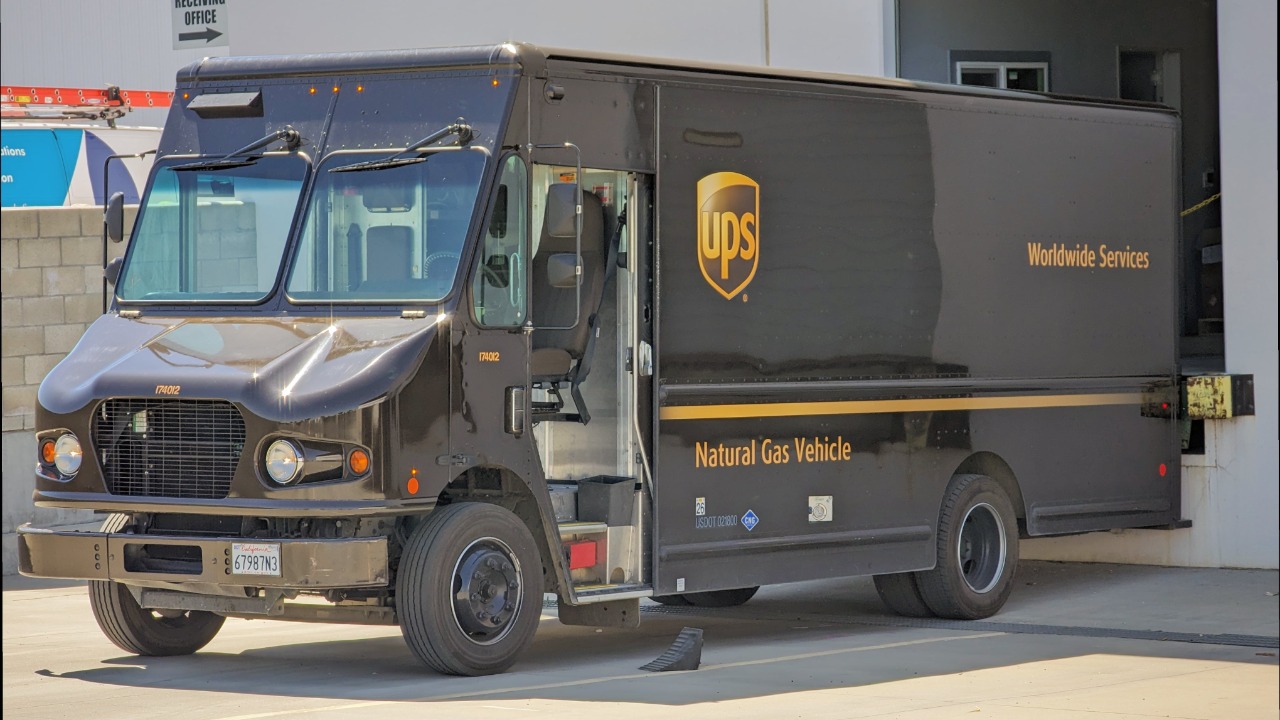
United Parcel Service said Tuesday that it plans to cut as many as 30,000 jobs in 2026, adding to roughly 48,000 positions the company eliminated last year as it accelerates a costly restructuring tied to shrinking volumes from its largest customer, Amazon. The announcement, made during UPS’s latest earnings call, signals that the delivery giant’s workforce contraction is far from over and raises hard questions about service capacity in a sector still central to American commerce.
What UPS Disclosed on Tuesday
UPS confirmed on January 27, 2026, that it expects to shed up to 30,000 jobs this year, a figure the company attributed to ongoing operational changes and facility closures. Executives tied the decision directly to continued reductions in package volume from Amazon, the retailer that once accounted for a dominant share of UPS shipments but has steadily built out its own delivery network. The company framed the move as part of a multi-year effort to resize its operations for a post-pandemic shipping landscape, with fewer low-margin residential deliveries and a heavier emphasis on profitable business accounts.
The 2026 cuts come on top of an already severe round of reductions. Around the time of its third-quarter 2025 results, UPS disclosed that it had eliminated approximately 48,000 jobs in the year to that point, including 34,000 operational positions and about 14,000 management roles. Those earlier reductions were paired with shuttered facilities and route consolidations, shrinking the company’s physical footprint alongside its headcount and signaling that the current year’s plan is an escalation rather than a new direction.
Why Amazon Is the Trigger
The scale of these layoffs is hard to separate from UPS’s shifting relationship with Amazon. For years, Amazon volume filled UPS trucks and justified a sprawling network of sorting hubs and delivery routes. As Amazon invested heavily in its own planes, trucks and local delivery contractors, that volume began to drain away, leaving UPS with infrastructure sized for a customer that was actively pulling back. The company is now absorbing the consequences of having built much of its capacity around a single, increasingly self-sufficient client.
UPS executives have described the Amazon pullback as a strategic reality they are choosing to manage rather than fight. Instead of chasing low-margin e-commerce parcels, the company has signaled a preference for higher-value shipments, including healthcare logistics, small-business customers and business-to-business freight. That pivot, however, requires fewer workers and fewer buildings, which is exactly what the 2025 and 2026 cuts reflect. Reporting from Washington Post journalists frames the 2026 reductions as part of this broader strategic shift away from Amazon dependency and toward a leaner, more specialized network.
Most coverage has treated the Amazon factor as a clean narrative: UPS loses volume, UPS cuts costs, margins improve. But that framing glosses over a tension at the core of the plan. UPS is betting it can shrink its way to profitability in a sector where scale has historically been the competitive advantage. FedEx, the U.S. Postal Service and regional carriers are all competing for the same higher-margin packages. Cutting 78,000 jobs across two years while closing facilities risks ceding delivery speed and geographic reach to rivals who keep their networks closer to full strength.
The Human Cost Behind the Numbers
Between the 48,000 positions cut in 2025 and up to 30,000 planned for this year, UPS is on track to remove a combined total of roughly 78,000 roles in under two years. For context, that figure is larger than the entire workforce of many major hospital systems or manufacturing employers in mid-size American cities. The company insists that the reductions are necessary to align staffing with demand, but the cumulative impact on workers and local economies is substantial.
The 2025 reductions hit hardest among frontline workers, with 34,000 of the 48,000 cuts falling on operational staff: drivers, package handlers and warehouse workers. The remaining 14,000 came largely from management, a signal that UPS was flattening its corporate hierarchy alongside its physical operations. The 2026 round includes additional facility closures, though UPS has not publicly detailed which locations will shut down or how the 30,000 cuts will break down by department or geography, leaving many employees in limbo as they await clarity.
For workers in logistics-dependent communities, particularly in the Southeast and Midwest where UPS operates major sorting hubs, these cuts carry consequences well beyond a single company’s balance sheet. Package-handling jobs have long served as entry points to middle-class wages, especially after UPS’s 2023 labor agreement with the Teamsters union raised pay for part-time workers and improved benefits. Eliminating tens of thousands of those roles concentrates economic pain in places with limited alternative employers at comparable wage levels, affecting not just laid-off workers but also local businesses that rely on their spending.
Short-Term Margins vs. Long-Term Capacity
Financial markets tend to reward cost-cutting, and UPS is clearly betting that leaner operations will improve its performance after pandemic-era shipping volumes collapsed and then normalized at lower levels. The logic is straightforward: fewer workers and fewer facilities mean lower fixed costs, which should widen margins if revenue holds steady or grows from higher-value customers. Investors have been pressing the company to show that it can protect profitability even as Amazon’s business declines.
The risk is that UPS is optimizing for a version of the future that may not arrive as planned. E-commerce spending in the United States continues to grow, and even with Amazon handling more of its own deliveries, third-party sellers on Amazon’s marketplace still rely on carriers like UPS. If UPS closes too many facilities or loses too many experienced drivers, it may struggle to ramp back up when demand shifts or when new categories of time-sensitive delivery emerge. Rehiring and retraining tens of thousands of logistics workers is neither fast nor cheap, and labor markets can tighten unexpectedly.
There is also a service-quality question. UPS has built its brand on reliability, particularly for time-sensitive business shipments and healthcare deliveries that cannot tolerate delays. Cutting 30,000 jobs while closing facilities creates real operational strain during the transition, from longer sort times to more congested routes. Missed delivery windows or slower transit times could push the very high-margin customers UPS is courting toward competitors, undermining the revenue mix shift that is supposed to justify the downsizing.
What the Earnings Call Revealed
UPS disclosed the 2026 job cuts during its January earnings call, outlining the plan in broad strokes while emphasizing that most reductions would be phased in over the course of the year. According to coverage from the New York Times, executives described the cuts as part of a restructuring aimed at matching staffing levels to expected volumes and redirecting investment toward technology and automation. They also sought to reassure customers that service standards would be maintained even as the network shrinks.
On the call, leadership pointed to the 2025 layoffs as evidence that the company can remove large numbers of jobs while continuing to operate at scale. They highlighted progress in consolidating underused facilities and integrating new sorting technology designed to handle more packages with fewer people. At the same time, they acknowledged that severance costs and restructuring charges would weigh on near-term earnings, with the anticipated payoff coming later in the decade as the slimmer network settles into a new equilibrium.
Executives were pressed by analysts on whether the company risked overcorrecting, particularly if Amazon’s volumes stabilize or if other large retailers shift more shipments to UPS. Management responded that the network is being redesigned for flexibility, with an emphasis on hubs that can scale up seasonally or absorb surges from specific industries. Still, they offered few specifics about how quickly UPS could rebuild capacity if demand rebounds faster than expected.
What Comes Next for UPS and Its Workers
Image Credit: United States Senate – The Office of Mazie Hirono – Public domain/Wiki Commons
For now, UPS is moving ahead with a restructuring that will reshape one of the country’s most important delivery networks. The company argues that it is better to make painful cuts now than to carry excess capacity indefinitely, especially as Amazon continues to internalize more of its own shipping. But the decision effectively trades near-term financial clarity for longer-term uncertainty about how much ground UPS may lose to competitors and how easily it can adapt if the market shifts again.
For workers, the coming year will be defined by uncertainty. Some may find opportunities within UPS as roles are reshuffled or as automation creates new technical positions, but many others will be forced to look elsewhere in a labor market that does not offer many direct equivalents to unionized parcel jobs. Local and state officials in communities that host major UPS facilities will be watching closely, weighing how to respond if closures or deep staffing cuts erode a key pillar of their regional economies.
UPS’s bet is that a smaller, more focused company can still play an outsize role in American commerce without the same headcount or footprint it once maintained. Whether that bet pays off will depend on how well it can execute a delicate balancing act, cutting enough to satisfy investors, but not so much that it undermines the very reliability that made its brown trucks and uniforms ubiquitous in the first place.
David M. Keller is a finance writer based in Columbus, Ohio, covering personal finance and consumer-focused economic topics. He earned his degree in journalism from Ohio University and began his career reporting on local business and economic trends for a regional media outlet. Since then, he has contributed to a variety of online publications, focusing on clear, practical coverage of topics such as cost of living, debt, and everyday financial decision-making.