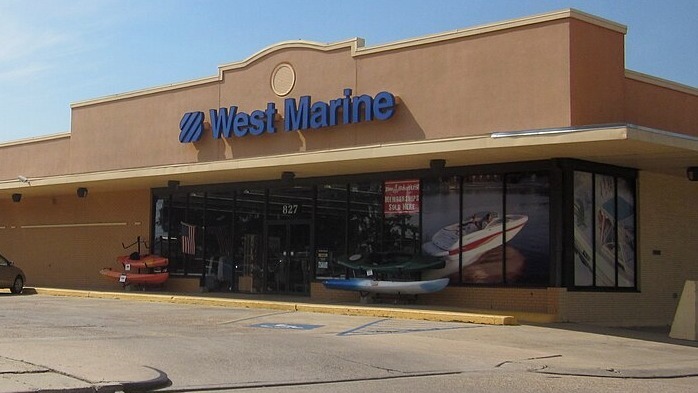
The boating-supply chain that has outfitted recreational sailors and fishing enthusiasts for decades is sharply reducing its store count after landing in bankruptcy court. West Marine, a fixture in coastal and lakeside communities across the country, is closing dozens of locations as part of a court-supervised reorganization that began this spring.
The retreat marks a hard turn for a retailer that once dominated the market for boat parts, marine electronics and on-the-water gear. Its troubles echo a familiar story in specialty retail, where a chain built for one era of shopping struggles to keep pace as costs rise and customers change their habits.
The closures
West Marine is shutting 59 stores spread across 23 states, according to a 2026 retail-bankruptcy roundup from Retail Oasis. That amounts to roughly 30% of the chain’s retail footprint, a substantial cut that reshapes where boaters can find gear in person.
The scale becomes clearer against the company’s full size. West Marine operated around 200 stores across 34 states and Puerto Rico when it entered bankruptcy, so the closures thin out its network considerably while leaving the majority of locations open, as Fox Business reported. Liquidation sales at the affected stores were set to run through late September, giving shoppers a window to pick over remaining inventory before the doors close for good.
What pushed it into bankruptcy
West Marine filed for Chapter 11 protection in Delaware in May 2026, and the filing laid bare a business under real financial strain. The company carried $549.2 million in outstanding debt while holding just $21.5 million in liquidity, a combination that left little room to maneuver, according to details reported by TheStreet.
The revenue trend behind those numbers helps explain the squeeze. West Marine posted about $690.1 million in sales in 2025, down roughly 8% from nearly $750 million the year before. The company pointed to a mix of pressures that piled up over several years: supply-chain disruptions that raised the cost of stocking stores, extreme weather that hurt boating activity in key markets, and shifts in how consumers shop for specialty goods. Recreational boating is also a discretionary pursuit, and spending on it tends to soften when households feel financially stretched.
How the reorganization is playing out
Bankruptcy does not automatically mean a company disappears, and West Marine’s case is structured as a reorganization rather than a wholesale shutdown. The plan calls for a large chunk of the company’s debt to be converted into ownership of the reorganized business — a common maneuver that hands lenders equity in exchange for wiping out obligations the company cannot repay.
The path there narrowed over the course of the case. West Marine had pursued a dual track, exploring either a sale of the business or a recapitalization. When no qualified buyer emerged by the June bid deadline, the company canceled a planned auction and moved ahead with the recapitalization, under which a substantial portion of its term-loan debt converts into the equity of the restructured company. The result is a leaner West Marine with fewer stores, less debt and new owners drawn from its former lenders.
The lesson for older shoppers and investors
Boaters who rely on a nearby West Marine face a practical adjustment. With nearly a third of the store base closing, the closest location for some customers will move farther away or disappear, pushing more purchases online or to competitors. Anyone holding a West Marine gift card, store credit or loyalty rewards should use them promptly, since balances tied to a bankrupt retailer can become harder to redeem once liquidation sales end and stores close.
The deeper lesson sits in the financial pattern, which repeats across the retail bankruptcies of the past two years. West Marine’s revenue was sliding while its debt stayed high, a combination that leaves a company with no cushion when a bad year arrives. Falling sales are survivable; falling sales stacked on top of heavy borrowing are what force a Chapter 11 filing. That distinction is worth carrying into any evaluation of a consumer-facing stock or bond held in a retirement account.
For older investors in particular, specialty retailers can look tempting when their shares fall, appearing cheap relative to a well-known brand. West Marine is a reminder that a recognizable name and a loyal customer base do not offset a stretched balance sheet. The companies most at risk in a downturn are the ones carrying large debt loads against a shrinking top line, and spotting that combination early is more valuable than reacting after a bankruptcy is announced.
What comes next
A reorganized West Marine is expected to emerge from the process smaller but with a lighter debt burden, focused on its remaining stores and its online business. Whether that leaner footprint proves durable will depend on the same forces that pushed the company into court: the cost of stocking specialty inventory, the health of the recreational-boating market, and whether customers stick with the brand as some nearby stores close.
The broader signal for households is consistency with the year’s other retail failures. When a chain combines declining sales with high debt, the reckoning tends to arrive, and it usually shows up first as store closures before it shows up in a courtroom. Specialty retailers that depend on discretionary spending are especially vulnerable, because their customers can simply postpone a purchase when money gets tight, and that lost revenue lands directly on a balance sheet already stretched by debt payments.
Reading those early signs — in a favorite store’s shrinking hours and thinning shelves, or in a company’s published revenue and debt figures — is the kind of attention that protects both a shopping routine and a portfolio. West Marine will likely sail on in a reduced form, but the arc of its bankruptcy is a compact lesson in how quickly a well-known brand can be undone when soft sales meet a heavy debt load.
This article was produced with AI assistance and reviewed before publication.
Free tool for readers: You check your blood pressure — when did you last check your retirement? You can get your free Retirement Safety Score in about five minutes, with no sign-up to see it.