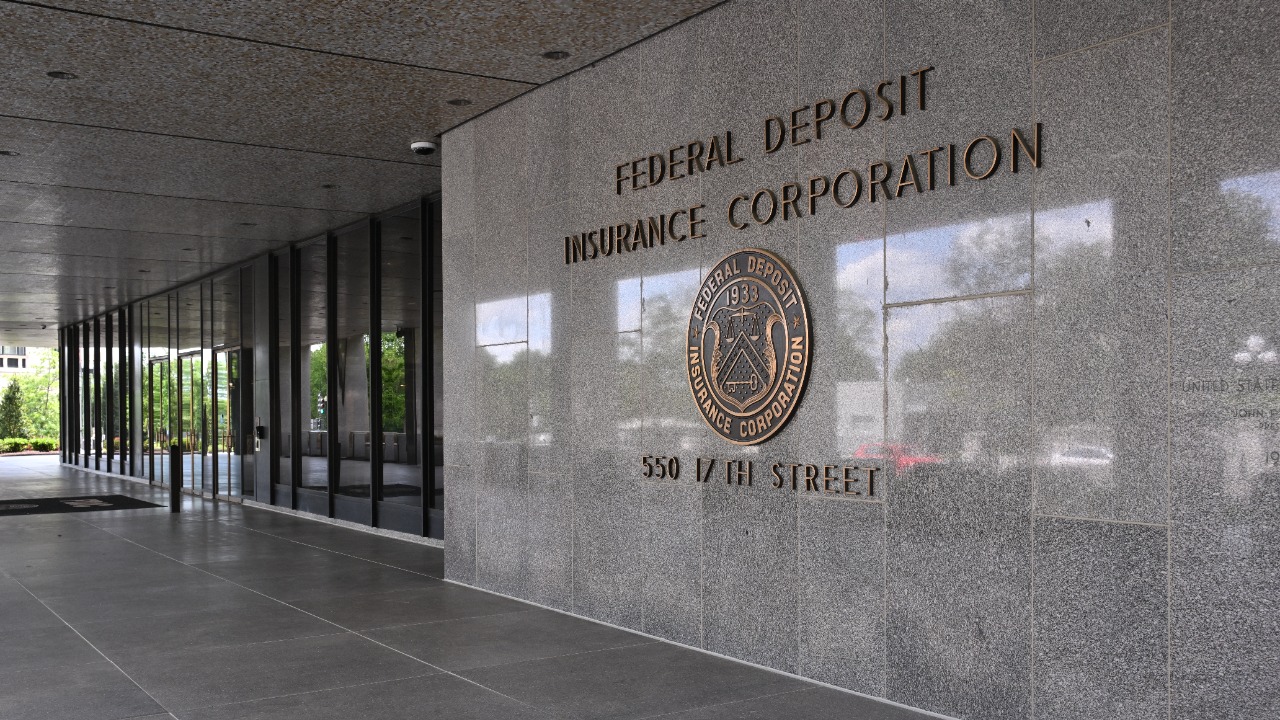
The Federal Deposit Insurance Corporation has been putting more energy into a message that sounds simple but still trips up many Americans: most bank deposits are protected, but only up to specific limits and only under specific rules. That matters because confusion about deposit insurance tends to surge whenever the banking sector looks shaky, and confusion can spread faster than facts. For readers trying to make sense of the issue, the core rule is straightforward. At an FDIC-insured bank, deposits are insured up to at least $250,000 per depositor, per insured bank, per ownership category. In other words, the cap is not just a flat number attached to a person’s name. It depends on how the account is titled, whether it is held at one bank or several, and whether the money sits in a checking account, savings account, certificate of deposit, or another deposit product that qualifies for coverage.
Why the FDIC is stressing the basics again
The renewed push did not happen in a vacuum. After the regional bank failures of 2023 rattled consumers, the FDIC launched a public campaign to raise awareness of how deposit insurance works. The agency said the effort was meant to address a knowledge gap that became hard to ignore as headlines about Silicon Valley Bank, Signature Bank, and First Republic triggered anxiety well beyond the customers of those institutions. That anxiety showed up in public polling. A Gallup survey conducted in April 2023 found that 48% of U.S. adults were very or moderately worried about the safety of their money in banks and other financial institutions. In announcing its awareness campaign, the FDIC said that concern suggested a meaningful share of consumers did not understand that deposits at insured banks are protected up to at least $250,000. The agency also pointed to a fact that often gets lost in moments of panic: more than 99% of deposit accounts in the United States are below the insurance limit. For most households, that means their bank money is already fully covered, even if they have never studied the fine print.
What the $250,000 limit actually means
The number itself is easy to repeat and easy to misunderstand. The $250,000 limit does not apply to each individual account in isolation. It applies by depositor, by insured bank, and by ownership category. Someone with both a checking account and a savings account at the same bank under the same single-owner category does not get $250,000 for each account. Those balances are added together for insurance purposes. But ownership categories can expand coverage. According to the FDIC’s deposit insurance guide, single accounts, joint accounts, certain retirement accounts, and trust accounts are insured separately if they meet the rules for their category. That is why two people with identical balances can end up with different amounts insured depending on how their money is structured. This is also why the agency keeps pushing depositors toward its online calculator and educational materials. A saver with $300,000 in one individual account at one bank may have uninsured funds. A married couple with $300,000 in a properly titled joint account at the same bank may be fully covered. The details matter more than many people assume.
What is covered, and what is not
Another reason awareness remains spotty is that consumers often blur the line between deposits and investments. The FDIC insures deposit products such as checking accounts, savings accounts, bank money market deposit accounts, and certificates of deposit held at insured banks. It does not insure stocks, bonds, mutual funds, annuities, crypto assets, or the contents of a safe deposit box. That distinction has become more important as traditional banks, brokerages, and fintech platforms increasingly sit side by side in consumers’ financial lives. The FDIC’s consumer guidance is explicit that non-deposit investment products are not insured by the agency, even if they were purchased through a bank. In plain English, seeing a familiar bank logo does not automatically mean every product attached to that institution carries federal deposit protection. This is where misunderstanding can become expensive. A customer may believe all cash-like holdings are equally protected, when in reality a brokerage sweep program, a money market mutual fund, and a savings account can have very different safeguards. That does not mean those products are unsafe. It means they are protected under different rules, or in some cases not protected against loss at all.
Why this matters even if a household has less than $250,000

For many readers, the immediate reaction is simple: if most accounts are already under the cap, why should they care? The answer is that insurance confusion can influence behavior long before a bank actually fails. Households that do not understand the rules may move money unnecessarily, split accounts in inefficient ways, or ignore warning signs that they are using products outside the insurance system. Clearer understanding also helps during periods of stress. The FDIC notes on its deposit insurance overview page that deposit insurance is automatic at insured banks. Consumers do not need to buy it or sign up for it. In a crisis, that automatic protection is supposed to support confidence. But it only works as intended if depositors know it exists and know its limits. Small businesses, retirees, and households managing inheritances may need to pay particular attention. A payroll account, proceeds from a home sale, or retirement cash rolled into a bank deposit can push balances above the standard limit faster than people expect. In those cases, a quick review of ownership categories or a conversation with the bank can make the difference between being fully protected and being partly exposed.
The real takeaway for readers
The most useful way to think about the FDIC’s awareness push is not as a technical education campaign, but as a reminder that confidence in the banking system depends on consumers understanding the rules. The agency is not trying to persuade Americans that every financial product is risk free. It is trying to make sure people know what is protected, where the line is drawn, and how to check their own coverage before panic sets in. For most depositors, the answer will be reassuring. Ordinary checking and savings balances at an FDIC-insured bank are likely already covered. But “likely” is not the same as “automatically obvious,” and that gap is exactly why the issue keeps returning to the spotlight. In the end, the $250,000 limit is not new. What has changed is the urgency around explaining it clearly. After the shock of recent bank failures and the wave of public concern that followed, the FDIC appears to have concluded that deposit insurance is not just a backstop. It is also a public-information challenge, and one that can no longer be treated as background knowledge. Just as important, that protection is automatic at insured banks. Customers do not need to request it separately or pay extra for it.