
Amazon has cut about 16,000 corporate jobs in what amounts to the biggest layoff round in the company’s history, deepening a restructuring push that had already eliminated roughly 14,000 similar roles just three months earlier. The latest move brings Amazon’s total corporate reductions since October to about 30,000, a sharp rollback for a company that spent years expanding its white-collar ranks alongside its retail, cloud, and devices businesses. The cuts matter not just because of the headline number, but because of where they landed. Amazon’s warehouse and delivery network still accounts for the vast majority of its overall workforce, but these reductions are concentrated in the company’s corporate ranks, where decisions around products, marketing, finance, cloud services, and operations strategy are made. That makes the cuts a meaningful test of how aggressively one of the world’s largest employers is willing to reshape office work as it pours money into artificial intelligence and demands faster execution from fewer people. In a memo posted by Amazon on January 28, Senior Vice President Beth Galetti said the company has been focused on “reducing layers, increasing ownership, and removing bureaucracy,” framing the move as part of a broader effort to simplify decision-making and speed up execution across teams.
Why this round stands out
Amazon has cut jobs before, including the roughly 27,000 positions it eliminated between late 2022 and early 2023. But Reuters reported that this latest push, combined with the October reductions, makes the current restructuring the largest layoff program in Amazon’s three-decade history. The company’s total workforce was about 1.58 million, mostly in warehouses and fulfillment operations, but Reuters also noted that the corporate workforce numbered roughly 350,000. Against that base, the latest 30,000-job reduction amounts to a major shrinkage of Amazon’s white-collar headcount.
The Associated Press reported that U.S.-based employees affected in the January round were given 90 days to look for other jobs inside the company. Those who do not land another role are set to receive severance, outplacement support, and continued health benefits for a limited period. Amazon did not publicly provide a full breakdown by division or location when it announced the cuts, leaving outside observers to piece together the impact across business units.About 16,000 corporate jobs cut in January, after roughly 14,000 more in October, bringing Amazon’s total white-collar reductions to around 30,000 in less than half a year.
AI is part of the story, but not the whole story
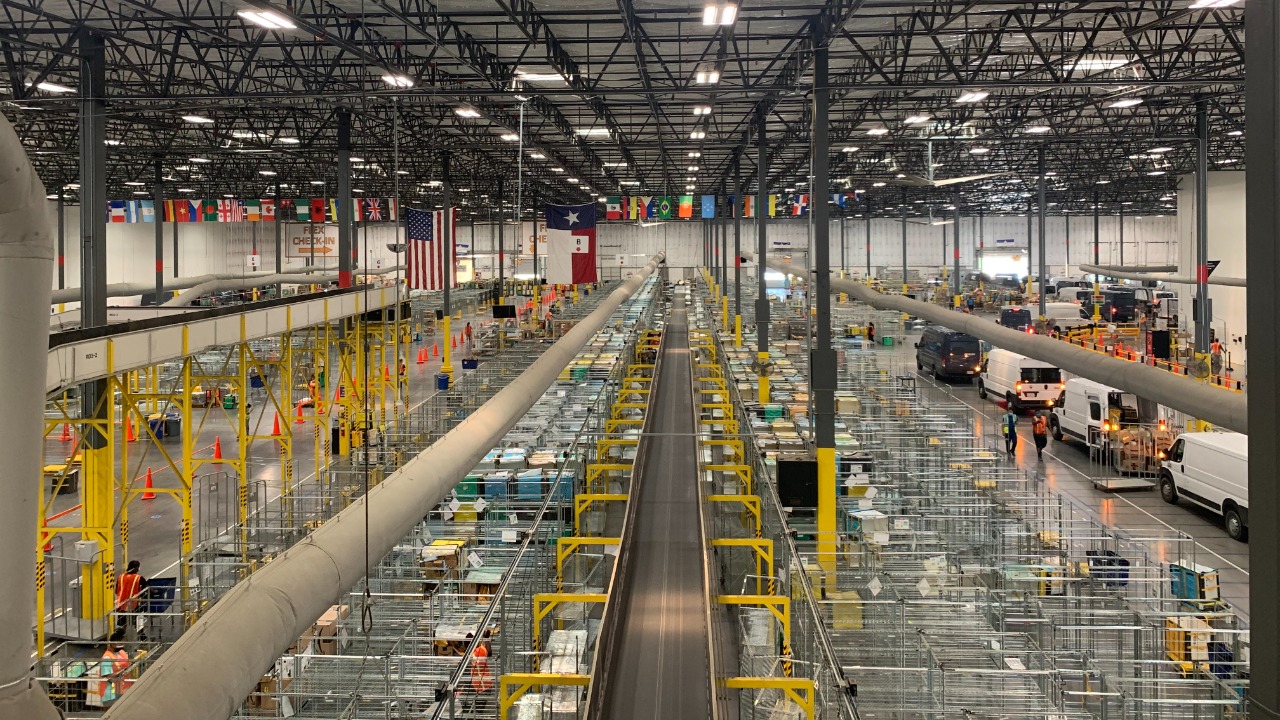
Amazon’s public messaging makes clear that artificial intelligence is central to its current strategy. In June 2025, CEO Andy Jassy said in a message to employees that broader use of generative AI and agents would likely reduce Amazon’s total corporate workforce over time because the company would need fewer people doing some of the jobs that exist today and more people doing other kinds of work. That message, which Amazon also published publicly, gave employees and investors an unusually direct warning about how management viewed AI’s effect on office roles. Reuters reported in June 2025 that Jassy expected AI and software agents to change how work is done across the company, especially by automating routine and repetitive tasks. Amazon has also highlighted uses for generative AI in customer service, forecasting, product listings, and internal tools, all of which point to a company trying to drive more output from smaller teams. Still, the job cuts cannot be explained by AI alone. Amazon has also been pruning businesses that did not meet expectations and trying to unwind layers added during its pandemic-era expansion. In Galetti’s January note, the language focused as much on organizational simplification as automation. Reuters also reported that Amazon was closing its remaining Fresh grocery stores and Go markets and ending its Amazon One biometric payment system, suggesting the restructuring includes a more traditional reset around underperforming bets, not just a pure AI replacement story.
Where the layoffs appear to be hitting
The company did not release a full public map of the reductions, but reporting points to a broad impact across corporate functions. Reuters said workers in Amazon Web Services, Alexa, Prime Video, devices, advertising, Kindle, last-mile delivery support, and supply chain optimization were among those affected. That breadth matters because it shows the cuts were not isolated to one troubled business line. They touched some of Amazon’s most important long-term growth engines as well as the internal teams that support them. The Washington region, where Amazon’s corporate presence is most concentrated, is feeling a particularly visible share of the blow. The state’s WARN database serves as the public record for large job reductions, and Axios Seattle reported that 2,198 Washington workers were included in the January layoff round, citing state records. That is a notable figure for a metro area where Amazon remains one of the most influential office employers, with ripple effects likely to be felt across downtown real estate, restaurants, transit, and the broader professional services economy.
What comes next for Amazon
The January layoffs do not appear to be the end of the restructuring. Reuters reported in early March that Amazon also cut at least 100 white-collar jobs in its robotics unit, a sign that the company is still willing to trim even technically specialized teams while it retools for the next phase of automation and AI spending. That creates a difficult balancing act. Amazon wants to convince investors that it can stay aggressive in AI, cloud infrastructure, and logistics while also proving it can operate more efficiently. But repeated cuts can carry their own costs. Large layoff programs tend to slow projects, increase internal uncertainty, and test morale among the people who remain. They can also make it harder to hold onto top engineering and product talent in a market where competitors are still spending heavily on AI. For now, what Amazon has clearly shown is that it is willing to make unusually large cuts to its corporate workforce in pursuit of a leaner structure. The headline number is real, and so is the scale of the shift underneath it. Whether the move ultimately makes Amazon faster and stronger, or simply leaner and more cautious, will become clearer only over time. What is already clear is that the company has entered a new phase, one where management is openly tying the future of white-collar work at Amazon to automation, fewer layers of management, and tighter discipline around where it chooses to invest.