Banks have seized an estimated 367,000 homes across the United States, pushing foreclosure activity to its highest level since 2020. The wave of repossessions, building steadily for nearly a year, is concentrated in a handful of states where homeowners face mounting pressure from elevated interest rates and lingering post-pandemic debt. For millions of families, the trend signals that the housing stability gained during the pandemic-era moratoriums has eroded faster than many analysts expected.
Eleven Straight Months of Rising Filings
The scale of the problem becomes clearer in the monthly data. According to ATTOM’s January 2026 U.S. Foreclosure Market Report, foreclosure activity rose annually for the eleventh consecutive month, carrying the upward trend into 2026 without interruption. Across the country, one in every 3,547 housing units received a foreclosure filing during that period, a rate that reflects both new defaults entering the pipeline and older cases finally reaching resolution after years of court backlogs.
That eleven-month streak matters because it rules out a seasonal blip or a one-time correction. Each successive month of year-over-year increases points to structural pressure rather than a temporary spike. Borrowers who stretched to buy homes when rates sat near historic lows in 2020 and 2021 are now contending with higher costs across the board, from property taxes to insurance premiums, while wage growth in many sectors has failed to keep pace. For households that entered the pandemic with little savings, even modest payment shocks can prove destabilizing once temporary protections fall away.
Which States Are Hit Hardest
The geographic pattern is shifting, and the data from consecutive months tells an evolving story. In January, Delaware, Nevada, and Florida led the nation in the worst foreclosure rates, according to ATTOM’s report covering that month. By February, the picture had changed: Indiana, South Carolina, and Florida topped the list for the highest foreclosure rates in the country. Florida’s presence on both monthly rankings is notable but not surprising. The state experienced one of the most aggressive pandemic-era home price surges, and its insurance market has been in turmoil for years, adding thousands of dollars in annual costs for many homeowners.
The rotation of states at the top of the list, from Delaware and Nevada in January to Indiana and South Carolina in February, suggests the crisis is not confined to a single region or housing market type. Sun Belt states with rapid population growth sit alongside smaller markets in the Midwest and mid-Atlantic. That geographic spread complicates any single-cause explanation and points instead to a combination of local economic conditions, state-level foreclosure timelines, and the uneven expiration of pandemic-era protections. In some states, faster judicial processes mean delinquent loans move quickly to repossession, while in others, long court queues delay the inevitable but do not prevent it.
Why the Post-Pandemic Safety Net Frayed
The federal foreclosure moratorium and forbearance programs that shielded millions of homeowners during 2020 and 2021 created an artificial floor under the housing market. When those programs wound down, servicers and courts began working through a massive backlog of delinquent loans. That process has played out over several years, and the current wave represents the tail end of that unwinding combined with new defaults from borrowers who never fully recovered financially.
Many homeowners who entered forbearance were able to resume payments or modify their loans, often by tacking missed installments onto the end of the mortgage term. But a significant share, particularly those in lower-income brackets or in regions where job recovery lagged, could not. Some saw temporary pandemic-era boosts to income, such as enhanced unemployment benefits, expire before their earnings stabilized. Others faced new burdens, including higher child care costs or medical bills, just as lenders resumed normal collection activity. Those borrowers are now cycling through the foreclosure process, and their homes are being repossessed at a pace the market has not seen since the early pandemic period.
The gradual nature of the increase, as documented by ATTOM’s tracking of eleven consecutive months of annual gains, indicates that this is not a sudden crisis but a slow-building one that federal and state policymakers have had time to see coming. Instead of a single cliff where protections ended all at once, the safety net frayed in stages, with different loan types, regions, and servicers phasing out relief on their own timelines. That staggered unwinding has made the trend less visible to the broader public even as it has become painfully clear in the hardest-hit communities.
What This Means for Homeowners and Buyers
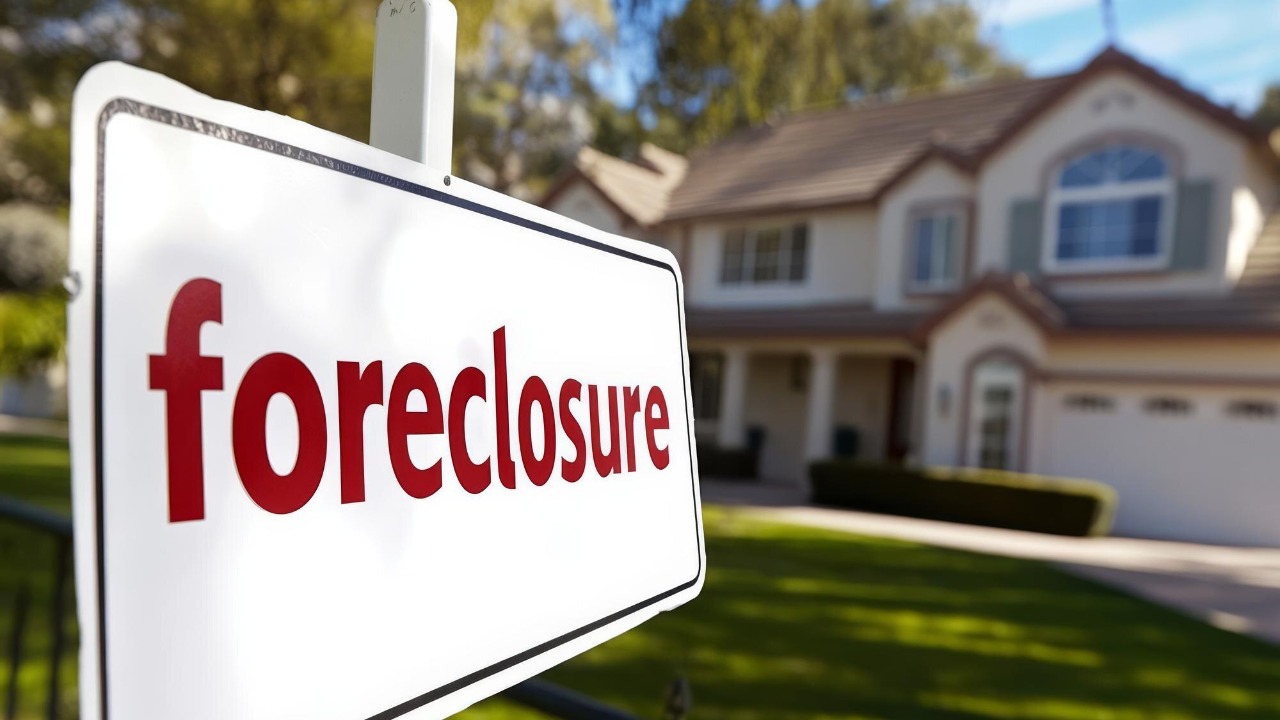
Image by Freepik
For current homeowners, the rising tide of foreclosures carries a direct risk even if their own mortgage is current. Distressed properties that sell at auction or through bank-owned listings typically trade at steep discounts to market value. When enough of these sales cluster in a single neighborhood or ZIP code, they drag down comparable values for every home nearby. That dynamic was well documented during the 2008 financial crisis, and early signs suggest it could repeat in the hardest-hit pockets of Indiana, South Carolina, Florida, Delaware, and Nevada.
Lower appraised values can make it harder for owners to refinance, tap home equity, or sell without bringing cash to the closing table. In extreme cases, homeowners can slip into negative equity, owing more on their mortgage than their property is worth. That, in turn, can trap families in place, unable to move for better jobs or schools, and can increase the temptation to walk away from an underwater loan if a financial shock hits.
For prospective buyers, the picture is more complicated. A growing supply of foreclosed homes could eventually ease the inventory shortage that has kept prices elevated in many markets, particularly for entry-level properties. However, bank-owned homes often come with deferred maintenance, title complications, and financing restrictions that make them less accessible to first-time buyers relying on conventional or government-backed loans. Many lenders impose stricter appraisal and condition requirements on such properties, which can derail transactions late in the process.
Investors with cash or private financing tend to absorb the bulk of distressed inventory, especially when properties are sold in bulk or at courthouse auctions. That can shift the ownership balance in affected neighborhoods from owner-occupants to landlords, with long-term implications for community stability. Renters may face less control over housing costs and conditions, while local governments must grapple with the fiscal impact of declining property values even as demand for social services rises.
A Critique of the “Gradual” Framing
ATTOM’s own characterization of the trend as a “gradual annual rise” deserves scrutiny. Eleven straight months of year-over-year increases is not gradual in any meaningful sense for the families losing their homes. The framing risks normalizing a pace of displacement that, while slower than the 2008 collapse, is still producing real harm at scale. When one in every 3,547 housing units in the country receives a foreclosure filing in a single month, the aggregate human cost is substantial, even if the percentage increase from month to month looks modest on a chart.
The language of gradualism can also shape political and market responses. If policymakers and industry leaders perceive the trend as manageable, they may feel less urgency to revisit loss-mitigation tools that proved effective earlier in the decade, such as streamlined modifications or targeted forbearance for borrowers facing temporary hardship. Similarly, investors and large landlords may interpret the data as a green light to continue acquiring distressed assets, confident that rising foreclosures will not trigger a broader price collapse that could threaten their portfolios.
The absence of a strong federal policy response so far also warrants attention. During the pandemic, the government acted quickly with moratoriums and forbearance mandates. The current wave, building over nearly a year with clear data showing acceleration, has not prompted comparable intervention. That gap between the data and the policy response suggests either a belief that the market can absorb these losses without broader damage, or a political calculation that the scale of distress does not yet justify renewed emergency measures.
For households on the brink, the distinction between “gradual” and “acute” is academic. A foreclosure notice still arrives in the mail, and a lock still appears on the front door. As repossessions climb and the map of hardest-hit states shifts month by month, the question is not whether the trend looks orderly from a distance, but how many families will be forced out of homeownership before policymakers and lenders decide that a slow-moving crisis is still a crisis worth confronting.
Peter Richardson is a finance writer based in Raleigh, North Carolina, specializing in tax and small business financial topics. He earned his degree in accounting from North Carolina State University and began his career working at a local accounting firm, where he focused on tax preparation and financial reporting for individuals and small businesses. He now writes for finance and small business websites, producing clear, practical content that helps readers better understand taxes, expenses, and everyday financial decisions.