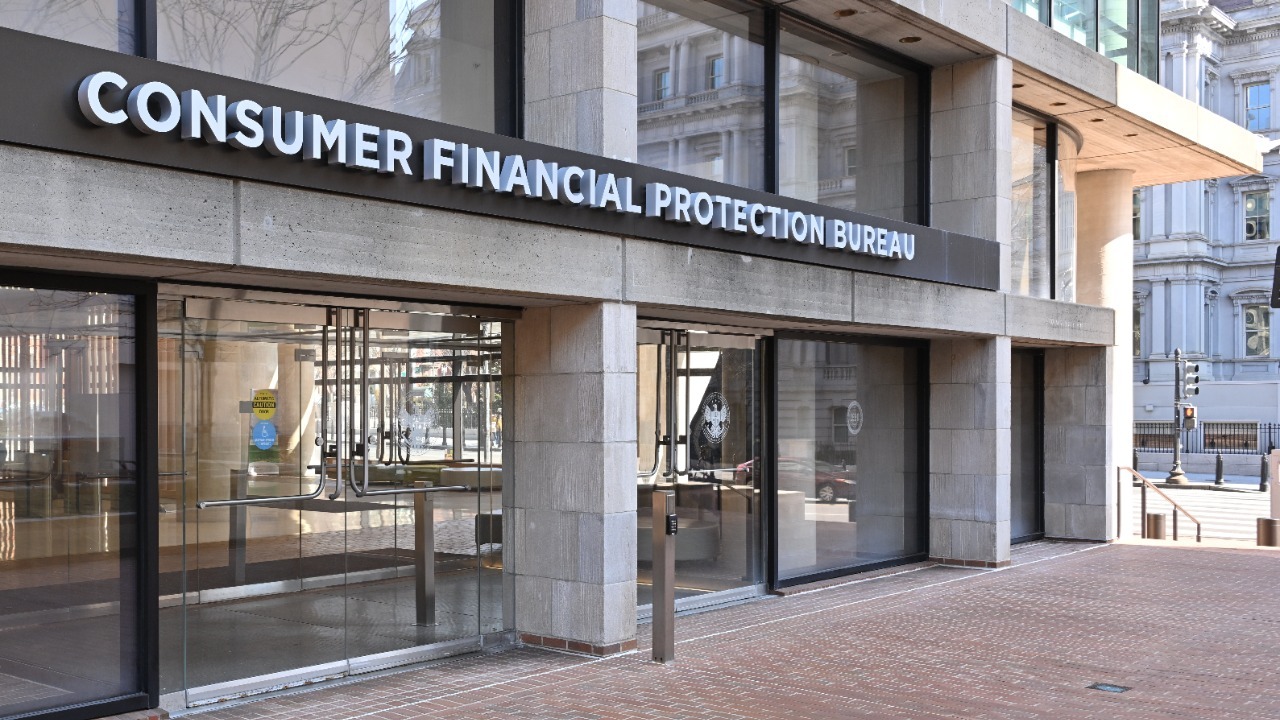
If you carry a mortgage, a student loan, or a credit card, the federal agency charged with making sure your lender plays fair may be about to change how aggressively it polices the rules. Twenty-three state attorneys general are telling the Consumer Financial Protection Bureau that its draft five-year strategic plan would gut federal enforcement of consumer financial laws and leave borrowers, credit card holders, and student loan recipients more exposed to predatory practices. In a formal comment letter submitted before the April 17, 2026, deadline, the coalition argued that the Bureau’s proposed pivot from active policing of lenders, debt collectors, and financial firms to “promoting” voluntary compliance amounts to a retreat from the mission Congress gave the agency when it created the CFPB under the Dodd-Frank Act in 2010.
The pushback lands at a volatile moment for the Bureau. Under new leadership installed by the Trump administration, the CFPB has simultaneously rolled out a supervision framework it calls a “Humility Pledge,” which narrows the scope of examinations, gives financial firms more advance notice before reviews begin, and favors resolving problems informally rather than through enforcement actions. The attorneys general see these moves as part of a broader scaling-back of federal regulatory activity, and they are not staying quiet about it.
What the draft plan says
The CFPB opened a public comment period for its draft strategic plan through an official notice, laying out the agency’s roadmap for fiscal years 2026 through 2030. The language throughout the document emphasizes efficiency, prioritization, and coordination with state regulators rather than the aggressive enforcement posture that defined the Bureau’s earlier years.
Under the Humility Pledge, the Supervision Division says examiners will focus on “tangible and identifiable consumer harm,” use more targeted review scopes, and step back from oversight in areas where state regulators are already active. The Bureau frames this as reducing duplicative government scrutiny of the same companies.
The plan also describes a reallocation of enforcement resources toward what the agency calls “pressing threats,” including scams targeting servicemembers and veterans. Officials have cited limited staff and budget as reasons for deprioritizing certain categories of enforcement, suggesting the CFPB cannot pursue every potential violation and must make harder choices about where to direct its attention.
Why 23 attorneys general are pushing back
California Attorney General Rob Bonta led the coalition, calling the draft plan “lackluster” in a public statement and warning it would weaken consumer safeguards at a time of heightened financial risk. Bonta’s objections centered on three points: reduced supervision of financial institutions, diminished civil penalties for companies that break the law, and a transfer of enforcement burdens to states that may lack the resources to fill the gap.
Connecticut Attorney General William Tong was blunter, calling on the CFPB to abandon what he described as a plan to “decimate enforcement and consumer protection.” Tong’s office emphasized that state attorneys general have historically partnered with the Bureau on multistate actions against abusive lenders and debt collectors, and that a federal retreat would make it harder to pursue large, complex cases that cross state lines.
The coalition’s core argument boils down to leverage. The CFPB’s enforcement powers, including its ability to seek substantial civil penalties and broad injunctive relief under federal law, are difficult for any single state to replicate. If the Bureau signals to the market that it will pursue fewer cases and intervene only in the most obvious instances of harm, the attorneys general warn, some firms may treat the reduced risk of federal action as permission to push boundaries. That concern is sharpest in states with weaker consumer protection statutes or smaller regulatory offices.
The case for the CFPB’s new direction
Supporters of the shift contend that the agency’s earlier enforcement-first posture imposed excessive compliance costs on financial firms, particularly community banks and credit unions that posed little systemic risk. Groups like the American Bankers Association and the Consumer Bankers Association have long argued that broad-scope examinations and aggressive penalty actions discouraged lending and created uncertainty for smaller institutions. From this perspective, the Humility Pledge and the draft strategic plan represent a course correction: focusing limited federal resources on the most serious consumer harms rather than casting a wide net that duplicates work already being done by state regulators.
The CFPB itself frames the changes as making supervision more efficient, not abandoning it. The Bureau’s public materials describe the Humility Pledge as a commitment to more targeted examinations and advance communication with firms, which the agency says will produce better cooperation and faster resolution of genuine consumer harm. By concentrating enforcement on defined priorities like servicemember scams, the Bureau argues it can deliver more meaningful results with the resources it has.
No enforcement data under the new framework exists yet, so both critics and supporters are projecting outcomes that cannot be verified until the approach has been in place long enough to generate a track record.
What this means for consumers and financial firms
For anyone with a mortgage, student loan, credit card, or auto loan, the practical question is straightforward: will fewer federal examinations and a preference for informal resolution mean less accountability when companies break the rules? The attorneys general believe it will. The CFPB argues its approach will be more efficient and better targeted at the most serious threats.
For financial firms, the most concrete near-term change is procedural. The Humility Pledge describes specific differences in how 2026 examinations will work: advance notice, narrower scopes, and a preference for resolving issues during supervision rather than escalating to formal enforcement. Companies operating in multiple states will also need to track whether individual state regulators step up their own oversight to compensate for any federal pullback.
There is a longer-term legal dimension worth watching. Strategic plans and supervision pledges are not formal regulations, but they shape expectations. If regulated firms come to believe the Bureau will act only in the most egregious cases, their compliance calculations may shift accordingly. And if courts view the Humility Pledge as evidence that the CFPB is narrowing its own mission, that perception could influence how judges evaluate the scope of the agency’s authority in future litigation, even though the underlying statutes passed by Congress have not changed.
Important context is still missing from the public record, and those gaps cut in every direction. The full text of the 23-state comment letter has not been publicly released as of late April 2026; only the press statements from Bonta and Tong provide summaries of the coalition’s arguments, so it is unclear whether the attorneys general proposed specific alternative benchmarks or measurable enforcement goals the CFPB should adopt. The complete list of signatory states has not been confirmed in a single public document, making it difficult to assess whether the coalition reflects a narrow bloc of states with historically aggressive consumer protection programs or a broader, bipartisan alignment. On the federal side, the CFPB has not published projections for how the Humility Pledge and resource reallocation will affect case volume, penalty totals, or examination frequency. For context, the Bureau brought dozens of enforcement actions per year and secured billions of dollars in consumer relief during its more active periods. Without comparable projections for the new plan, the scale of the shift remains an open question. And the capacity of individual states to absorb additional enforcement work varies enormously: some operate dedicated consumer financial protection units with experienced staff, while others rely on smaller, generalist offices. The Bureau’s statements about strengthening state authority do not spell out concrete support mechanisms like joint funding, shared databases, or formal delegation agreements.
Where the fight goes after the comment deadline
The public comment period closed on April 17, 2026. The CFPB is expected to review submitted comments and publish a final version of the strategic plan, though the agency has not announced a specific timeline for doing so. Whether the Bureau modifies its draft in response to the attorneys general’s objections, or proceeds largely as proposed, will signal how much weight the current leadership places on state-level concerns.
By publicly challenging the plan before it was finalized, the 23 attorneys general have put the CFPB on notice that any enforcement gaps created by the new approach will be tracked, criticized, and potentially litigated. The coalition’s letter also sets up a political benchmark: if consumer complaints rise or enforcement actions drop sharply in the coming fiscal years, these attorneys general will have a documented record of having warned the Bureau in advance. How that pressure plays out depends on the Bureau’s actual enforcement record, the willingness of states to invest in their own consumer protection capacity, and whether Congress takes any action to clarify or constrain the agency’s direction.