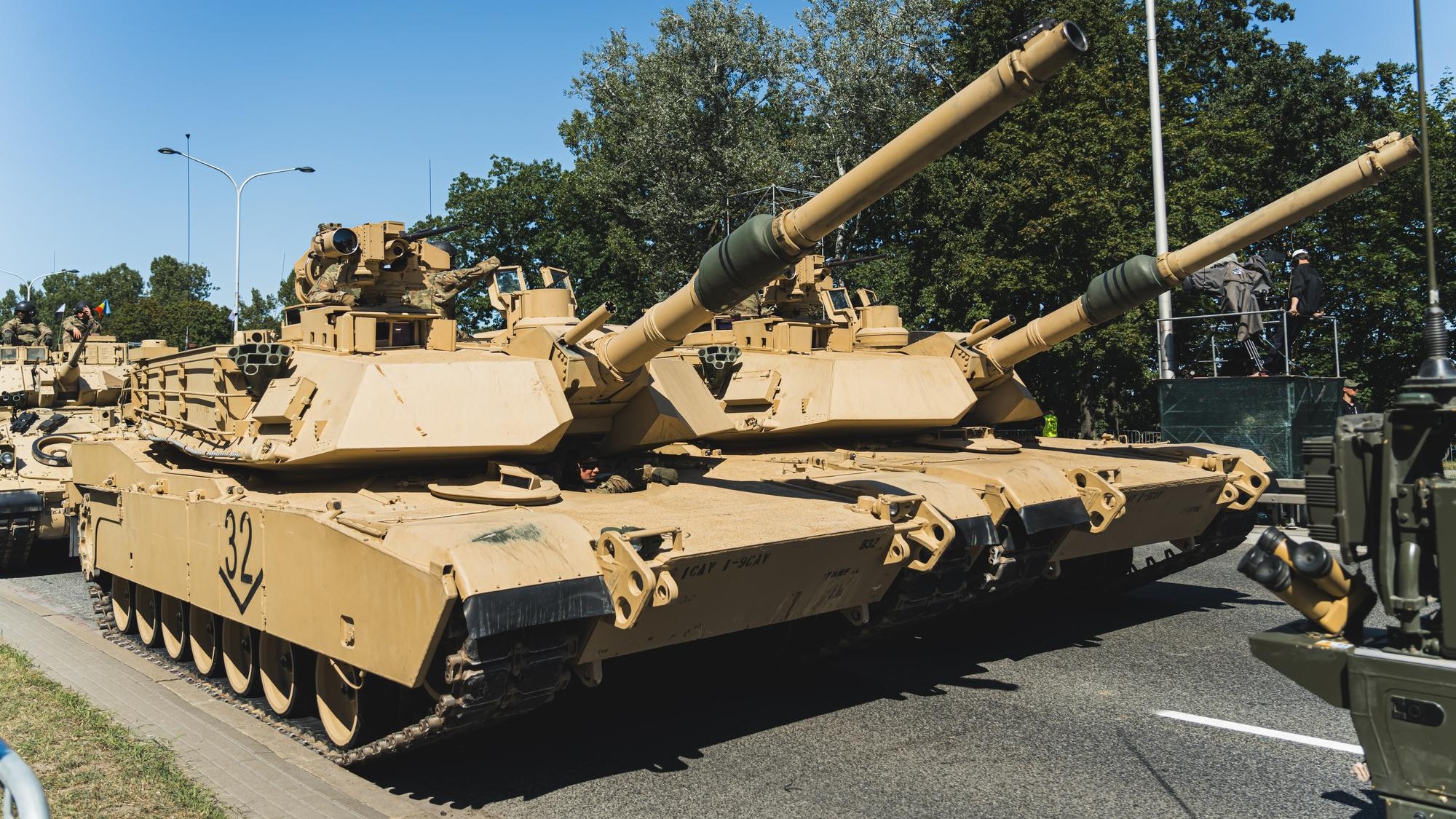
Every major military power on Earth spent more on defense in 2024. Every one except the largest. The United States, which still accounts for roughly 37% of all global military expenditure, saw its spending edge down 0.3% in real terms, to about $997 billion, even as the rest of the world pushed the combined total to a record $2.718 trillion, according to data the Stockholm International Peace Research Institute published in April 2025.
The 2.9% real increase was the steepest annual jump in more than a decade, driven by the wars in Ukraine and the Middle East, intensifying rivalry between Washington and Beijing, and a broad rearmament push across Europe. The combination of record global totals and a slight American retreat captures a shift that policymakers, allied governments, and American taxpayers are only beginning to reckon with.
Where the money went
SIPRI’s figures, measured in constant 2023 dollars and drawn from national government disclosures cross-referenced with IMF financial data, show spending increases on every inhabited continent. A few standouts define the picture.
Europe. European NATO members collectively pushed their defense budgets about 17% higher in real terms, the sharpest single-year surge the alliance has recorded. Poland, Germany, and the Baltic states led the charge, fueled by the war on their eastern doorstep and mounting political pressure to meet or exceed NATO’s 2%-of-GDP spending guideline. For the first time, a majority of NATO’s European members hit that threshold in 2024. Even so, the increases start from a low base after decades of underinvestment; translating budget lines into deployable combat power will take years.
China. SIPRI estimated Beijing’s military expenditure at $313.5 billion, making it the world’s second-largest spender by a wide margin and reflecting a 7.2% real increase. The institute cautions that Chinese defense budgets lack the line-item transparency common in Western governments. SIPRI fills gaps using official topline announcements and open-source research on off-budget military items, so the precise figure carries a wider margin of error than NATO-member data.
Russia. Moscow’s war economy continued to channel enormous resources toward Ukraine. SIPRI placed Russian military spending at roughly $146 billion in 2024, a figure reflecting dramatic wartime escalation that made defense the single largest category in Russia’s federal budget. Sanctions, currency fluctuations, and opaque Kremlin accounting make the number approximate, but the direction is unmistakable.
India. Often overlooked in transatlantic-focused defense debates, India spent an estimated $101 billion, ranking it the world’s fourth-largest military spender. New Delhi’s steady increases reflect border tensions with China, a naval modernization program aimed at the Indian Ocean, and a push to build a domestic arms industry that reduces reliance on Russian imports.
Middle East. Saudi Arabia, Israel, and other regional powers also increased outlays. Israel’s spending jumped sharply as its operations in Gaza expanded, while Gulf states continued long-running modernization programs. Across the region, the conflict environment kept budgets elevated well above pre-2023 levels.
Why U.S. spending dipped
A 0.3% real decline in a nearly $1 trillion budget is modest, but it stands out against the global trend. Several factors contributed. Procurement timelines for major weapons systems, including next-generation fighter jets and naval vessels, involve uneven year-to-year spending that can create temporary dips even when long-term commitments are rising. Domestic inflation, while cooling in 2024, still eroded some purchasing power from appropriations set in nominal terms. And continuing resolutions that delayed final budget authority for parts of the fiscal year constrained some accounts.
No single Department of Defense fiscal report isolates which budget category drove the decline. What is clear is that the U.S. share of global military spending, while still dominant, has been gradually shrinking as other nations ramp up. That trend predates 2024 but accelerated as European and Asian allies responded to threats closer to home.
Despite the real spending dip, the U.S. military burden remained elevated at about 3.4% of GDP, according to SIPRI’s calculations. Slower GDP growth kept the ratio high even as the dollar amount edged down, a reminder that the spending-to-GDP metric can move for reasons that have nothing to do with defense policy.
The global burden in context
Worldwide, military spending held at about 2.5% of global GDP in 2024. That ratio has been climbing since the post-Cold War low point of the early 2010s, when many Western governments treated defense as a bill that could safely shrink. The reversal has been swift. In just three years since Russia’s full-scale invasion of Ukraine in February 2022, dozens of countries have announced rearmament plans, revived conscription debates, or signed new arms deals.
SIPRI’s dataset, which covers more than 170 countries and applies a consistent methodology, remains the most widely cited independent benchmark for these comparisons. Governments, think tanks, and newsrooms rely on it as a shared reference point for debates over burden-sharing and arms races. But the data has limits. Rankings and year-on-year changes are most reliable at the global and regional level. For opaque spenders like China and Russia, published estimates are informed approximations, not audited accounts.
Even among transparent governments, accounting differences complicate direct comparisons. Some countries fold veterans’ benefits, border security, or intelligence budgets into their defense totals; others do not. A nation can appear to cross the NATO 2% line simply by reclassifying existing security spending rather than buying new capabilities. Readers should treat precise country-level percentages as useful guideposts, not gospel.
Who bears the cost next
The 2024 data captures a world in which security demand is rising faster than any single power, including the United States, is willing or able to supply on its own. Europe’s rearmament, while dramatic in percentage terms, faces industrial bottlenecks: ammunition production lines are still scaling up, and shipyards capable of building modern frigates are booked years out. Closing the gap with Russia’s wartime output will require sustained political will, not just budget increases.
China’s steady spending growth funds a military modernization program focused on the Western Pacific, raising the cost of any future confrontation over Taiwan or the South China Sea. India’s buildup adds another layer of competition along the Himalayan border and across the Indian Ocean. And smaller powers, from the Baltics to the Gulf, are spending more because they see fewer guarantees that a distant ally will always show up.
For the United States, the slight 2024 pullback may prove temporary. Congressional debates over the fiscal year 2025 and 2026 defense budgets have centered on whether to increase spending to keep pace with China and support Ukraine, or to restrain it as part of broader deficit-reduction efforts. The outcome will shape not just American force structure but the willingness of allies to keep raising their own contributions.
As of spring 2026, the trajectory set by the 2024 numbers shows no sign of reversing. The question is no longer whether the world is rearming but how long the buildup lasts, and who pays for it.