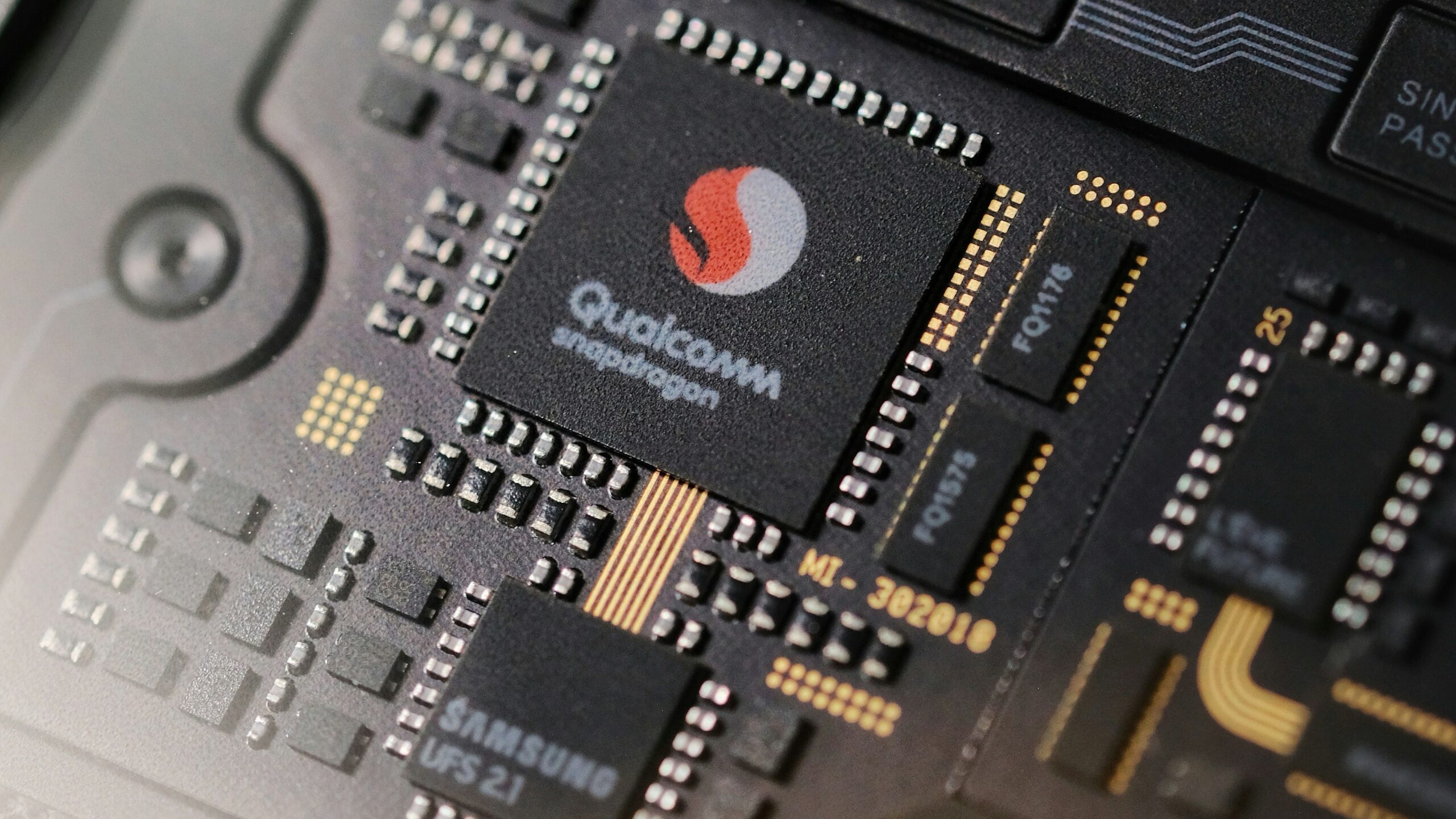
Qualcomm shares surged roughly 13% in premarket trading on Monday, April 28, 2026, after supply-chain analyst Ming-Chi Kuo reported that OpenAI is working with the San Diego chipmaker on AI-focused smartphone processors. Qualcomm, which closed the prior Friday near $168 per share with a market capitalization of roughly $188 billion, saw billions of dollars in added value before the opening bell. The note, attributed to Kuo through TF International Securities (his primary institutional affiliation, though he also publishes independently), was first flagged by Bloomberg and also named rival chipmaker MediaTek as a partner in the effort. Neither Qualcomm, OpenAI, nor MediaTek has confirmed the arrangement.
What Kuo’s report actually says
Kuo, best known for his Apple supply-chain scoops, wrote that “industry checks” indicate OpenAI is collaborating with both Qualcomm and MediaTek on processors tailored for on-device AI in smartphones. He did not specify whether the effort involves modifying existing chip architectures, such as Qualcomm’s Snapdragon 8 Elite, or designing something entirely new. Financial terms, timelines, and exclusivity arrangements were absent from the note.
The sourcing deserves a closer look. “Industry checks” typically means conversations with component suppliers, contract manufacturers, or design houses along the semiconductor supply chain. That kind of intelligence has proven reliable in hardware forecasting, where chip orders and engineering samples often surface months before formal announcements. But it is indirect. And while Kuo’s track record in Apple’s ecosystem is strong, his visibility into AI software companies branching into custom silicon is less established.
Why the market moved so fast
Qualcomm has spent the past two years positioning its mobile chips as the leading platform for on-device generative AI. Its most recent earnings exhibit, filed with the SEC for the fiscal quarter ending December 2025, highlights growing revenue from AI-capable system-on-chip platforms and continued investment in neural processing engines. The company already runs Meta’s Llama models on Snapdragon hardware and has integrated Microsoft Copilot features into its reference designs.
A formal partnership with OpenAI, the company behind ChatGPT, would carry far greater weight. It would signal that the most prominent name in generative AI views Qualcomm’s combination of CPU, GPU, modem, and dedicated AI accelerator cores as the right foundation for running large language models directly on phones rather than routing everything through the cloud. For investors, that narrative translates into higher chip volumes and richer average selling prices across the Android ecosystem.
The inclusion of MediaTek adds a competitive wrinkle. MediaTek held an estimated 39% of global smartphone processor shipments in 2024, according to Counterpoint Research, making it the volume leader in mid-range and budget Android devices. A three-way collaboration would be unusual in an industry where chip designers fiercely guard their architectures. One interpretation: OpenAI wants broad device compatibility rather than a single silicon partner, much the way it already distributes ChatGPT across iOS and Android.
OpenAI’s hardware ambitions in context
The report arrives at a moment when OpenAI is visibly pushing beyond software. The company has been working with former Apple design chief Jony Ive and his firm LoveFrom on a dedicated AI hardware device, a project first reported by The Information and later confirmed by multiple outlets. Custom smartphone silicon would represent a parallel track: rather than building its own consumer gadget from scratch, OpenAI would embed its models deeply into phones that hundreds of millions of people already carry.
That strategy also puts OpenAI on a collision course with Apple and Google, both of which design their own AI-optimized mobile chips. Apple’s Neural Engine and Google’s Tensor processors are purpose-built to handle on-device machine learning. If OpenAI co-designs processors with Qualcomm and MediaTek, it would effectively arm the Android side of the market with a competitive answer to those proprietary stacks, a development that could also ripple through Samsung’s Exynos roadmap and reshape how handset makers choose their silicon.
What is still missing
For all the market excitement, the gaps in the story are significant. No one outside Kuo’s sources has described the scope of the work. It could range from deep co-design of custom silicon blocks to a lighter arrangement where OpenAI simply optimizes its models for existing Snapdragon and Dimensity platforms. The revenue implications for Qualcomm differ enormously depending on which end of that spectrum the partnership falls.
There is also no public timeline. Chip development cycles typically run 18 to 36 months from initial design to mass production, meaning a product born from this collaboration might not reach consumers until 2028 or later if the effort is still in early engineering discussions.
The premarket surge prices in an optimistic scenario. If the partnership turns out to be narrower than investors hope, or if competing chipmakers secure similar deals with OpenAI or rival AI labs, Qualcomm could give back a meaningful share of those gains. Until one of the three companies confirms the collaboration on the record, the strategic logic is sound and the supply-chain signals are encouraging, but the details remain unverified.
Qualcomm’s May 2026 earnings call as the first real test
Qualcomm’s next scheduled earnings call, expected in early May 2026, is the most likely venue for management to address the reports directly. Analysts will press for specifics on whether any engineering work with OpenAI is under way, how it relates to existing Snapdragon AI roadmaps, and whether new revenue has been booked or is still prospective. Beyond that call, concrete evidence would include SEC filings referencing new partnership agreements, product announcements at developer conferences, or OpenAI listing Qualcomm or MediaTek hardware in its technical documentation. The speed of the stock’s reaction on April 28 underscores how much weight the market places on AI-hardware deals. Whether that move looks prescient or premature depends entirely on what the companies involved disclose in the weeks ahead.