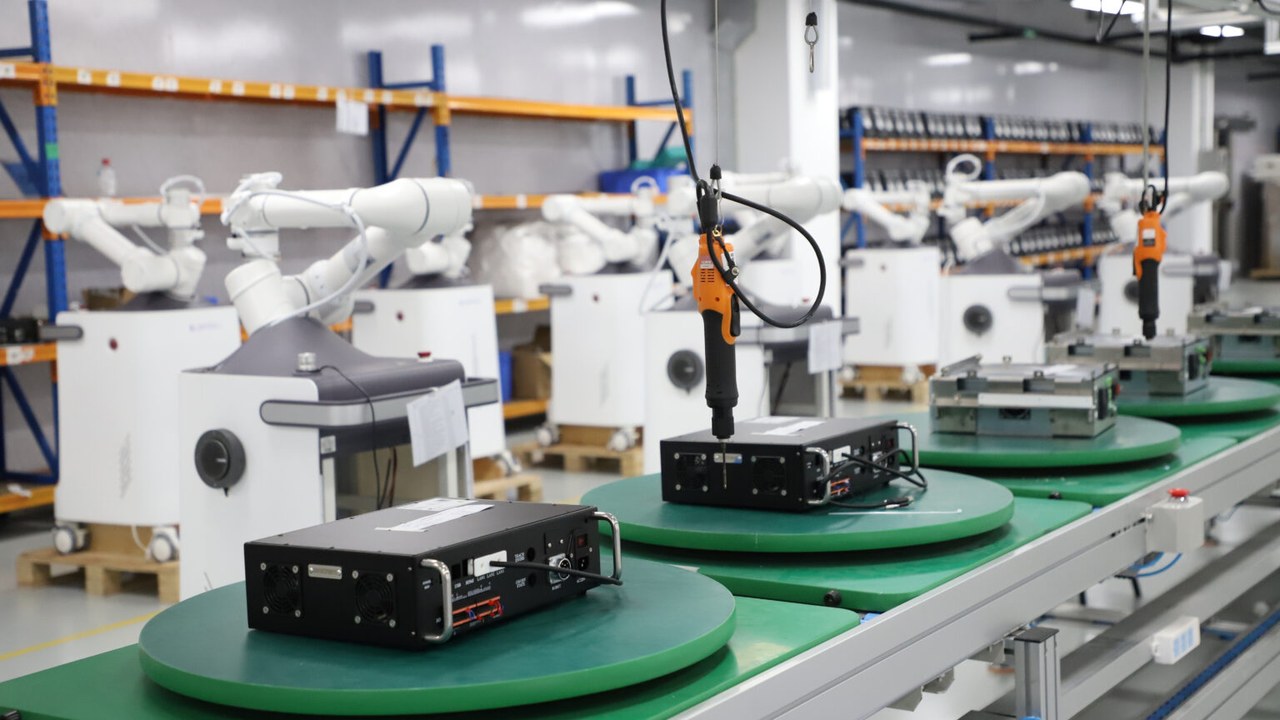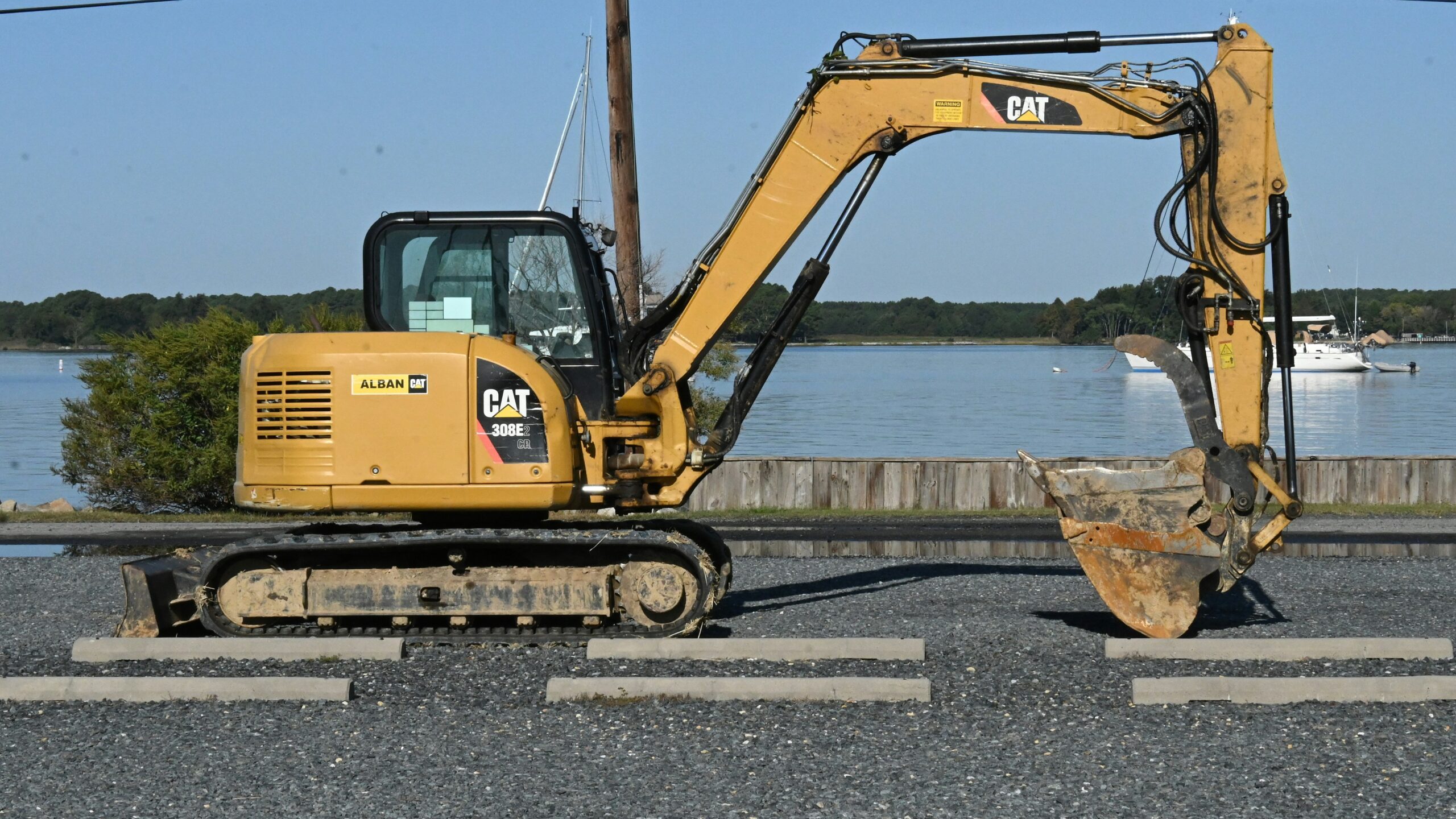
When most people hear “AI stock,” they think Nvidia, Microsoft, maybe a cloud startup. They do not think of a nearly 100-year-old company that sells bulldozers, excavators, and diesel generators. But in late May 2026, Caterpillar Inc. (NYSE: CAT) posted a quarterly earnings beat that sent its shares surging roughly 10% in a single trading session. The catalyst was not a new mining boom or a highway bill. It was artificial intelligence.
More precisely, it was the physical reality behind artificial intelligence: the hundreds of data centers being planned, permitted, and poured across the United States and abroad, each one requiring vast quantities of earthwork, reinforced concrete, and, increasingly, on-site power generation to keep the servers running when the grid cannot keep up.
The earnings beat that turned heads
Caterpillar’s latest quarterly results topped Wall Street profit estimates on both revenue and adjusted earnings per share. More importantly, management raised the company’s full-year revenue guidance and pointed directly to AI-related data center construction and power-system demand as a growing tailwind. On the earnings call, CEO Joe Creed and other executives described a pipeline of orders for large reciprocating generator sets, switchgear, and site-preparation equipment tied to hyperscale data center projects, citing strength in the company’s Energy & Transportation segment. They stopped short of naming specific customers or contracts, but the message was clear: the dirt-and-diesel side of the AI boom is arriving.
The stock’s reaction told its own story. A roughly 10% single-day move for a company with a market capitalization in the range of $150 billion to $180 billion signals that investors see something bigger than a one-quarter beat. The market is beginning to price in a multi-year construction cycle, one that links Caterpillar’s fortunes not to chips or cloud software but to the earth, steel, and fuel that make those digital services physically possible.
Why AI needs heavy iron
The connection starts with electricity. According to an assessment by the International Energy Agency, global data centers consumed an estimated 415 terawatt-hours of power in 2024, roughly 1.5% of worldwide electricity use. The IEA projects that figure could more than double by 2030, with AI training runs and inference workloads as the central driver.
In the United States, the federal government is treating the surge as a strategic planning problem. A Department of Energy analysis, drawing on research from Lawrence Berkeley National Laboratory, documents how quickly U.S. data center electricity consumption has grown and lays out scenarios ranging from moderate expansion to a near-doubling of load by the end of the decade. Even the conservative scenarios imply substantial new generating and transmission capacity.
This is where Caterpillar enters the picture. Grid interconnection queues in the U.S. now stretch years in many regions. When a hyperscaler like Microsoft, Google, or Amazon breaks ground on a new campus, it often cannot wait for a utility to build a substation or string new transmission lines. Instead, operators install banks of large diesel or natural-gas generator sets to supply prime or backup power from day one. Caterpillar’s Energy & Transportation segment manufactures exactly those systems, along with the automatic transfer switches and paralleling switchgear that tie them together.
And before a single generator arrives, someone has to clear the land, grade the pad, dig utility trenches, and pour foundations capable of supporting server halls that can weigh tens of thousands of tons. That work runs on Caterpillar’s bread-and-butter machines: dozers, excavators, wheel loaders, and articulated trucks. A single large data center campus can span 100 acres or more and require earthmoving on the scale of a small open-pit mine, with hundreds of thousands of cubic yards of soil moved and thousands of truckloads of concrete poured before the first rack of servers is installed.
The grid gap fueling on-site power
The U.S. Energy Information Administration has separately warned that fossil-fueled power generation could increase if data center demand outpaces the buildout of renewables and transmission. That is not a prediction; it is a conditional scenario. But it is one that many utility planners and data center developers consider plausible, and it maps directly onto Caterpillar’s product line.
If grid upgrades, renewable installations, and emerging options like small modular nuclear reactors keep pace with demand, the need for on-site fossil generation could moderate over time. If they do not, and current permitting timelines suggest they may not, data center operators will continue to lean on gensets as bridge power, and in some cases as semi-permanent prime power. Either way, the construction equipment needed to build the facilities themselves remains in demand regardless of the power source.
Autonomous machines and the AI feedback loop
There is an additional layer to Caterpillar’s AI relevance that goes beyond simply supplying equipment to data center job sites. The company has been expanding its own autonomous equipment program for years, deploying driverless haul trucks in mining operations and integrating GPS-guided grading and compaction systems across its construction lineup. That push means Caterpillar is not only a beneficiary of AI-driven construction demand but also a user of AI technology in its own products. As data centers proliferate and AI models improve, the same advances could feed back into more capable autonomous Caterpillar machines, potentially lowering operating costs on the very job sites where those data centers are being built.
A crowded field and open questions
For all the excitement, important details remain thin. Caterpillar has not disclosed a granular revenue breakdown separating AI and data center customers from its traditional construction, mining, and industrial base. Investors cannot yet see how much of the order book is tied to hyperscale projects versus, say, oil sands or highway work. Without that transparency, it is difficult to distinguish a cyclical surge from a durable structural shift.
The competitive picture also matters. Caterpillar is not the only player chasing data center power demand. Cummins, a direct rival in large gensets, has flagged similar tailwinds in its own recent earnings calls. Generac, Rolls-Royce Power Systems, and several smaller manufacturers are all positioning for the same market. How much pricing power and market share Caterpillar can hold as competition intensifies is an open question. Caterpillar’s advantage lies in its massive installed base and global dealer-service network, but the genset market is attracting new entrants at a pace the industry has not seen in years.
Then there is the efficiency wildcard. Chip designers are pushing hard to reduce the watts-per-inference of AI accelerators. Liquid cooling is replacing less efficient air-cooled designs. Software optimizations are trimming wasted compute cycles. If those gains compound faster than AI adoption grows, the pressure on grids and backup generation could ease, softening the long-term boost to Caterpillar’s power-systems segment. Conversely, if AI spreads into new industries without commensurate efficiency improvements, the buildout could accelerate beyond current projections.
How Caterpillar’s physical footprint shapes the AI buildout
Strip away the stock-ticker excitement and the Caterpillar story is really about a simple, underappreciated fact: artificial intelligence is not just a software phenomenon. It is a construction project, an energy project, and a logistics project, all at once. Every chatbot query, every image generator, every autonomous-driving model runs on hardware that sits inside a building that someone had to dig, pour, wire, and power.
The strongest evidence for that claim comes not from Caterpillar’s investor deck but from the institutional energy data. The IEA’s 415 TWh baseline and its projection toward roughly double that by 2030, the DOE’s scenario modeling, and the EIA’s fossil-generation warning all point in the same direction: digital infrastructure is becoming one of the largest new sources of electricity demand on the planet, and the physical supply chain to support it is only beginning to scale.
Caterpillar’s earnings beat and upgraded outlook are real-time, market-based confirmation that capital is already flowing into that supply chain. Whether the company ultimately captures a transformative share of AI-linked revenue or simply rides a strong cyclical wave will depend on grid modernization timelines, regulatory decisions on emissions and permitting, and the pace of efficiency gains inside the data center itself. What is no longer in question is that the AI boom has a physical footprint, and right now, Caterpillar is one of the companies pouring its foundation.