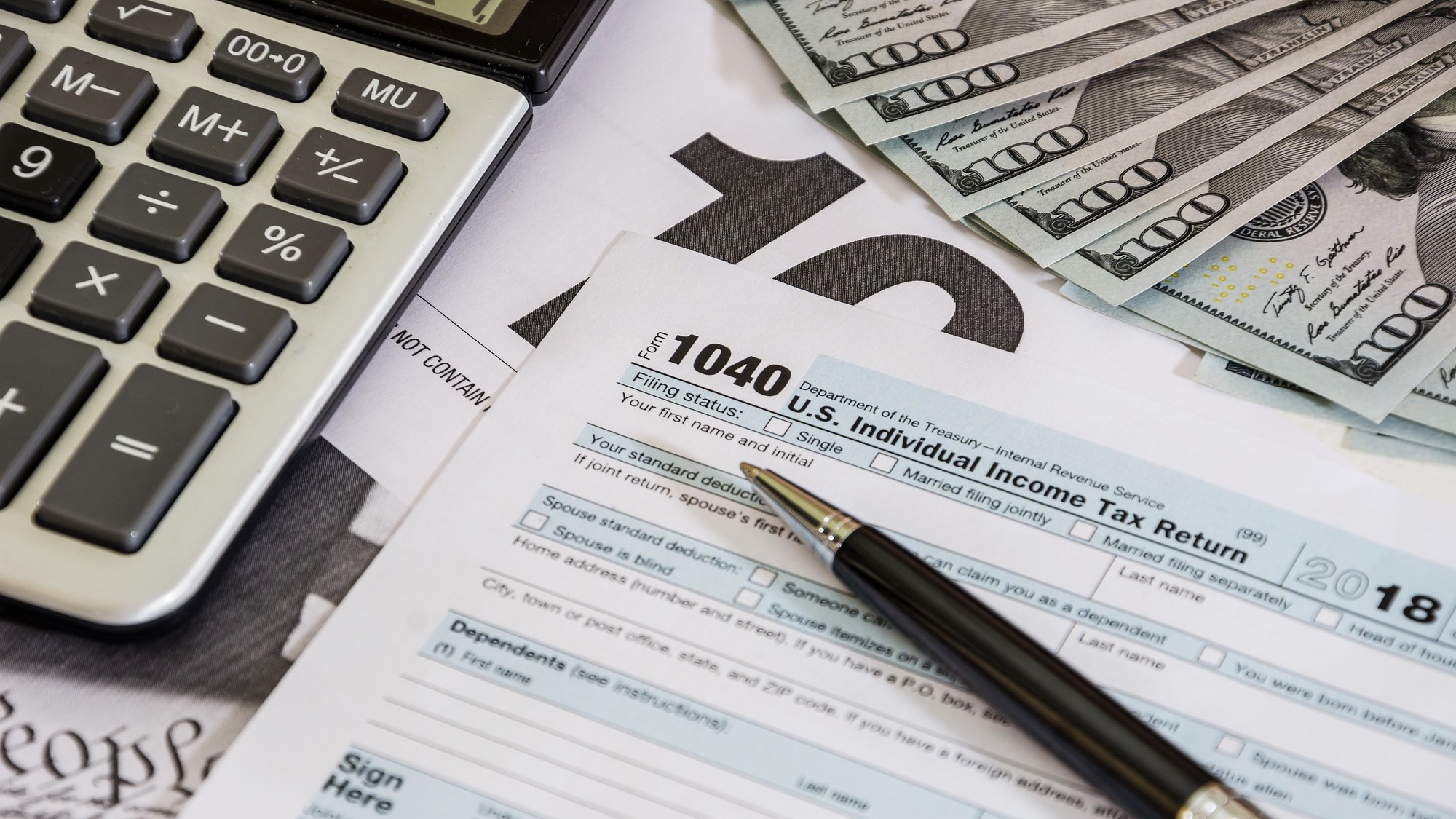
A married couple filing jointly in 2026 will be able to earn $32,200 before owing a penny in federal income tax, up $2,200 from the $30,000 standard deduction in 2025. For a household living paycheck to paycheck, that difference could mean roughly $500 or more in annual tax savings, depending on their bracket.
The increase is part of a sweeping set of inflation adjustments the IRS published in its IR-2025-103 announcement. But these are not routine cost-of-living tweaks. The agency notes that several 2026 figures reflect changes enacted through the One Big Beautiful Bill Act (Public Law 119-21), which made the 2017 tax cuts permanent and expanded key provisions before the inflation formula was applied.
Single filers will see their standard deduction jump to $19,400, up from $15,000 in 2025. Heads of household get $25,550, up from $22,500. Those are unusually large year-over-year moves, driven by the new law’s expansion of the deduction well beyond what inflation indexing alone would have produced. For the roughly 90% of filers who claim the standard deduction rather than itemizing, every dollar of increase translates directly into lower taxable income.
The 2026 federal income tax brackets
The U.S. still uses seven marginal tax rates, unchanged since the 2017 Tax Cuts and Jobs Act. What shifts each year are the income thresholds at which each rate kicks in. Here is what the IRS confirmed for tax year 2026:
Married filing jointly:
- 10%: Taxable income up to $24,900
- 12%: $24,901 to $101,400
- 22%: $101,401 to $197,050
- 24%: $197,051 to $260,500
- 32%: $260,501 to $390,500
- 35%: $390,501 to $540,500
- 37%: Over $540,500
Single filers:
- 10%: Taxable income up to $12,450
- 12%: $12,451 to $50,700
- 22%: $50,701 to $98,525
- 24%: $98,526 to $197,050
- 32%: $197,051 to $260,500
- 35%: $260,501 to $324,850
- 37%: Over $324,850
Head of household:
- 10%: Taxable income up to $17,750
- 12%: $17,751 to $67,600
- 22%: $67,601 to $98,525
- 24%: $98,526 to $197,050
- 32%: $197,051 to $260,500
- 35%: $260,501 to $432,650
- 37%: Over $432,650
Because these thresholds are wider than in 2025, more of a taxpayer’s income falls into lower-rate brackets. Consider a married couple with $200,000 in taxable income: compared to 2025, a slightly larger share of their earnings will be taxed at 22% rather than 24%, producing a modest but real reduction in their total bill.
Other key thresholds for 2026
Beyond brackets and the standard deduction, the IRS updated several figures that affect planning across income levels:
- Alternative Minimum Tax (AMT) exemption: The exemption for married couples filing jointly rises to $137,000 (single filers: $88,100), with phaseout beginning at higher income levels. The wider exemption, partly a product of the new law, means fewer upper-middle-income households will be caught by the parallel AMT calculation.
- Estate and gift tax exclusion: The lifetime exclusion climbs to roughly $15.96 million per individual for 2026, reflecting both inflation indexing and the One Big Beautiful Bill’s decision to make permanent the higher exemption that had been set to sunset after 2025. (The IRS has not yet published a revenue procedure with the exact dollar figure, so this number may be refined slightly.)
- Earned Income Tax Credit (EITC): The maximum credit for a family with three or more qualifying children rises for 2026, with updated income phaseout ranges. The IR-2025-103 announcement confirms the broad increase but does not list the precise maximum dollar amount; the IRS is expected to publish that figure in a subsequent revenue procedure.
- State and local tax (SALT) deduction cap: The new law raised the cap on the SALT deduction to $40,000 for most filers, up from the $10,000 ceiling that had been in place since 2018. The higher cap phases down for taxpayers with adjusted gross income above $400,000 (married filing jointly). This is a significant change for itemizers in high-tax states like New York, New Jersey, and California.
- Child tax credit: The One Big Beautiful Bill increased the per-child credit to $2,500, up from $2,000, and expanded refundability. The IRS has confirmed the new amount applies for 2026.
Many of these numbers are already embedded in IRS operational tools. Publication 505 provides withholding and estimated tax worksheets; however, as of June 2026 the version posted on the IRS website may not yet reflect every 2026 figure, so taxpayers should verify that they are using the edition dated for tax year 2026 before relying on its tables.
What the new law changed and what it did not
The One Big Beautiful Bill Act, designated H.R. 1 of the 119th Congress, did more than extend expiring provisions. It made the 2017 individual tax cuts permanent, expanded the standard deduction, raised the child tax credit, and lifted the SALT cap. Those provisions had all been scheduled to revert to pre-2018 levels after December 2025 under the original sunset clause of the Tax Cuts and Jobs Act.
What the law did not do is simplify the code. The seven-bracket structure remains, the AMT still exists as a parallel system, and the phaseout rules for credits and deductions remain layered and complex. High-income households looking for precise income thresholds at which certain benefits begin to phase down will need to wait for a detailed revenue procedure from the IRS. Several tax advisory firms have offered their own projections of those phaseout ranges, but because the firms rely on different modeling assumptions, their numbers do not always agree and none carry the weight of an official IRS publication.
The IRS also has not yet released worked examples showing how the 2026 changes translate into dollar-for-dollar withholding differences for typical earners. Publication 505 provides blank worksheets, but the usual “What’s New” fact sheets with sample scenarios have not yet appeared for 2026 as of late May. For workers with variable income, multiple jobs, or significant nonwage income, that gap makes it harder to gauge whether to adjust Form W-4 entries before January.
How to check your withholding before the 2026 brackets take effect
The most practical step for most taxpayers right now is to review withholding. The wider brackets and higher standard deduction mean many workers will have slightly less withheld from each paycheck once 2026 payroll tables take effect. But if your employer’s payroll system is slow to update, you could end up overwithholding for the first few pay periods and waiting months for a refund.
Taxpayers who currently itemize should pay particular attention to whether the higher standard deduction now exceeds their typical itemized total. With the joint filer threshold jumping to $32,200, some households that previously benefited from itemizing, especially those near the old breakeven point, may find it simpler and more advantageous to switch. On the other hand, the higher $40,000 SALT cap could push some itemizers’ totals back above the standard deduction, particularly in high-tax states. Running the numbers both ways is worth the effort.
For higher earners, the AMT exemption increase is worth modeling. If you have been subject to the AMT in recent years, the 2026 exemption bump could pull you out of it entirely, freeing up deductions that were previously disallowed under the parallel calculation.
Until the IRS publishes its full set of phaseout tables and worked examples, the safest approach is to plan around the confirmed numbers and treat third-party projections as estimates, not guarantees. The bracket thresholds and standard deduction amounts are locked in. The granular guidance that tax professionals rely on for precise planning is still on the way.