American drivers are paying more than 40% above last year’s prices to fill their tanks, a direct result of the largest oil-supply disruption in recorded history. U.S. retail gasoline averaged above $4 a gallon this spring, up sharply from the roughly $3.13 national average recorded in early June 2025. The cause is singular: military action tied to the Iran war has choked the Strait of Hormuz, the narrow waterway that previously carried nearly 20% of global oil supply, reducing crude and product flows from roughly 20 million barrels per day to a trickle.
Why a 40% jump at the pump hits households right now
The price gap between spring 2026 and a year earlier is not an abstract market statistic. It translates to roughly $15 to $20 more per fill-up for a typical sedan, compounding grocery and rent inflation that was already straining family budgets. Prices have eased slightly in recent weeks, with the national average dipping below $4 for the first time since March, but they still sit about 25% above year-ago levels even after that retreat. Weekly gasoline price data from federal energy statisticians underscore how abrupt the jump has been compared with prior years.
The relief, such as it is, traces directly to an unprecedented government intervention. Thirty-two IEA member countries agreed to make 400 million barrels available to the market, the largest coordinated stock release ever attempted. The United States alone authorized a 172-million-barrel draw from the Strategic Petroleum Reserve, later expanded through an emergency exchange mechanism that allowed refiners to borrow crude against future deliveries. Those releases have flattened the near-term price curve, preventing what analysts say could have been $6 or $7 gasoline. But the buffer is finite. If Hormuz flows stay well below their pre-conflict baseline, the exhaustion of that 400-million-barrel cushion could trigger a secondary price spike, potentially sharper than the first because strategic reserves will be depleted.
For households, the timing could hardly be worse. Many families had already burned through pandemic-era savings and taken on higher-interest credit card debt. A commuter who drives 15,000 miles a year in a midsize car now spends hundreds of dollars more annually on fuel than in 2025, crowding out discretionary purchases and forcing trade-offs on everything from summer travel to back-to-school shopping. Lower-income drivers, who tend to drive older, less efficient vehicles and have longer commutes, shoulder a disproportionate share of that burden.
Strait of Hormuz flows and the scale of the disruption
The IEA’s March 2026 Oil Market Report described the conflict’s effect on global supply as the largest disruption in the oil market’s history. Before military action began, roughly 20 million barrels per day of crude and refined products moved through the strait. That volume collapsed almost overnight as tankers were rerouted, delayed, or idled. In its assessment of the crisis, the IEA highlighted how concentrated the risk had become in this single chokepoint and warned that spare production capacity elsewhere could not fully offset a prolonged outage.
Energy analysts had long flagged the strait as a vulnerability, but the scale of the current disruption exceeded most stress-test scenarios. According to the agency’s March oil review, the sudden loss of Hormuz flows forced refiners in Asia and Europe into a scramble for alternative barrels, bidding up cargoes from West Africa, the North Sea, and the Americas. Freight rates spiked as ships were diverted to longer routes, adding weeks to delivery times and effectively tightening supply even further.
The U.S. Energy Information Administration reached similar conclusions. Its short-term market review detailed how the conflict-induced outage cascaded through global benchmarks, widening the spread between seaborne grades and landlocked crudes and pushing up prices for diesel and jet fuel alongside gasoline. The EIA noted that nearly one-fifth of world oil trade had previously transited Hormuz, so even partial disruptions could reverberate quickly through wholesale and retail markets.
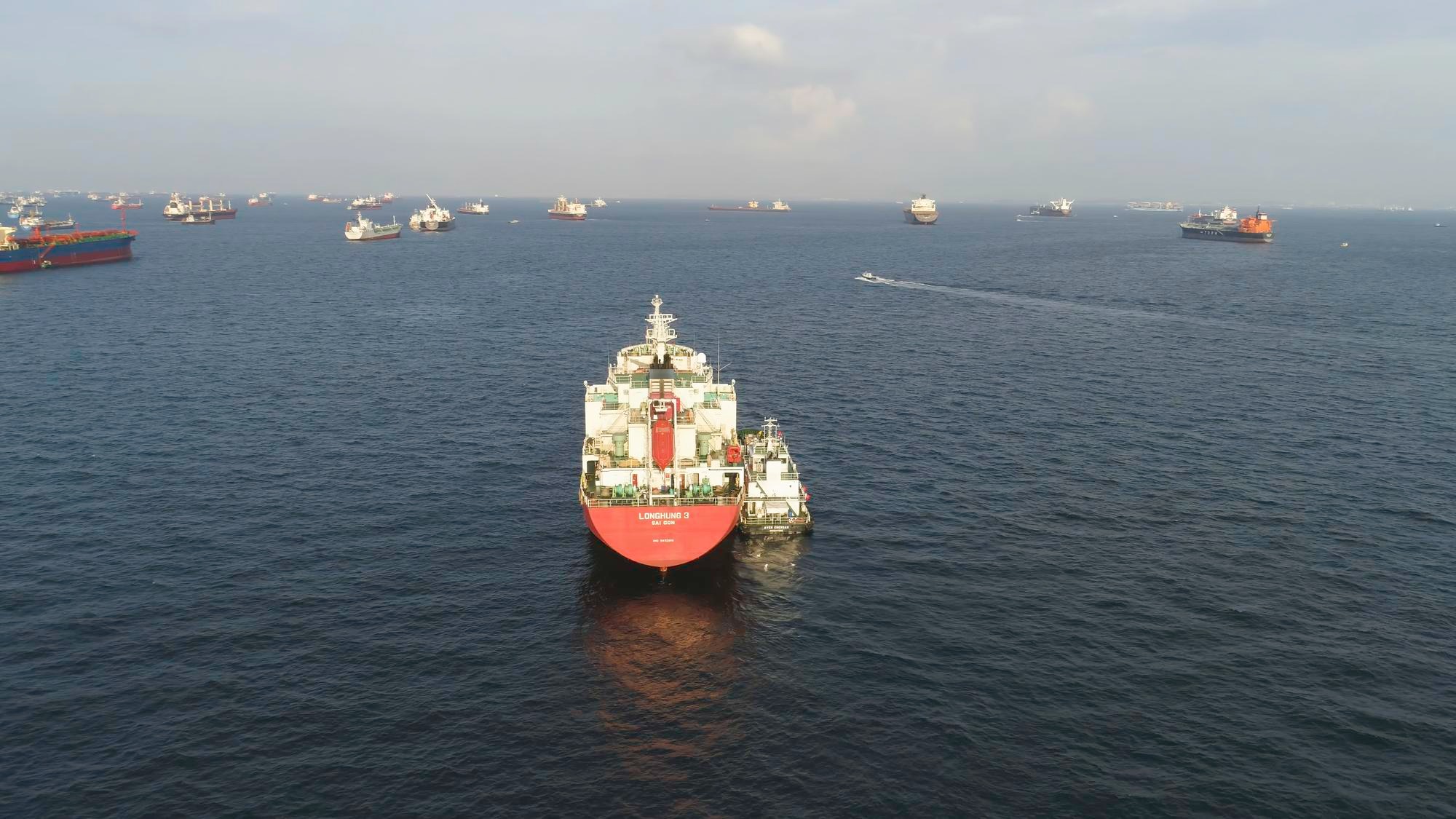
Maritime tracking data show that the central navigation route through the strait remains closed to routine commercial traffic, with only limited, military-escorted convoys allowed to pass at irregular intervals. Some regional producers have managed to reroute a fraction of their exports through pipelines that bypass Hormuz, but those lines were already operating near capacity before the conflict. As a result, the net loss in seaborne supply remains historically large, and the market continues to price in a significant geopolitical risk premium.
For now, the combination of emergency stock releases, modest demand destruction from higher prices, and incremental output increases from producers outside the Gulf has kept gasoline below the worst-case scenarios sketched out when the conflict began. But policymakers and consumers alike are confronting an uncomfortable reality: as long as the Strait of Hormuz remains constrained, the world is operating with a thinner margin for error. Any additional shock-a major refinery outage, a hurricane in the Gulf of Mexico, or an escalation of fighting-could quickly turn today’s elevated prices into tomorrow’s full-blown energy crisis.