Jerome Powell will walk out of the Federal Reserve chair’s office for the last time on May 15, 2026, closing a tenure that included the fastest rate-hiking cycle in four decades and a pandemic-era housing market that still has not fully normalized. His likely successor, Kevin Warsh, cleared the Senate Banking Committee on April 29, according to Bloomberg reporting, and a full Senate confirmation vote could come within days. For the roughly 40 million U.S. households carrying a mortgage and millions more priced out of a market where the average 30-year fixed rate has hovered near 7% for much of the past year, the handoff raises a simple, high-stakes question: will borrowing a home get cheaper under new leadership?
The honest answer is not right away. But the longer answer depends on who Warsh turns out to be once he holds the gavel, and the clues are worth examining closely.
The timeline and what Powell left behind
Powell was sworn in for his second term in May 2022. Under the Federal Reserve Act, the chair’s term runs four years from the date of expiration of the previous term, placing the end of Powell’s tenure on May 15, 2026. His separate seat on the Board of Governors runs through January 31, 2028, and Washington Post reporting indicates he intends to remain as a governor after stepping down as chair. If he follows through, that decision would deny the White House an extra vacancy and keep a seasoned, independent voice in the room during the transition.
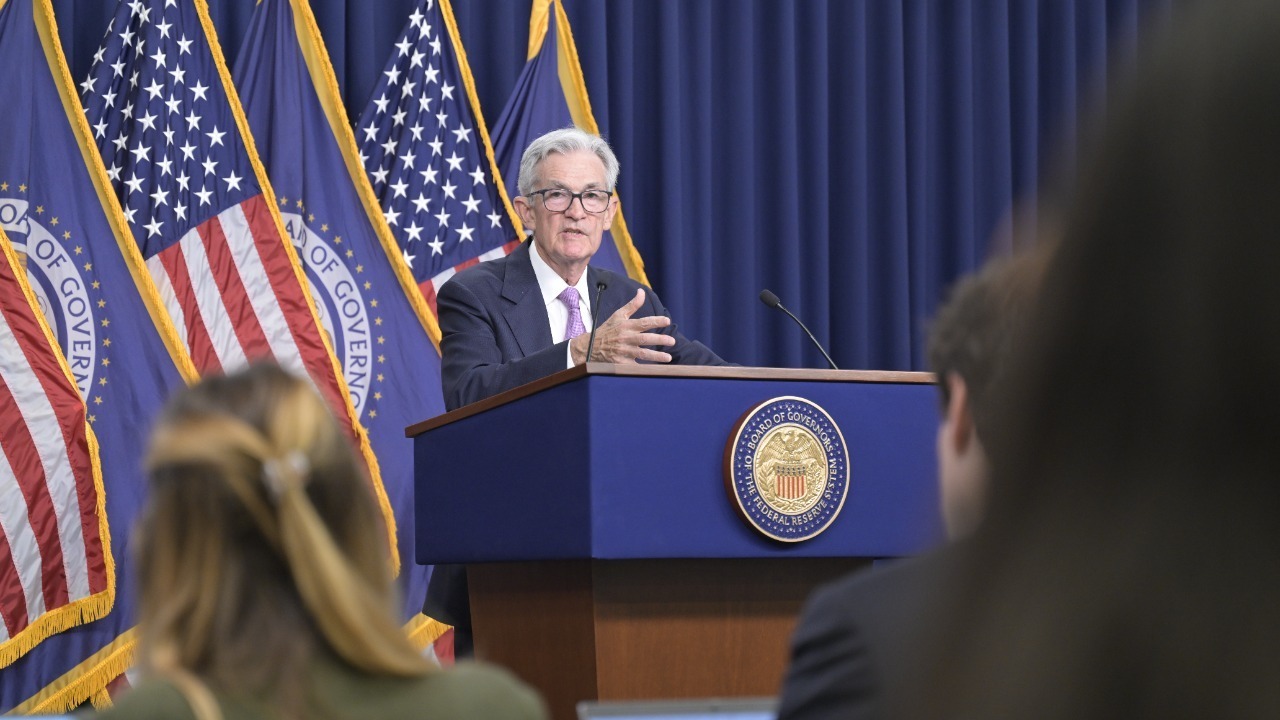
Powell’s final scheduled meeting as chair produced an FOMC statement and press conference on April 29. The committee held the federal funds rate steady at its current target range, citing balanced risks to both inflation and employment. In his closing press conference, Powell emphasized the committee’s data-dependent posture, reinforcing the Fed’s wait-and-watch stance. The official policy statement described the current rate setting as “appropriate” given recent readings on inflation and the labor market.
That hold decision is the baseline Kevin Warsh would inherit. It is also the last clear policy signal of the Powell era.
Who is Kevin Warsh and what has he signaled?
The White House formally transmitted Warsh’s nomination to the Senate in March 2026 for both the four-year chair term and a 14-year governor seat starting February 1, 2026. Warsh is not a newcomer to the building: he served as a Fed governor from 2006 to 2011, a stretch that included the 2008 financial crisis and the early rounds of quantitative easing. During and after that period, he publicly questioned the effectiveness of large-scale asset purchases and generally favored tighter policy, positions that put him at odds with the expansionary consensus of the time.
Those views, however, were shaped by a different economy. In his 2026 confirmation hearing before the Senate Banking Committee, Warsh was careful not to commit to a specific rate path or lay out a detailed policy agenda. He acknowledged the Fed’s dual mandate and stressed the importance of institutional credibility, but offered little in the way of concrete forward guidance. Analysts who predict he will push for higher rates or accelerate the balance-sheet rundown are drawing on a decade-old track record, not on-the-record commitments from the nominee this year. That distinction matters for anyone trying to forecast where mortgage rates are headed.
What this actually means for your mortgage rate
Mortgage rates do not move in lockstep with the federal funds rate. The 30-year fixed rate is driven primarily by the yield on the 10-year Treasury note, which reflects investor expectations about inflation, growth, and Fed policy over the coming decade. As of late April 2026, the average 30-year fixed rate sits near 6.8% according to the most recent Freddie Mac Primary Mortgage Market Survey, well above the sub-3% levels borrowers locked in during 2020 and 2021. On a $400,000 loan, that difference translates to roughly $900 more per month in principal and interest compared to the pandemic-era lows.
A Congressional Research Service report on Federal Reserve board membership underscores a structural point that often gets lost in chair-transition coverage: the chair sets the tone, shapes the meeting agenda, and leads public communication, but does not unilaterally set interest rates. Decisions are made by the Federal Open Market Committee, which includes all sitting governors and a rotating group of regional Reserve Bank presidents. That collective structure limits how fast any single leader can redirect policy, even one with strong convictions.
History backs this up. When Ben Bernanke handed the chair to Janet Yellen in February 2014, the 30-year fixed rate barely moved in the weeks surrounding the transition. The same was true when Yellen gave way to Powell in February 2018. Markets had time to price in each new leader’s likely approach, and the institutional momentum of the FOMC acted as a stabilizer. There is no structural reason to expect the Powell-to-Warsh handoff to break that pattern, though the political environment around the Fed is more charged than it was during either of those earlier transitions.
Where the real uncertainty lives
The biggest unknown is not whether Warsh will raise or cut rates at his first meeting. It is how he will communicate. Powell built his public credibility on measured, data-driven press conferences that bond traders learned to parse word by word. A single unexpected phrase from a Fed chair can move Treasury yields by several basis points in minutes, and those moves ripple directly into mortgage pricing. Warsh’s communication style in the chair role is untested, and markets will be listening closely for any shift in tone.
Timing adds another wrinkle. The full Senate has not yet voted on Warsh’s confirmation as of early May 2026. If the vote slips past May 15, Vice Chair Philip Jefferson would lead the board during the gap. That scenario would be procedural, not destabilizing, but it introduces a layer of uncertainty that rate-sensitive markets tend to price in, however modestly.
Then there is the economy itself. Inflation has cooled significantly from its 2022 peaks, but the core Personal Consumption Expenditures index, the Fed’s preferred gauge, remains above the 2% target. The labor market is solid overall but showing early softening in sectors like technology and commercial real estate. Ongoing tariff disputes are clouding business investment decisions and adding upward pressure to import prices. None of these conditions are the new chair’s doing, but all of them will shape the policy choices he faces and, by extension, the trajectory of borrowing costs for American homeowners.
What to watch between now and the June 2026 FOMC meeting
For anyone carrying a mortgage or hoping to get one, the most useful thing to track is not the name on the chair’s door but the data the committee is watching. Monthly inflation reports, jobs numbers, and the 10-year Treasury yield will tell you more about where your rate is headed than any single leadership change. The April 29 FOMC statement made clear the committee is in a holding pattern, waiting for the economic picture to sharpen before making its next move. That posture is unlikely to shift in the first weeks of a new chair’s tenure, regardless of his personal leanings.
The Senate confirmation vote, expected sometime in May 2026, is the next concrete milestone. If Warsh is confirmed and sworn in on or near May 15, the transition will be seamless. If there is a delay, watch for any market reaction to the gap, though precedent suggests it would be modest.
After that, the June 2026 FOMC meeting becomes the real tell. It will be the first window into how Warsh runs the room, what language he uses in the post-meeting statement, and whether the committee’s tone shifts in any detectable way. Until then, the most reliable guide to future mortgage costs remains the official record: the Fed’s own statements, the data it is tracking, and the institutional guardrails that prevent any one person from rewriting monetary policy on day one.