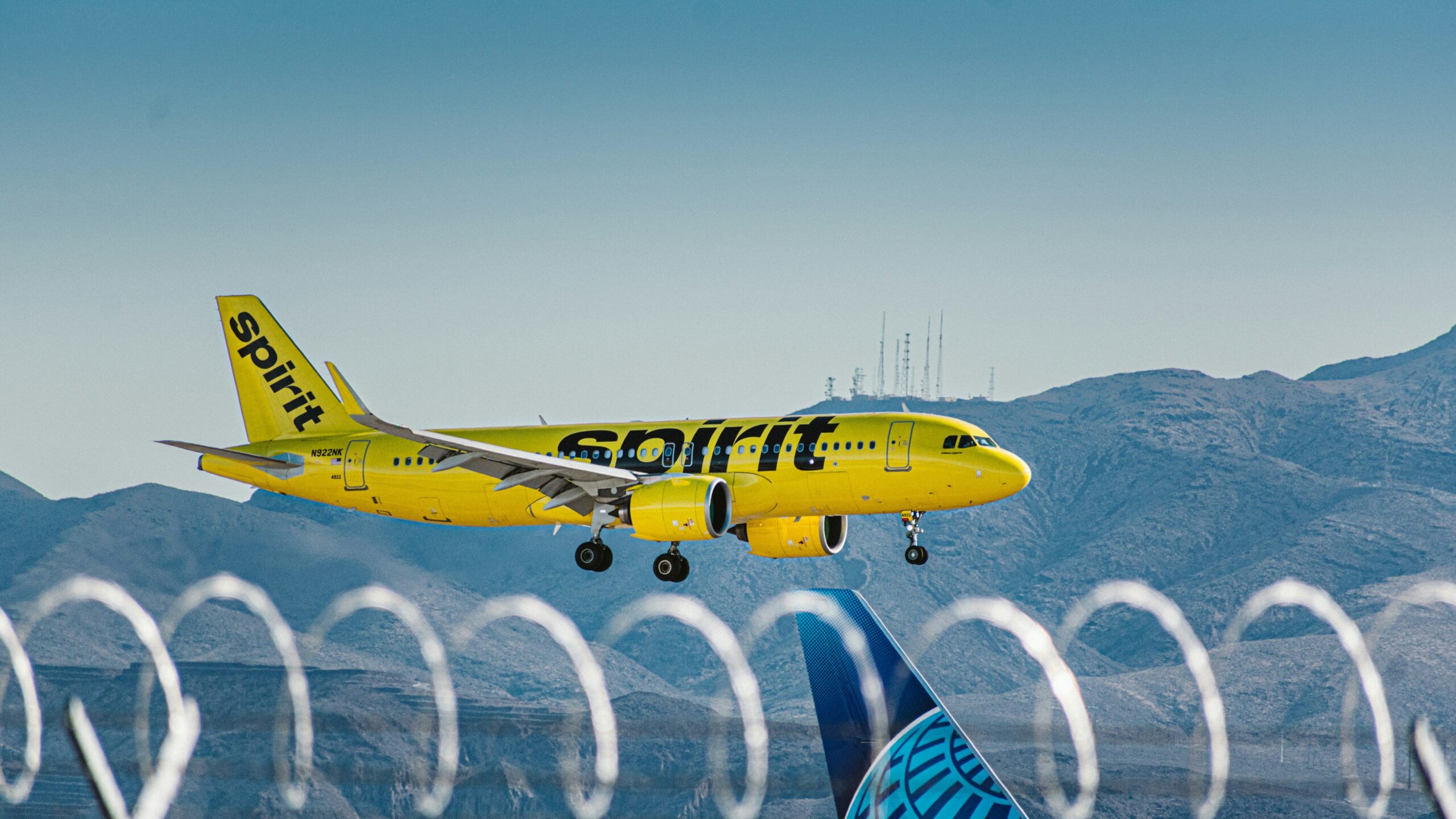
At 3 a.m. Eastern on Monday, June 23, 2025, Spirit Airlines canceled every remaining flight on its schedule, shut down its operations, and told passengers not to come to the airport. The airline that built its identity on $9 base fares and a bright yellow fleet was finished. More than 100 aircraft sat grounded. Roughly 17,000 employees, from pilots and flight attendants to gate agents and mechanics, were out of work. And travelers holding active reservations were left to figure out their own way forward.
The company confirmed the shutdown through a press release describing an “orderly wind-down.” CEO Dave Davis pointed to “liquidity constraints” and rising fuel costs as the forces that made continued operations impossible. Spirit offered no rebooking assistance and did not specify when or how refunds would reach customers.
How Spirit ran out of runway
The collapse had been building for more than a year. In January 2024, a federal judge blocked JetBlue Airways’ proposed $3.8 billion acquisition of Spirit on antitrust grounds, eliminating what the carrier’s leadership had treated as a lifeline. An earlier merger agreement with Frontier Airlines had already fallen apart. By November 2024, Spirit filed for Chapter 11 bankruptcy protection, weighed down by years of operating losses and a debt load it could no longer service.
Spirit emerged from bankruptcy in early 2025 with a smaller fleet and restructured obligations, but the turnaround never took hold. Jet fuel prices climbed through the spring, and Spirit’s business model left almost no room to absorb the hit. The airline had always depended on selling the cheapest possible base fare and then charging separately for carry-on bags, seat assignments, and even bottled water. Larger carriers can offset fuel spikes by raising prices on business-class tickets or leaning on premium cabin revenue. Spirit had no such cushion.
When cash reserves fell below the level needed to fund daily operations, the board voted to wind down the company rather than attempt another restructuring.
The Associated Press reported that Spirit’s own attorney disclosed the workforce figure during related court proceedings, estimating approximately 17,000 job losses. That number has not been independently confirmed through a federal WARN Act filing or union statement, but because it came from the company’s legal counsel in a judicial setting, labor analysts consider it a credible preliminary count.
What passengers should do right now
If you hold a Spirit Airlines ticket for any date, that flight will not operate. The airline’s website may still display booking records, but no aircraft are flying and no rebooking through Spirit is available. Here is what consumer advocates and travel attorneys recommend.
Request a refund directly from Spirit. Under federal rules enforced by the U.S. Department of Transportation, airlines must issue automatic cash refunds for flights they cancel. Not vouchers, not credits. Spirit acknowledged this obligation in its shutdown announcement but gave no timeline. Submit your request through the airline’s website or customer service channels and save every confirmation number and screenshot.
File a credit card chargeback if Spirit does not pay. If you purchased your ticket with a credit card and the airline fails to process a refund within a reasonable window, contact your card issuer and dispute the charge. The Fair Credit Billing Act generally gives consumers 60 days from the statement date to initiate a dispute for services not rendered. Given Spirit’s financial condition, a chargeback may be the fastest route to recovering your money.
Review your travel insurance policy. Some policies cover “carrier cessation of operations” or “financial default” and may reimburse nonrefundable expenses tied to a Spirit itinerary, such as hotel bookings or ground transportation. Not all policies include this protection, so check the fine print or call your insurer directly.
File a complaint with the DOT. The Department of Transportation accepts consumer complaints through its online portal. A single complaint will not put you on another plane, but a high volume of filings increases the pressure on regulators to enforce refund rules, even against a company in financial distress.
Check your Free Spirit miles and credit card status. Spirit has not disclosed what will happen to its Free Spirit loyalty program or the co-branded credit card. If you hold a balance of miles, document your account now. If you carry the Spirit credit card, contact the issuing bank to ask whether annual fees will be refunded and whether any residual value in the program will be honored.
As of Monday afternoon, no competing airline had announced a formal accommodation program for displaced Spirit passengers. In past airline failures, carriers have occasionally offered discounted rescue fares to stranded travelers, but nothing of the sort has materialized yet.
The cities and workers left behind
Spirit’s disappearance removes the largest ultra-low-cost carrier from the U.S. market and eliminates competition on dozens of routes where it was often the only budget option. Cities like Fort Lauderdale, Atlantic City, Las Vegas, and Myrtle Beach, where Spirit operated heavy schedules, now face gaps in their air service that may take months or years to fill, if they are filled at all.
The damage extends well beyond the departure board. Airport vendors, rental car agencies, and hotels near Spirit-heavy terminals will feel the drop in passenger traffic almost immediately. In Fort Lauderdale, Spirit’s headquarters city, the fallout reaches corporate offices, maintenance hangars, and a network of local contractors and suppliers. Broward County officials have not released a formal economic impact assessment, but the region’s dependence on a single carrier makes it especially vulnerable.
For the 17,000 workers now facing unemployment, the immediate outlook is uncertain. Spirit’s press release did not mention severance packages, and no union representing Spirit employees has issued a public statement on negotiated protections. Pilots and flight attendants with current certifications may find openings at other carriers that are still hiring, but mechanics, ground crews, and administrative staff face a tighter market, particularly in South Florida, where Spirit was one of the largest private employers.
What Spirit’s failure means for cheap flights
Spirit’s exit forces a question that regulators and lawmakers had already been circling: whether the ultra-low-cost model can survive in the United States at all. Frontier Airlines, the closest remaining competitor in that segment, has been steadily moving toward a hybrid approach with bundled fares and assigned seating, distancing itself from the bare-bones playbook Spirit pioneered.
If budget carriers cannot weather fuel volatility and razor-thin margins, the competitive pressure that kept fares low on secondary and leisure routes disappears with them. Travelers who relied on Spirit to fly affordably between mid-size cities or to Caribbean destinations may find that no airline steps in to offer comparable pricing.
The DOT has not issued a public statement on enforcement actions or broader passenger relief. No WARN Act notice has surfaced to confirm the precise layoff count or any severance terms. And Spirit has not said whether any buyer is interested in pieces of the business, including aircraft leases, airport gate rights, or the Free Spirit loyalty program.
Spirit described its wind-down as orderly, but a 3 a.m. shutdown with zero advance rebooking and no refund timeline does not look like an airline that had weeks to plan. Until bankruptcy court filings or SEC disclosures fill in the gaps, the full sequence of decisions that took Spirit from post-bankruptcy emergence to total collapse in roughly five months remains unclear.
What is not unclear: Spirit Airlines is gone, its workforce is scattered, and its passengers need to act now to recover their money. The budget airline era that Spirit helped create has not necessarily ended, but it just lost the carrier that defined it.