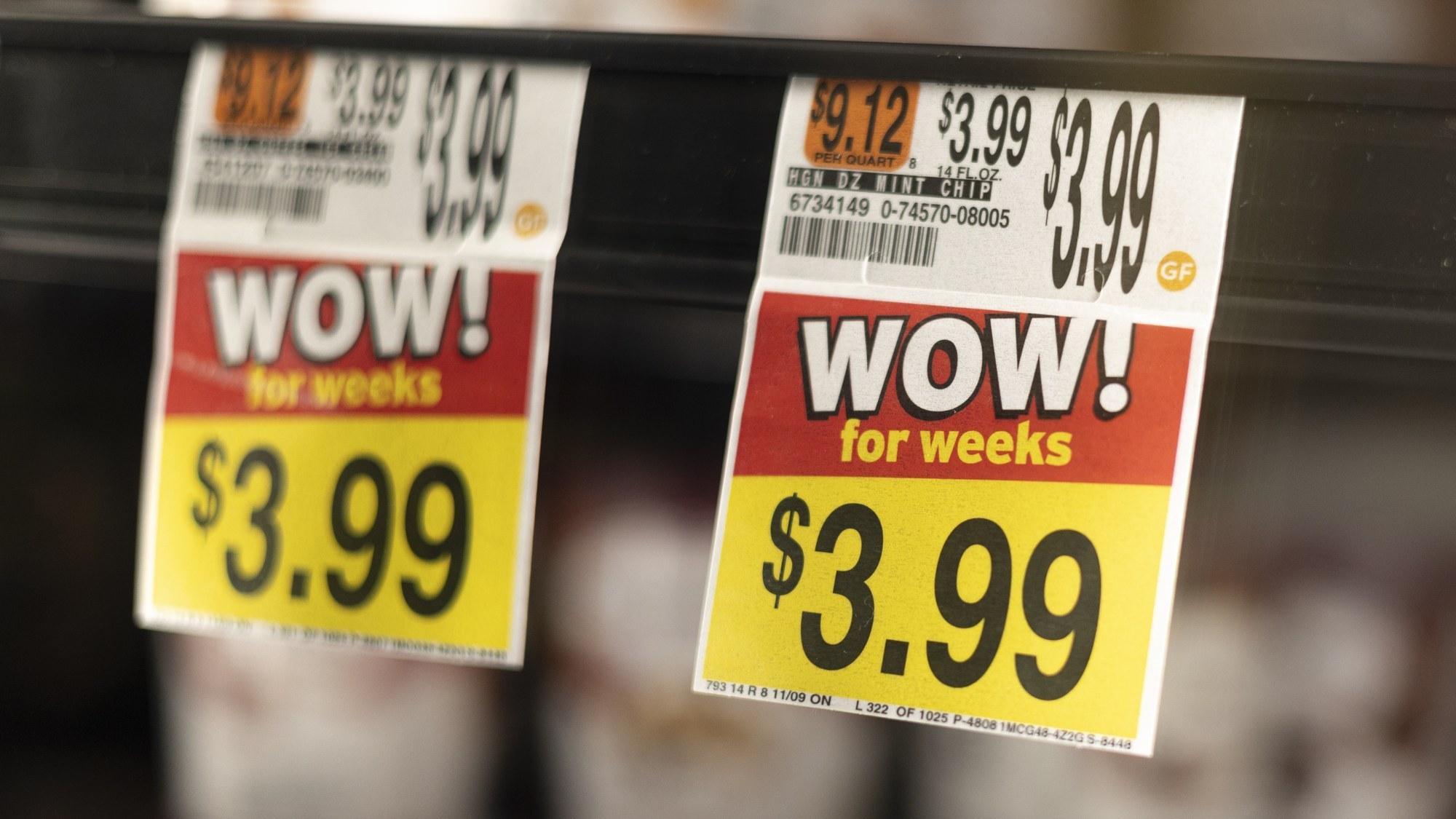
Three dates in the next three weeks could decide what you pay on your mortgage, what your savings account earns, and whether your 401(k) glides or lurches into summer. On April 29, 2026, the Federal Reserve held its benchmark interest rate steady. The same day, the Senate Banking Committee advanced Kevin Warsh’s nomination to replace Jerome Powell as Fed chair. And on May 12, the Bureau of Labor Statistics will publish a fresh Consumer Price Index report that lands just 72 hours before Powell’s term expires on May 15. Each event alone would move markets. Stacked together, they create the most consequential stretch for household finances since the Fed began cutting rates in late 2024.
Where rates stand after the April 29 hold
The Federal Open Market Committee’s April 29 policy statement kept the federal funds rate target at 3-1/2 to 3-3/4 percent, pointing to steady inflation and a labor market that has not cracked. That target directly anchors what banks charge on credit cards, home equity lines of credit, and adjustable-rate mortgages. When the Fed holds, those costs hold with it.
Fixed-rate mortgages follow a different signal. They track longer-term Treasury yields, which the Fed reports in its H.15 statistical release. A 30-year fixed rate in late April 2026 reflects what bond traders believe the Fed will do over the next several years, not just what it did yesterday. A new chair with a different philosophy can shift those beliefs quickly, even before casting a single vote.
Powell’s second term as chair ends May 15, 2026. His separate term as a member of the Board of Governors runs until January 31, 2028, meaning he could legally remain as a regular governor. He has not publicly said whether he will. If the full Senate has not yet confirmed Warsh by May 15, Vice Chair Philip Jefferson would be expected to lead FOMC proceedings in the interim.
What a Warsh Fed could mean for your mortgage
Warsh served as a Fed governor from 2006 to 2011 and has spent the years since publicly questioning large-scale bond purchases and prolonged low-rate policies. In op-eds for The Wall Street Journal and research papers at Stanford’s Hoover Institution, he has argued that the Fed should pull back stimulus more quickly once the economy stabilizes. That record suggests he would be less eager to cut rates aggressively than some of his predecessors.
Futures markets heading into May 2026 reflect roughly even odds of a rate cut at the Fed’s June meeting, according to CME Group’s FedWatch tool. A new chair who leans hawkish could tilt those odds toward a hold, keeping 30-year fixed rates flat or nudging them higher. If the May 12 CPI report shows inflation cooling convincingly, even a hawkish-leaning chair would face pressure to ease, which could pull mortgage rates down.
Borrowers deciding whether to lock a rate in May or wait should watch two things: the inflation print and Warsh’s earliest public remarks after confirmation. The gap between those signals will tell you more than any forecast.
What changes for savings accounts and CDs
High-yield savings accounts and certificates of deposit have been one of the clearest winners of the Fed’s elevated-rate cycle. Banks set those yields in loose relation to the federal funds rate, and as long as the target stays near its current level, competitive online banks have reason to keep advertising attractive APYs to pull in deposits.
A chair who is slower to cut extends that window. Warsh’s historical preference for tighter policy, if it carries into his tenure, could mean savings yields stay elevated longer than markets currently expect. But if economic data weaken sharply, or if tariff-driven uncertainty drags on business investment, the Fed may cut regardless of who holds the gavel, compressing those yields. Savers with maturing CDs face a concrete choice: roll into a new term now at current rates, or gamble that yields will hold through the fall. Locking in a 6- to 12-month CD before the June meeting removes one variable from that bet.
What it means for your 401(k)
Retirement accounts feel a Fed leadership change through two channels at once. On the equity side, stocks tend to climb when investors expect rate cuts because cheaper borrowing lifts corporate earnings and makes equities more attractive relative to bonds. A chair perceived as hawkish can cool that optimism, at least initially, and the S&P 500 has historically shown elevated volatility in the weeks surrounding a new Fed chair’s first meeting, according to research from the Federal Reserve Bank of St. Louis.
Bond funds inside 401(k) plans move in the opposite direction of yields. If Warsh holds rates steady or signals fewer cuts ahead, bond prices could soften, trimming returns on fixed-income allocations. The practical impact depends on where you are in your career. Workers with decades until retirement can treat short-term swings as background noise. People within five to ten years of drawing down should check whether their stock-to-bond mix still matches their timeline. Financial advisors generally recommend reviewing asset allocation during periods of policy transition rather than reacting to any single headline.
The May 12 CPI report is the real trigger
The Bureau of Labor Statistics has the April 2026 Consumer Price Index scheduled for release on May 12 at 8:30 a.m. ET, according to its published calendar. That report lands just 72 hours before the chair transition and will be the last major inflation reading before the Fed’s June meeting, where the committee decides whether to hold, cut, or, less likely, raise rates.
A soft number would likely send markets racing to price in a June cut, pulling mortgage rates lower and compressing savings yields before Warsh even chairs his first meeting. A sticky number hands the new chair a rate environment where cuts are hard to justify, keeping borrowing costs elevated and giving savers better returns for longer. Tariff-related price pressures, particularly on imported goods, add a wild card: if new or expanded trade levies are feeding into consumer prices, the CPI could run hotter than the underlying economy warrants, complicating the Fed’s calculus regardless of who is in charge.
What is still genuinely unknown
A full Senate floor vote on Warsh’s nomination has not been scheduled as of late April 2026. The Banking Committee advanced him, but procedural holds or opposition could push a final vote past May 15. In that scenario, Vice Chair Jefferson or the most senior available governor would temporarily lead FOMC proceedings, creating a brief window of ambiguity about who sets the policy agenda.
More fundamentally, no one knows how Warsh will govern once he is actually in the chair. Past op-eds and speeches offer clues, but they were delivered during a different economic cycle with different inflation dynamics, a different labor market, and a different trade-policy landscape. Until he has a voting record as chair, projections about his stance are informed guesses, not facts. Markets will start forming a verdict the moment he speaks publicly in his new role.
Concrete steps before the calendar forces your hand
For anyone weighing a big financial decision in May or June 2026, the most reliable anchors are already on the public record: the rate target from the April 29 FOMC statement, the H.15 yield curve, and the May 12 CPI release. Predictions about what Warsh will do are provisional until he actually does it.
If you are shopping for a mortgage, get a rate quote now so you have a baseline, then watch the CPI print before deciding whether to lock. If you hold maturing CDs, consider whether current yields justify rolling over before the June meeting introduces new uncertainty. And if your 401(k) allocation has not been reviewed since the last rate cycle began, this compressed timeline is a reasonable prompt to check it, not because panic is warranted, but because clarity could arrive fast and surprises will hit harder than usual.