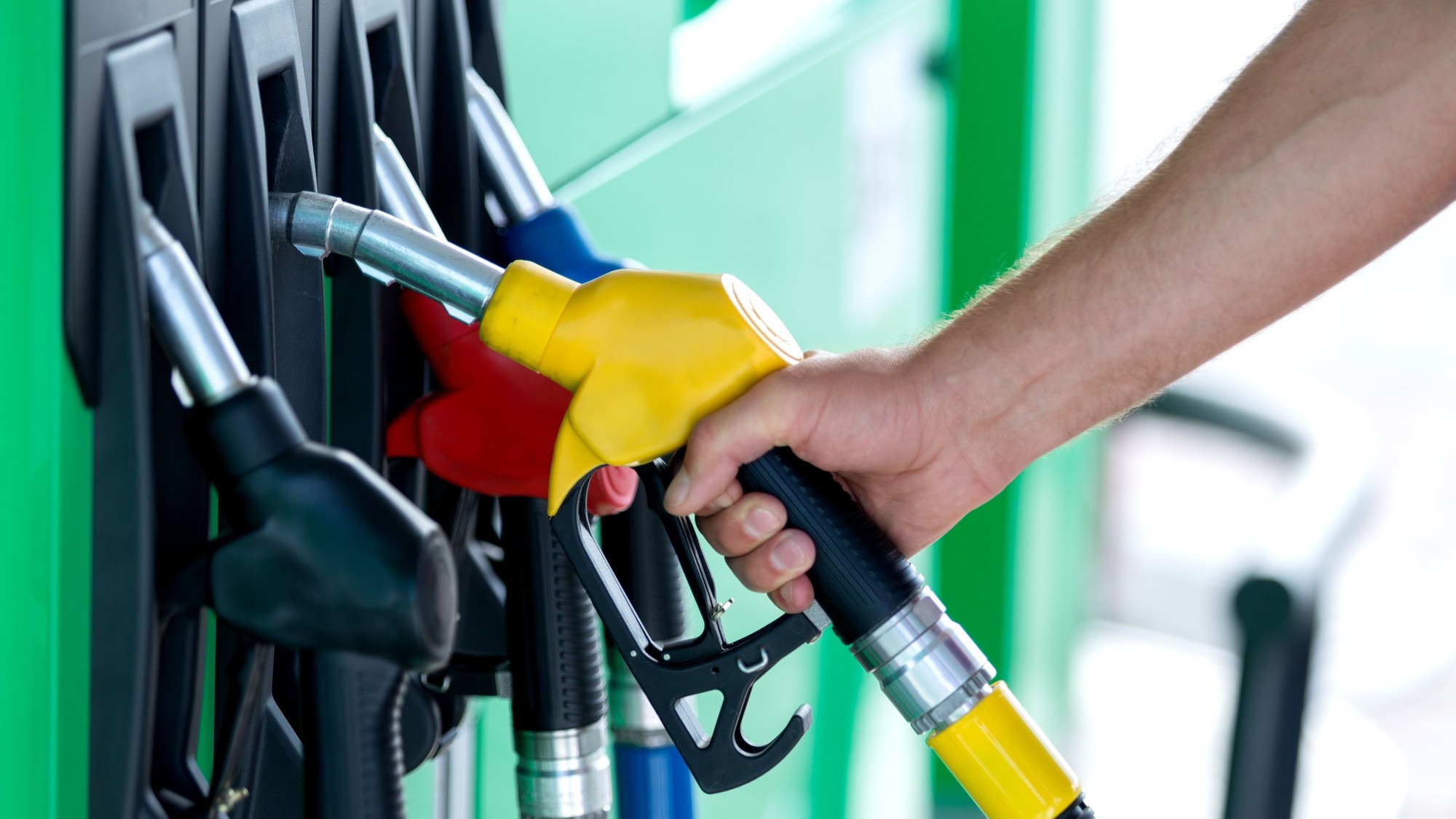
The last time Americans saved this little of their paychecks, the economy was sliding into the worst recession in a generation. In March 2026, the personal saving rate dropped to 3.6%, according to the Bureau of Economic Analysis, the lowest reading since December 2007. But unlike a typical consumer boom, the culprit was not a wave of new TVs, vacations, or restaurant tabs. It was the rising cost of necessities, led by gasoline, eating into household budgets before families could decide how to spend.
The numbers behind the squeeze
Personal saving totaled $857.3 billion in March, down from a revised figure that produced a 3.9% rate just one month earlier. A full three-tenths-of-a-point decline in a single reporting cycle signals real stress, not seasonal noise.
The mechanics are straightforward. Personal income grew 0.5% in March, a gain that barely kept pace with inflation. Nominal personal consumption expenditures rose faster: the BEA’s March release shows current-dollar PCE up 5.3% from a year earlier, a figure that has not been adjusted for price changes. Some of that increase captures higher prices rather than higher volumes of goods and services purchased. When spending outpaces earnings by that margin, the saving rate contracts almost automatically.
What matters is where the money went. The BEA’s consumer spending tables show that energy-related outlays have been among the most volatile components of personal consumption in recent quarters, swinging more sharply than categories like clothing, electronics, or dining. Gasoline prices, tracked weekly by the Energy Information Administration, climbed through much of early 2026. Households paid more at the pump even if they did not buy an extra gallon. That kind of price-driven spending inflates total outlays without reflecting any change in consumer appetite.
Why gas prices hit harder than a shopping spree
There is an important distinction between spending more because you want to and spending more because you have to. A family that upgrades to a bigger car is making a choice. A family paying more per gallon for the same commute is not. The EIA’s weekly survey showed the national average for regular gasoline rising through the first quarter of 2026, a climb that added dollars to every fill-up without putting a single new mile on the odometer. Both types of spending show up identically in the national consumption figures, but only one signals confidence.
The most granular monthly spending data lives in the BEA’s NIPA Table 2.4.5U, and finer commodity-level detail lags by several weeks. But the pattern is consistent with what economists have observed in prior periods of elevated fuel costs: nominal spending rises, the saving rate falls, and the headline numbers can make it look like consumers are on a tear when they are actually just absorbing higher bills.
Tariff-related price pressures add another layer. The 25% duties on imported automobiles and auto parts that took effect in early 2025, along with broader tariffs on Chinese-manufactured goods, have nudged up costs across supply chains, compounding the effect of energy prices. Disentangling how much of the spending increase traces to fuel, how much to tariff pass-throughs, and how much to genuine discretionary purchases will require more detailed data in the months ahead. But the direction is clear: a growing share of household spending is going toward costs that feel mandatory, not optional.
The 2008 comparison, and its limits
Calling this the lowest saving rate since the pre-recession period is accurate based on the BEA’s historical time series, published through the Federal Reserve Bank of St. Louis’s FRED database. The saving rate dipped below 3.5% in the months before the Great Recession, a period when housing wealth was evaporating and consumer credit was stretched to the breaking point.
The comparison is useful but imperfect. In 2008, the low saving rate coincided with collapsing asset values and a banking crisis. In 2026, the labor market remains relatively firm, unemployment is historically low, and household balance sheets are not weighed down by the same kind of toxic mortgage debt. The danger is different: not a financial system on the verge of failure, but a slow erosion of household buffers driven by costs that workers cannot easily avoid.
One parallel does hold. Oil prices spiked above $140 a barrel in the summer of 2008, and fuel costs played a role in compressing household budgets then, too. The broad strokes rhyme, even if the underlying financial conditions do not.
What a sub-4% saving rate actually means for households
Before the pandemic, the saving rate hovered around 7% to 8%. The stimulus-fueled spike above 30% in 2020 was an anomaly, but even after that cash was spent down, rates stayed in the 4% to 5% range through much of 2024. Dropping below 4% marks a meaningful shift.
At 3.6%, the average household is setting aside roughly $3.60 of every $100 in after-tax income. That leaves almost no margin for an unexpected car repair, a medical bill, or a job loss. The Federal Reserve’s most recent Survey of Household Economics and Decisionmaking, published in 2025, found that more than a third of adults still could not cover a $400 emergency expense entirely with cash or its equivalent. A falling saving rate makes that vulnerability worse.
Mark Zandi, chief economist at Moody’s Analytics, described the combination of sticky fuel costs and soft wage growth as “squeezing middle-income households from both sides” in public remarks in late April 2026. His assessment tracks with what the BEA data shows: income is not falling, but it is not rising fast enough to absorb the higher cost of essentials.
What would turn the saving rate around
For policymakers and households alike, the question is whether income growth can catch up. Wage gains have been positive but modest, and inflation, while cooler than its 2022 peak, has not retreated enough to give consumers meaningful relief. Meanwhile, Federal Reserve data on revolving credit has shown steady growth in outstanding balances, suggesting that some households are borrowing to maintain their standard of living rather than cutting back. That is a pattern that can persist for months but not indefinitely.
If gas prices stabilize or fall through the summer, the saving rate could recover. If they do not, or if tariff costs continue to filter through to retail prices, March’s 3.6% may turn out to be a waypoint rather than a floor.
The national accounts do not distinguish between a dollar spent eagerly and a dollar spent reluctantly. Both count the same in the GDP calculation, and both reduce the saving rate by the same amount. That is why the March data deserves careful reading. A 3.6% saving rate driven by voluntary consumption would suggest an economy full of confident spenders. A 3.6% rate driven by gas prices and rising essentials tells a different story: households running harder just to stay in place. Americans are not saving less because they feel rich. They are saving less because filling the tank costs more than it used to.