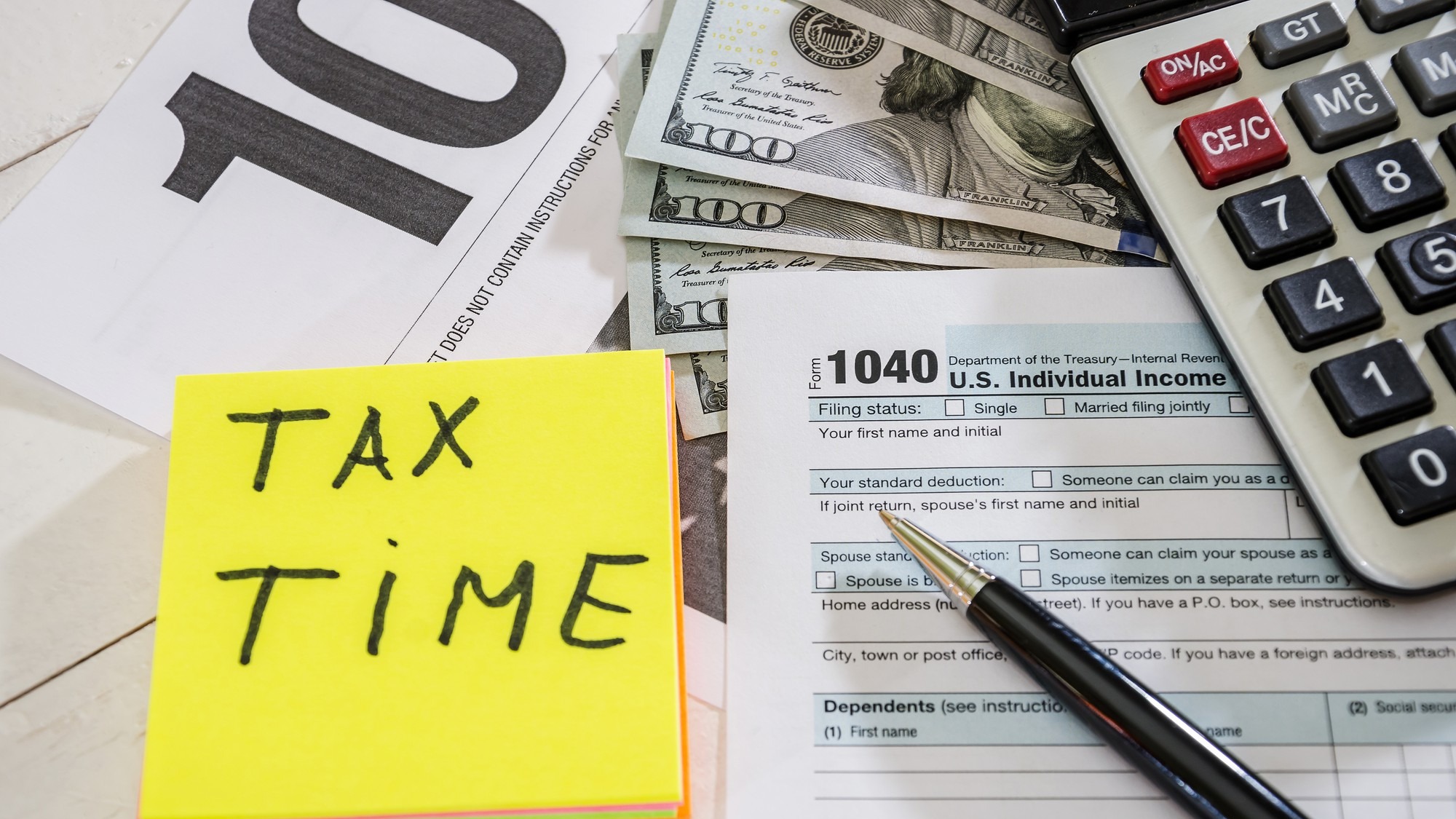
A full-time server at a busy steakhouse pulling in $800 a week in tips just got a reason to pay closer attention to her tax return. Under the One Big Beautiful Bill Act, signed into law on July 4, 2025, tipped workers can deduct up to $25,000 in tip income from their federal income taxes each year through 2028. For someone whose taxable income falls in the 22% federal bracket, that deduction is worth roughly $5,500. At the 12% bracket, where many tipped workers actually land, the maximum benefit comes to about $3,000, still a meaningful number for households whose base wages often sit well below the national median.
The provision is codified in the Internal Revenue Code and applies to tax years 2025 through 2028. But the details matter more than the headline, and several of them cut against the “no tax on tips” slogan that helped sell the idea politically.
Who qualifies and what counts
The Treasury Department and IRS published final regulations in the 2026-18 Internal Revenue Bulletin laying out eligibility and definitions. “Qualified tips” include voluntary customer payments made in cash, by credit or debit card, or through mobile payment apps like Venmo or Apple Pay. Non-cash items such as gift cards or event tickets do not qualify. Tips received through tip-pooling or tip-sharing arrangements do count, so a busser who takes home a share of pooled gratuities can claim the deduction on that income.
The IRS identified more than 70 occupations in which workers “customarily and regularly” receive tips and are therefore potentially eligible. The list spans restaurant servers, bartenders, hair stylists, valets, tattoo artists, and dozens of other service roles. Workers in those occupations report tips through a W-2, various 1099 forms, or Form 4137 (Social Security and Medicare Tax on Unreported Tip Income). The deduction is available only for tips that are properly reported as income, and filers claim it on a new line within Schedule 1 of Form 1040, following instructions the IRS released alongside the final regulations.
Because the law was signed partway through 2025, some workers who filed their 2025 returns before the IRS published guidance may have missed the deduction entirely. The agency has confirmed that those filers can submit an amended return using Form 1040-X to capture the benefit retroactively.
The payroll tax catch
Here is the detail that undercuts the political shorthand: the deduction reduces federal income tax only. Social Security and Medicare withholding on reported tips, the combined 7.65% employee share, stays the same. A server claiming the full $25,000 deduction still owes roughly $1,913 in payroll taxes on that income. The gap between “no tax on tips” and “reduced income tax on tips” is not trivial, and it has generated real confusion among workers and employers trying to understand what the law actually does.
How the phaseout narrows the benefit
The deduction is not a flat entitlement for every tipped worker regardless of earnings. It begins to phase out at higher income levels, with modified adjusted gross income (MAGI) thresholds that differ for single and joint filers. According to IRS explanatory guidance, the phaseout is designed to concentrate relief on lower- and middle-income workers who depend on tips as a large share of their total pay. The IRS guidance describes the income range over which the deduction is reduced but, as of June 2026, the agency has not published a standalone table listing the exact MAGI thresholds for each filing status. Above the specified income range, the maximum $25,000 deduction shrinks dollar for dollar until it disappears entirely.
That structure creates a particular squeeze for workers in high-cost metropolitan areas. A bartender in Manhattan or San Francisco may cross the phaseout threshold faster because menu prices and tipping norms push gross income higher, even though rent-adjusted living standards may mirror those of a lower-earning counterpart in a smaller city. Tax practitioners have flagged this dynamic as one that could blunt the benefit for the very workers whose entire compensation model revolves around gratuities. As of June 2026, neither the Treasury Department nor the Congressional Budget Office has published a formal distributional analysis of the provision.
The standard deduction question
One point worth clarifying: the tip deduction is an “above-the-line” adjustment to gross income, not an itemized deduction. That means workers can claim it regardless of whether they take the standard deduction or itemize. For the majority of tipped workers who rely on the standard deduction, this is critical. The $25,000 tip deduction stacks on top of it, reducing adjusted gross income before the standard deduction is even applied. Without that structure, the provision would have been largely useless to the workers it was designed to help.
Open questions on compliance and state treatment
Several practical issues remain in play. The IRS has not released data on how many workers across those 70-plus occupations are likely to claim the deduction or what their average annual tip income looks like. Without that baseline, estimating the provision’s total fiscal cost or its real-world reach is difficult. A full-time server at a high-volume urban restaurant could approach the $25,000 cap without difficulty, while a part-time barista in a smaller market might earn $5,000 or less in annual tips and see a proportionally modest tax cut.
Compliance is another open question. Because the deduction is tied to reported tips, some tax professionals worry it could encourage workers or employers to reclassify base wages or overtime as tip income to inflate the deductible amount. Others argue that the requirement to document tips on W-2s and related forms will actually improve reporting accuracy by giving workers a financial incentive to declare every dollar. The IRS has not announced any targeted audit programs or data-matching initiatives focused on tipped occupations, leaving the enforcement posture unclear.
State-level treatment adds another layer. The tip deduction is a federal provision and does not automatically carry over to state income tax returns. States that conform to the federal definition of adjusted gross income on a rolling basis may adopt the deduction by default. States that selectively decouple from federal changes could choose not to recognize it at all. Until individual state legislatures and revenue departments issue their own guidance, many workers will not know whether they will see parallel savings on their state returns.
What happens after 2028
The tip deduction sunsets at the end of tax year 2028 unless Congress acts to extend it. That three-year window gives lawmakers time to evaluate the provision’s cost and effectiveness, but it also means tipped workers cannot count on the deduction as a permanent feature of the tax code. Whether Congress renews it may depend on how many workers actually claim the benefit, how much revenue the Treasury forgoes, and whether the provision becomes a campaign issue in the 2028 election cycle.
Tax advisers recommend that tipped workers focus on meticulous recordkeeping now: maintaining daily logs of cash and electronic tips, retaining statements from tip pools, and confirming that year-end tax forms reflect those amounts accurately. Workers whose 2025 returns did not include the deduction should weigh the cost of filing an amended return against the potential savings, especially if their annual tips approach the $25,000 ceiling.
Why the records you keep determine the refund you get
The “no tax on tips” promise, as enacted, is real but bounded. It delivers a meaningful income tax cut for millions of service workers while leaving payroll taxes untouched, phasing out for higher earners, and expiring in three years. The server at that steakhouse stands to keep thousands more of her tip income each year, but only if she reports it, documents it, and files for the deduction. The law opened the door. The paperwork is what walks her through it.