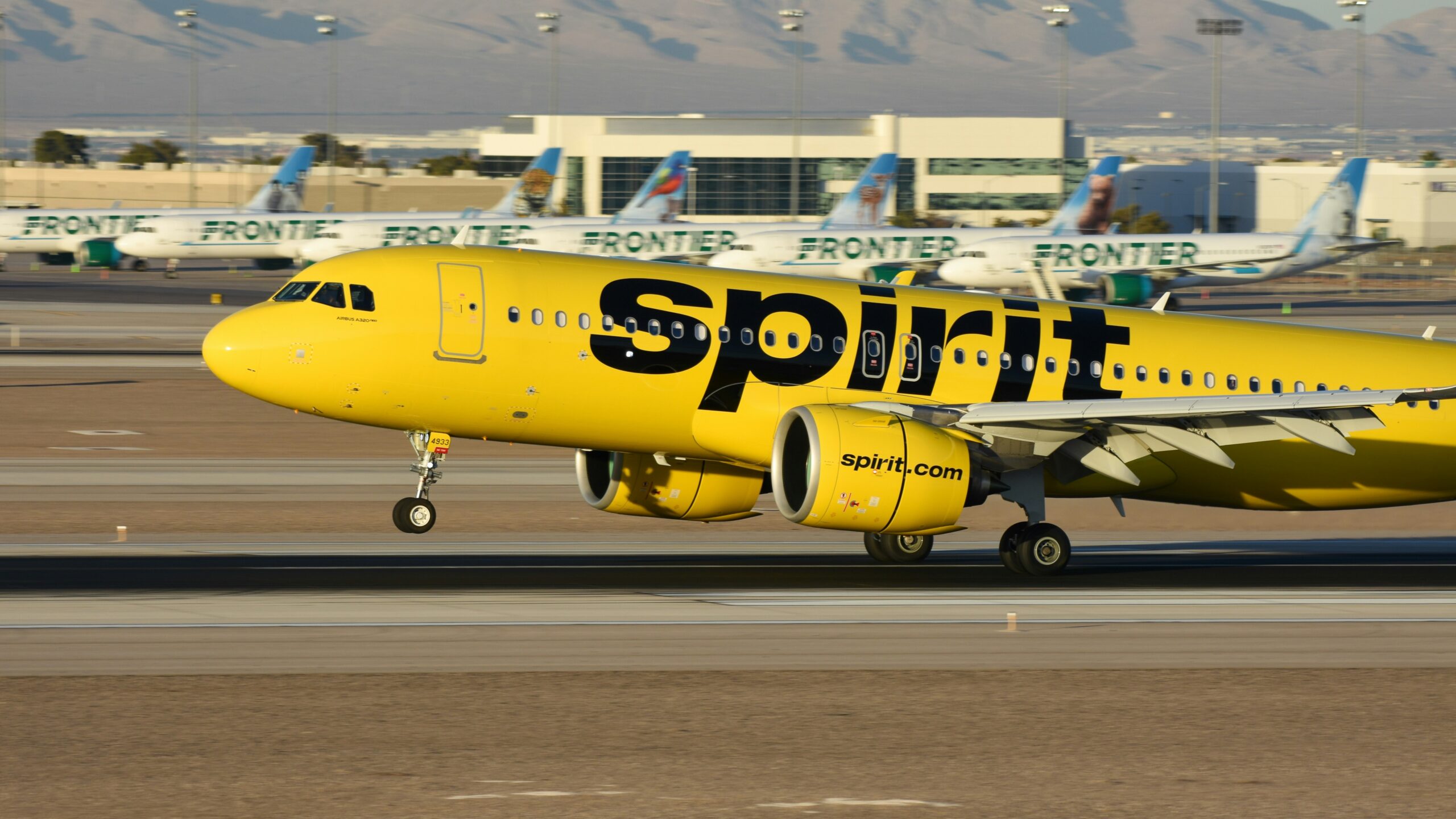
A round-trip flight from Fort Lauderdale to Detroit on Spirit Airlines used to run about $120 in the off-season. That fare no longer exists. Neither does the airline that offered it, at least not in any form most travelers would recognize.
Spirit’s financial collapse across 2024 and 2025 ripped more than 200 routes and roughly 300 daily flights out of the domestic air network, according to the company’s audited 10-K annual report filed with the SEC. The airline abandoned 14 cities entirely. And the pricing impact is no longer theoretical: average fares on routes Spirit once served have risen approximately 14% compared with the same periods a year earlier, based on the U.S. Department of Transportation’s Airline Origin and Destination Survey, the federal government’s most granular tool for tracking what passengers actually pay at the route level.
Early booking data for the June-through-August peak season points to increases of 25% or more on some of Spirit’s former corridors, though that figure is based on real-time fare searches rather than completed DOT survey releases, which lag by several months.
How Spirit’s collapse reshaped the route map
Spirit’s unraveling happened in two stages. The airline filed for Chapter 11 bankruptcy protection in November 2024 in the U.S. Bankruptcy Court for the Southern District of New York, weighed down by roughly $3.3 billion in debt, rising fuel costs, and a post-pandemic squeeze that hit ultra-low-cost carriers harder than legacy airlines. It emerged from that initial restructuring in early 2025 with a slimmed-down schedule, but the recovery never took hold. By the second half of 2025, Spirit entered a second Chapter 11 proceeding, and the route cuts accelerated.
The 10-K filing describes the result in corporate language: Spirit “strategically reduced and re-worked its route network.” In practice, the largest ultra-low-cost carrier in the United States effectively dismantled the network it had spent two decades building. Spirit’s presence on a route had long functioned as a price anchor. When it sold seats for $49 or $79, competitors had to respond, either by matching those fares on certain days or by offering bundled deals that came close. That downward pressure is now gone on more than 200 routes, and the remaining carriers have little reason to replace it voluntarily.
Where travelers are paying more
The 14% average increase masks wide variation. Routes where Spirit held a large share of seats, particularly leisure corridors connecting South Florida, Las Vegas, and mid-size airports across the South and Midwest, are seeing the steepest jumps. On some of those routes, Spirit was one of only two or three airlines offering nonstop service. With that competition removed, the surviving carriers can price more aggressively without losing passengers to a cheaper alternative.
The impact falls hardest on the travelers Spirit was built to serve: families stretching a vacation budget, college students flying home on tight timelines, retirees who planned entire travel patterns around sub-$100 fares. For a family of four booking a summer trip, a 14% fare increase across four round-trip tickets can add $200 to $400 to the total cost. That is real money, and it comes on top of broader inflation in hotels, rental cars, and airport food.
Will competitors fill the gap?
So far, only partially. Frontier Airlines, Spirit’s closest competitor in the ultra-low-cost segment, has picked up some former Spirit routes but has not signaled an aggressive expansion. Frontier is managing its own cost pressures and appears focused on profitability over market-share grabs. Southwest Airlines, historically a value-oriented carrier, has been pulling back from smaller cities rather than pushing into them. Allegiant and Avelo, two smaller ultra-low-cost carriers, operate on a more limited scale and lack the fleet size to absorb Spirit’s former footprint.
No major carrier has publicly announced a large-scale push into former Spirit markets as of June 2026. Airlines may be quietly repositioning aircraft to test demand on some of those routes, but until those moves show up in published schedule filings or quarterly earnings calls, the competitive picture remains thin. If carriers prioritize revenue per available seat mile over passenger volume, the current fare increases could harden into a new pricing floor rather than fading as a temporary disruption.
Why the 25% summer figure is plausible but not final
The 14% increase draws from mandatory airline filings processed through the DOT’s Origin and Destination Survey, which collects a 10% sample of all domestic tickets sold. That dataset is the industry standard, and it gives the number real weight. The 25% summer projection is less certain. It is based on fare snapshots from booking platforms and early-season pricing trends reported by travel industry outlets and local news organizations covering affected markets. Those sources reflect what travelers are seeing in real time, but they have not been validated against a completed quarterly DOT release.
Several forces will determine where the final number lands. Jet fuel prices, which remain volatile heading into summer 2026, directly affect how airlines price discretionary leisure routes. Strong travel demand, which most industry forecasters expect this summer, gives carriers less incentive to discount. A surprise competitive entry, say Frontier launching a dozen new routes with $39 introductory fares, could pull the average down. But absent that kind of move, the trajectory points upward.
How budget travelers can protect themselves
Travelers who built their plans around Spirit’s pricing have fewer options, but not zero. Booking summer trips earlier than usual remains the single most effective way to avoid the steepest increases; airlines typically raise fares on popular leisure routes as departure dates approach and seats fill. Comparing prices directly on airline websites, not just through aggregators, can surface fares that third-party platforms miss or mark up. Shifting departure days to Tuesday or Wednesday can cut 10% to 20% off peak-day pricing even in a tighter market.
It is also worth monitoring route announcements from Frontier, Allegiant, and Avelo. When any carrier launches new service on a route, introductory pricing often undercuts the market for the first few weeks or months. Setting fare alerts on Google Flights or similar tools for specific city pairs can flag those windows before they close.
A pricing shift that outlasts the airline
None of those tactics fully replaces what Spirit provided at scale. For nearly two decades, the airline’s willingness to fly packed planes at razor-thin margins kept fares lower across hundreds of domestic markets, not just on its own flights but on every competitor’s flights that overlapped with its routes. That competitive effect is what economists call a “fare umbrella,” and Spirit held it open wider than any other U.S. carrier.
With Spirit’s network largely dismantled, the umbrella has closed on more than 200 routes. The DOT data arriving over the next two quarters will quantify the full extent of the damage. For millions of budget-conscious travelers, the numbers will confirm what their credit card statements already show: flying cheap in America just got meaningfully more expensive.