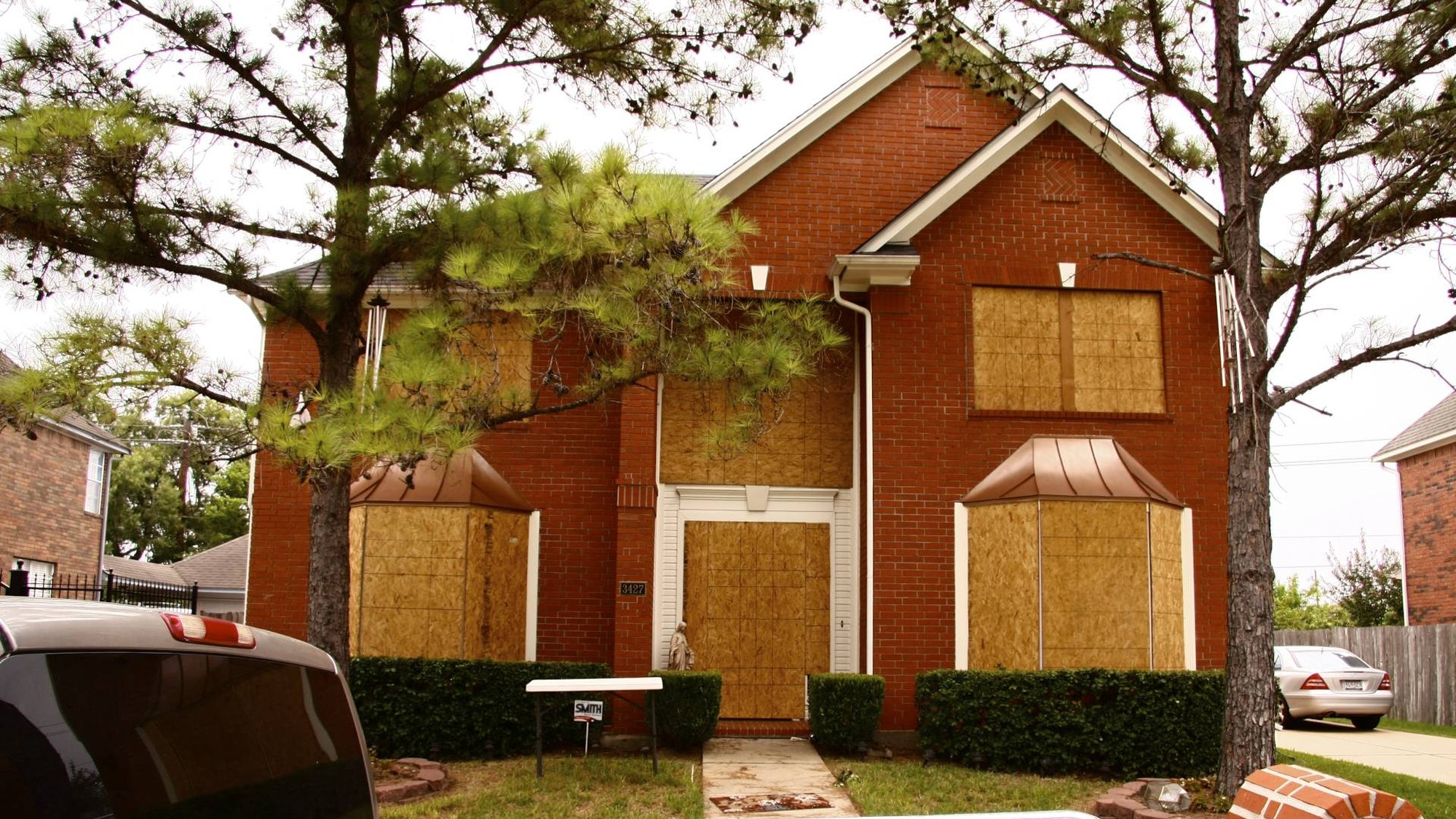
When a Fort Myers, Florida, homeowner locked in a 3.2% fixed-rate mortgage in 2021, her monthly payment was supposed to stay predictable for 30 years. It didn’t. After her insurer pulled out of the state following Hurricane Ian, her replacement policy came in at nearly triple the original premium. Her escrow payment jumped more than $400 a month. She wasn’t behind on her mortgage. She was behind on the cost of keeping it. (This account is a composite based on patterns widely reported by housing counselors and insurance agents in southwest Florida; no individual case file is cited.)
Stories like hers have become common enough to show up in national data. Foreclosure filings in the first quarter of 2025 reached 118,727 properties, the highest quarterly total since early 2019, according to ATTOM’s Q1 2025 U.S. Foreclosure Market Report. Bank repossessions, the final stage of the process, surged 45% compared with the same quarter a year earlier. More than a year later, the trend those numbers signaled has only sharpened. ATTOM’s subsequent quarterly reports showed foreclosure starts remaining above pre-pandemic norms through the end of 2025 and into early 2026, with housing analysts and mortgage servicers increasingly pointing to a cause that has nothing to do with bad loans: the rising cost of insuring a home in a country battered by hurricanes, wildfires, and floods.
The insurance squeeze behind the numbers
The mechanics are straightforward, even if the consequences are not. The Government Accountability Office’s 2024 report on climate-related financial risks found that homeowners insurance costs in disaster-prone regions have outpaced broader inflation by a wide margin. Florida, California, Louisiana, and stretches of the Gulf Coast and Mountain West bore the sharpest increases. In Florida alone, the average annual premium exceeded $4,200 by late 2024, according to the Insurance Information Institute, roughly triple the national average.
Those higher premiums don’t stay on a separate bill. For the roughly 80% of mortgage holders whose insurance is bundled into an escrow account, according to the Consumer Financial Protection Bureau, any rate hike translates directly into a larger monthly payment. A $2,000-a-year premium increase adds about $167 a month to the housing bill on top of principal, interest, and property taxes. For households already stretching to afford a home, that kind of jump can be the difference between staying current and falling behind.
The Federal Reserve’s Survey of Household Economics and Decisionmaking (SHED) asks respondents whether they had difficulty meeting monthly housing costs. A meaningful share of homeowners reported such difficulty even when their base mortgage terms had not changed. The Fed’s data does not isolate insurance as a single cause or break out individual escrow line items, but it documents the cumulative burden that rising fixed costs place on household budgets.
Why this wave looks different from 2008
During the subprime crisis, the foreclosure pipeline was fed by adjustable-rate mortgages resetting to unaffordable levels, loans made to borrowers who couldn’t document income, and a housing bubble that left millions underwater. Lending standards tightened dramatically after the Dodd-Frank reforms of 2010, and the mortgages originated in the 2020s are, on paper, among the strongest in modern history. Average credit scores at origination are higher, debt-to-income ratios are tighter, and the vast majority of recent loans carry fixed rates.
That is precisely what makes the current trend so unsettling. The borrowers entering foreclosure are not, by and large, people who took on loans they couldn’t afford. Many are homeowners whose original budgets were sound but whose carrying costs shifted beneath them. When an insurer exits a state or reprices a policy after a catastrophic loss year, the homeowner has little leverage: pay the new rate, find a more expensive surplus-lines policy, or risk losing coverage entirely, which itself can trigger a mortgage default under most loan agreements.
In Louisiana, where hurricanes Laura, Delta, Zeta, and Ida struck between 2020 and 2021 alone, more than a dozen property insurers went insolvent or withdrew from the market, according to the Louisiana Department of Insurance. Homeowners pushed onto the state’s insurer of last resort, Louisiana Citizens, often saw premiums double or triple. Similar dynamics played out in California, where insurers including State Farm and Allstate paused or restricted new homeowners policies in wildfire-prone areas in 2023, funneling thousands of residents into the state’s FAIR Plan at higher rates.
What the data proves and where the gaps remain
It is worth being precise about what the evidence supports and where it falls short. The GAO establishes that insurance costs are rising fastest in climate-exposed regions. The Fed confirms that total housing-payment stress is a growing burden. ATTOM’s data shows foreclosure activity climbing to levels not seen since before the pandemic. The logical thread connecting these findings is strong: when the non-mortgage costs of owning a home spike, some owners can’t keep up.
But no published study has yet isolated insurance premiums as the dominant variable behind the Q1 2025 foreclosure surge while controlling for unemployment, medical debt, interest-rate resets on older adjustable loans, or other financial shocks. Regional breakdowns are also incomplete. The GAO flags that some states bear disproportionate insurance burdens, but it does not publish a state-by-state foreclosure correlation table. Without that granularity, it is difficult to confirm whether the spike was concentrated in the same disaster-prone markets where premiums jumped or whether it spread more broadly.
Rick Sharga, founder of CJ Patrick Company and a longtime housing-market analyst, told multiple outlets in 2025 that insurance and property-tax increases were becoming “a hidden driver” of mortgage distress, particularly in states where climate risk had repriced coverage. His assessment aligns with what servicers are seeing on the ground: borrowers who were never late on a payment suddenly falling behind after an escrow adjustment they didn’t anticipate.
The most defensible reading of the available evidence is that insurance has become a significantly more important part of the foreclosure equation. It has not replaced all other factors, but it has added a new and growing source of pressure that existing safety nets were not designed to catch.
What comes next for homeowners and the market
For families in high-risk regions, the old rule of thumb that a fixed-rate mortgage equals predictable payments no longer holds. Budgeting for homeownership now requires stress-testing insurance and property-tax costs, particularly in areas facing repeated climate disasters. Homeowners who haven’t reviewed their escrow statements recently may be caught off guard by adjustments already baked into their next payment cycle.
For policymakers, the data points toward targeted interventions rather than broad fixes. Strengthening state insurance oversight, expanding reinsurance backstops for high-risk markets, and offering temporary escrow relief in federally declared disaster zones could blunt the sharpest edges of the premium shock without masking deeper affordability problems. Florida passed insurance-market reforms in late 2022 and 2023 aimed at reducing litigation costs and attracting insurers back to the state; California’s insurance commissioner moved in 2024 to allow insurers to use forward-looking catastrophe models in rate-setting. The effects of both efforts are still filtering through to household budgets.
For mortgage servicers, the shift suggests that monitoring escrow changes and reaching out to borrowers when bills spike may be as critical as tracking interest-rate resets. Early intervention, whether through payment restructuring, insurance-shopping assistance, or connecting homeowners with state hardship programs, could prevent some filings from reaching the repossession stage.
A foreclosure crisis the lending system didn’t cause
The foreclosure wave that surfaced in early 2025 is not a replay of 2008. The loans are sound. The houses are standing. But the cost of protecting them has become, for a growing number of Americans, the thing that takes them away. That disconnect between mortgage quality and foreclosure risk is new territory for the housing market, and as of mid-2026, neither federal policy nor the private insurance industry has closed the gap.