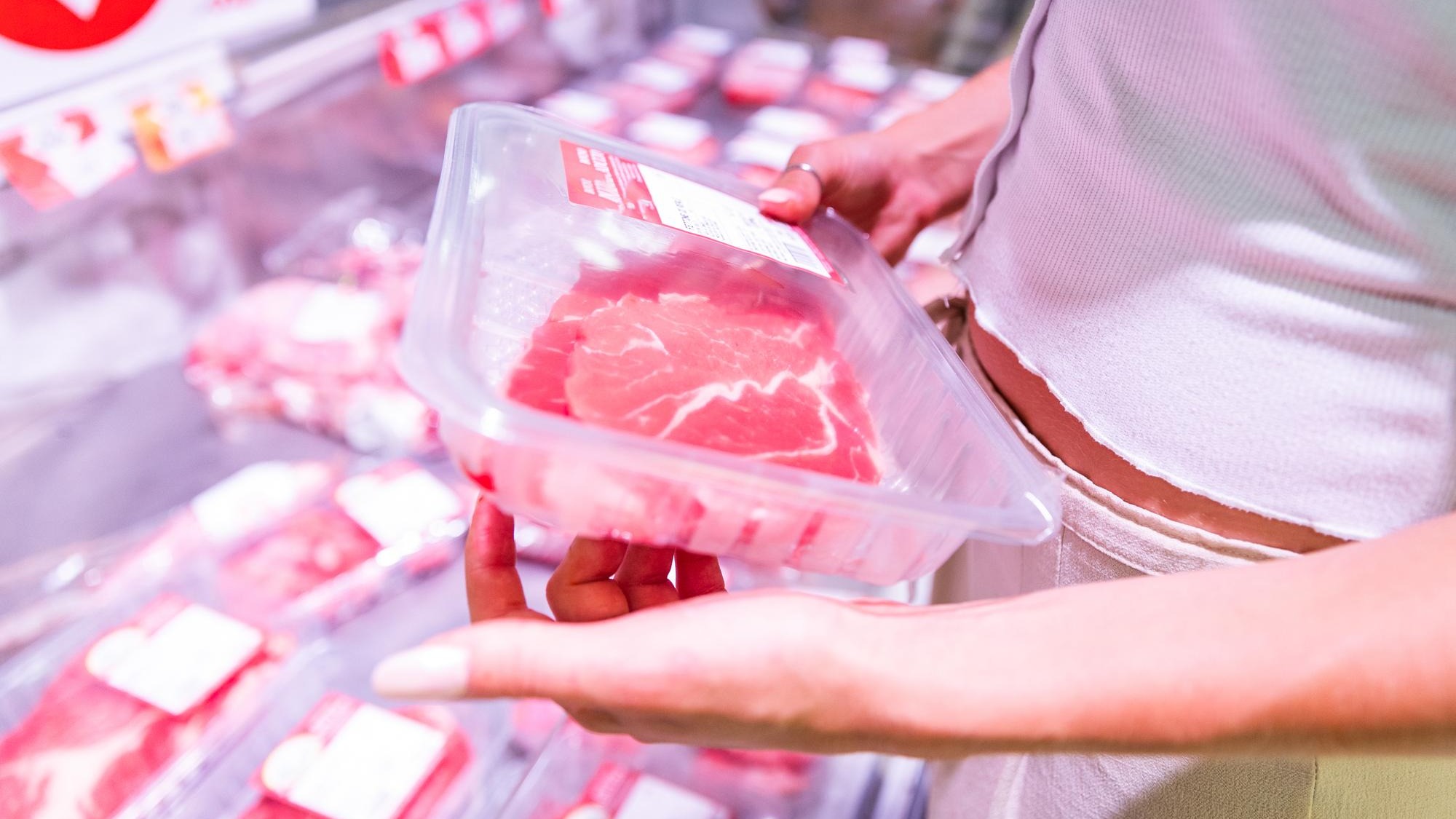
Three pounds of ground beef for taco night, weeknight burgers, and a pot of pasta sauce. That weekly shopping list now runs about $20, up from roughly $15 two years ago, because a pound of regular ground beef has hit a price never recorded in more than four decades of federal tracking.
The Bureau of Labor Statistics average-price series for 100% ground beef, which dates to January 1984, reached $6.70 per pound in March 2026, the highest reading in the series’ 42-year history. As of late May 2026, that March figure represents the most recent available data point, and nothing in the trend suggests a reversal.
The number lands differently when you set it next to the rest of the grocery aisle. Food-at-home prices rose just 1.9% over the 12 months ending in March 2026, according to the BLS Consumer Price Index. Beef and veal surged 12.1% over the same stretch, more than six times the overall grocery rate. A shopper whose cart leans heavily on beef is living in a different inflation universe than the headline number implies.
The smallest cattle herd since 1951
The price tag at the meat counter starts with what is happening on ranches. On January 30, 2026, USDA’s National Agricultural Statistics Service reported that the U.S. cattle inventory as of January 1 had slipped again from the prior year. Placed on the agency’s long-run inventory chart, which tracks herd size back to the 1800s, the January 2026 count is the lowest since 1951. That is a 75-year low in the nation’s beef supply pipeline.
Fewer cattle moving through feedlots and packing plants means less beef reaching refrigerated cases. The math is straightforward: demand has held relatively steady while supply has contracted, and prices have responded accordingly. The month-by-month FRED data show the climb has been building for years, not arriving as a sudden spike. Ground beef averaged around $4.80 a pound in early 2022. The grind toward $6.70 has been steady and unrelenting.
Why ranchers keep selling instead of expanding
Prolonged drought across the country’s biggest cattle-producing states has been the dominant force. The U.S. Drought Monitor, a joint effort by USDA, NOAA, and the University of Nebraska-Lincoln, has documented severe to exceptional drought cycling through Texas, Kansas, and other Plains states over the past several years. When pastures dry up, ranchers face a brutal choice: buy expensive supplemental feed or sell animals they would otherwise keep for breeding. Most have chosen to sell, accelerating the herd drawdown.
Elevated feed costs have deepened the squeeze. When hay and grain prices are high, the economics of holding onto a cow through another calf season get harder to justify, particularly for smaller operations already running on razor-thin margins. The result has been years of liquidation rather than expansion.
Trade dynamics add another layer. The U.S. is both a major beef exporter and importer, and shifts in tariff policy or global demand can tighten or loosen domestic supply. In mid-2026, ongoing trade tensions have introduced uncertainty about how much imported beef (particularly from Australia and Brazil) will flow into the U.S. market to offset the domestic shortfall, and how much American beef will continue heading overseas to higher-paying buyers in Asia.
How shoppers are adjusting
When one protein gets expensive, grocery budgets tend to shift. Chicken and pork prices have also risen, but neither category has matched beef’s 12.1% annual jump. BLS data show poultry and pork climbing at rates closer to the overall food-at-home average, making them meaningfully cheaper on a relative basis.
The substitution effect is real but hard to quantify precisely. The CPI tracks prices, not purchase volumes, and official consumer-expenditure survey data covering this period have not yet been released. What grocery industry observers have noted is that chicken breast and pork shoulder have taken on larger roles in weekly meal planning for cost-conscious families, a pattern consistent with past beef price spikes.
Restaurants and foodservice operators are competing for the same shrinking supply, which adds upward pressure on retail prices. A fast-food chain buying millions of pounds of ground beef each month is bidding against the family at the supermarket, and both are drawing from a historically small pool of cattle.
The biological clock working against a quick fix
Rebuilding a cattle herd is nothing like restocking a warehouse shelf. A rancher who decides to expand must hold back heifers for breeding instead of sending them to slaughter. That decision removes animals from the near-term beef supply. A heifer needs about nine months of gestation, and her calf will take another 18 to 24 months to reach market weight. The full cycle from “let’s rebuild” to “more beef on shelves” spans roughly two to three years.
That biological lag means even if conditions improve soon, with better rainfall, cheaper feed, and favorable economics, retail prices would not feel meaningful relief until 2028 or later. The USDA Economic Research Service publishes directional guidance on food costs but has not issued a specific percentage forecast for beef and veal beyond the current reporting window. Weather, global trade flows, and feed-grain markets can all shift the trajectory, which is why agricultural economists generally avoid precise price targets more than a few quarters out.
A record price hiding inside a mild inflation number
A 1.9% rise in overall grocery prices sounds manageable, and for shoppers who eat little red meat, it may genuinely be. But beef remains one of the most purchased proteins in the country, and ground beef in particular is a staple in budget-conscious kitchens precisely because it stretches across so many meals. When that staple hits a record $6.70 a pound, the national average masks the inflation that millions of families feel every time they stand at the meat case.
The $6.70 figure is a nominal record, meaning it is not adjusted for the general rise in prices over the decades. The BLS average-price series does not publish a companion inflation-adjusted line, so whether ground beef has also reached a real-dollar record requires a separate calculation that the agency has not provided. What is clear is that even after accounting for broader inflation, ground beef has become substantially more expensive relative to other grocery items and relative to household incomes that have not kept pace with a 12.1% annual protein spike.
The federal data are clear on three points: beef prices are climbing far faster than the rest of the grocery basket, ground beef has never been more expensive in the 42-year nominal price series, and the cattle herd supplying it is the smallest it has been in 75 years. What remains genuinely uncertain is how long the squeeze lasts. Herd rebuilding is slow, trade policy is unsettled, and drought forecasts are inherently unpredictable. Until more cattle work their way through the supply chain, the price on America’s most popular ground meat is unlikely to come down in any meaningful way.