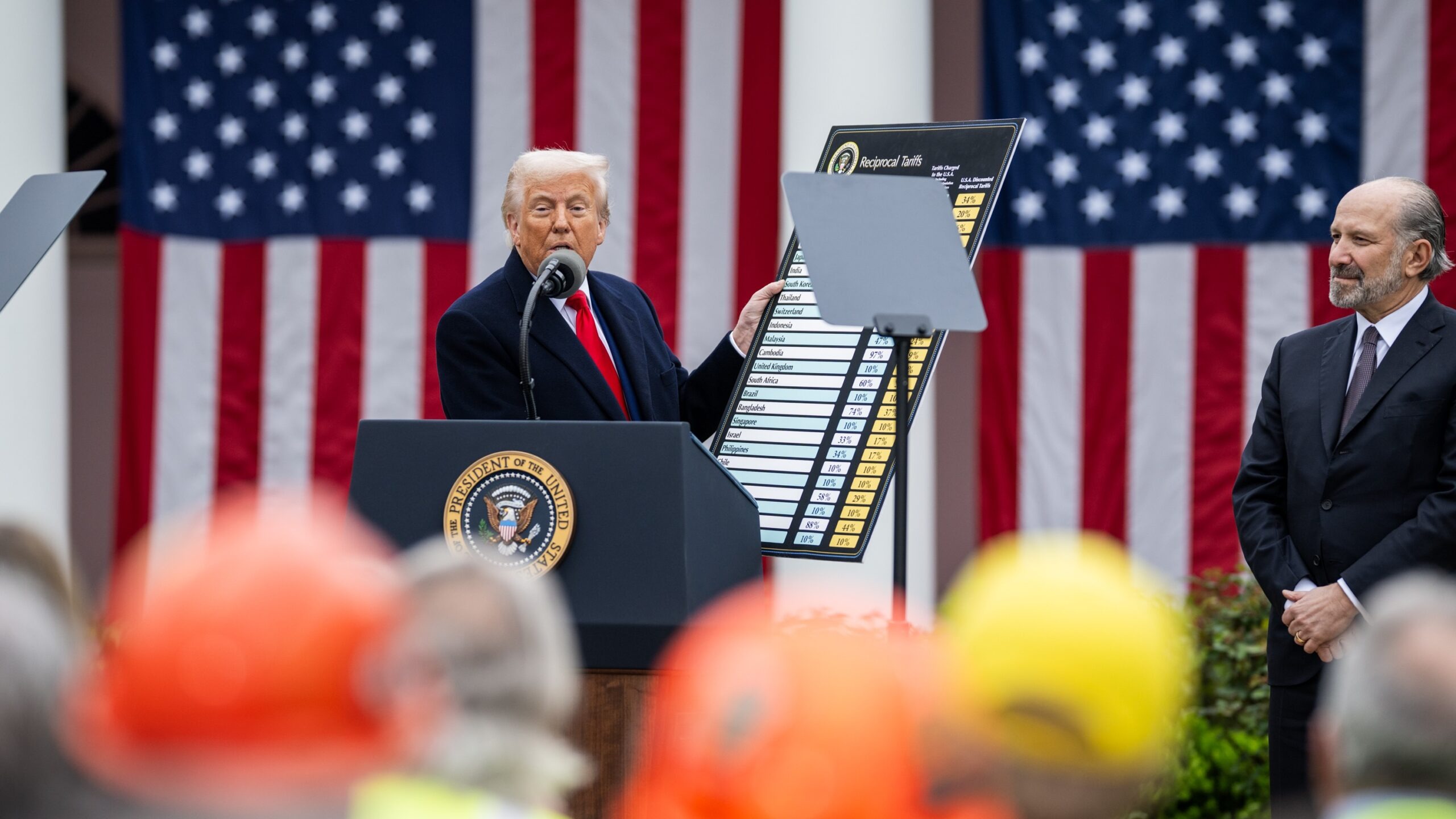
When the Supreme Court struck down tariffs imposed under the International Emergency Economic Powers Act this past February, Maria Delgado figured some relief was coming. The Houston mother of three had watched the price of her kids’ school supplies, shoes, and winter coats climb steadily over the past several years. “I kept thinking, these tariffs are supposed to be temporary,” she told a Consumer Federation of America listening session in April. “Now they say the tariffs were illegal. So where’s our money?”
She is not going to get it. Nobody in her position is.
In May 2026, the federal government began processing what could become one of the largest duty refund operations in modern U.S. history. Following the Court’s ruling in Learning Resources, Inc. v. Trump, importers across the country are filing claims to recover duties they paid while the now-invalidated levies were in effect. Some trade policy analysts have estimated the potential refund pool could reach tens of billions of dollars or more, though precise figures remain difficult to verify and no single published report has provided a definitive total. But every dollar of that is flowing to the companies that paid duties at the border, not to the families who ultimately absorbed the cost at the checkout line.
What the Supreme Court actually decided
The ruling was decisive. Writing for the majority, the justices held that IEEPA does not grant the president authority to impose tariffs, a power the Constitution reserves to Congress. The full opinion, published on the Supreme Court’s website, invalidated the duties and created a legal obligation for the federal government to return what it had collected.
That obligation, however, runs to importers, not to shoppers. Under federal customs law, the “importer of record” is the entity that pays duties when goods cross the border. When a court strikes down those duties, the refund goes to the same entity. U.S. Customs and Border Protection administers the process through its duty refund and protest mechanisms, which are built for trade participants: importers, exporters, and licensed customs brokers.
There is no line in that process for a parent who paid $12 more for a set of building blocks, or a small business owner who absorbed a 25% markup on imported steel parts.
How tariff costs landed on families
Tariffs function as a tax paid at the border, but the economic burden rarely stays there. Research from the National Bureau of Economic Research has consistently found that U.S. importers passed the vast majority of IEEPA-era tariff costs downstream. Wholesalers raised prices to retailers. Retailers raised prices to customers. By the time a tariff-affected product reached a store shelf or an online cart, the added cost was baked into the sticker price.
The Peterson Institute for International Economics estimated that tariffs on Chinese goods alone cost the average American household between $800 and $1,300 per year during peak enforcement, depending on income level and spending patterns. Multiply that across several years of collection, and the cumulative consumer burden runs well into the hundreds of billions of dollars, a figure that tracks closely with the refund pool now flowing back to importers.
Yet no federal system connects a specific duty payment at the port of Long Beach to a specific price increase at a store in Minneapolis. Customs records track shipments, classifications, and assessed duties. They do not track what happened to prices after the goods cleared the dock.
Why businesses collect and consumers do not
The gap is not an oversight. It is how trade law is designed.
Customs refund mechanisms exist to correct government overcharges against the parties the government directly charged. Importers have entry summaries, payment receipts, and Harmonized Tariff Schedule codes that tie their payments to specific shipments. That paper trail makes refund claims straightforward, at least for companies with well-organized compliance departments.
Consumers have none of that. A grocery receipt does not itemize how much of the price of a bag of coffee reflected tariff costs versus shipping, labor, or retailer margin. Even if Congress wanted to build a consumer rebate program, the data infrastructure to calculate individual household losses does not exist.
“The legal framework treats this as a government-to-importer transaction,” said Clark Packard, research fellow at the Cato Institute’s Herbert A. Stiefel Center for Trade Policy Studies. “There’s no mechanism in current law that traces the economic incidence of a tariff back to the end consumer and compensates accordingly.”
Scott Lincicome, vice president of general economics at the Cato Institute, has made a similar point in published analyses: the legal payer and the economic payer of a tariff are almost never the same party, but the law only recognizes the legal payer when it comes time to make things right.
Will companies lower prices?
Some might. There is no law requiring them to do so.
Once a refund lands on a company’s balance sheet, the company decides what to do with it. Options include reducing prices on affected products, returning capital to shareholders through buybacks or dividends, paying down debt, or simply holding the cash. Publicly traded importers may face pressure from investors to treat refunds as a windfall that boosts earnings rather than as a cost reduction to share with customers.
A handful of major retailers have reportedly lowered prices on select categories in early 2026, citing reduced input costs, though the scope and direct connection to tariff refunds remain unclear. Those moves were voluntary, limited, and difficult to separate from broader competitive dynamics or seasonal pricing shifts. No federal agency has announced plans to monitor whether refund recipients adjust consumer-facing prices, and no reporting requirement compels them to disclose how refund dollars are allocated.
Consumer advocacy groups, including the Consumer Federation of America, have called on Congress to create transparency requirements or a direct rebate mechanism. As of late May 2026, no legislation has been introduced.
What Congress could do, and what it has not done
Lawmakers have several options on paper. They could establish a consumer rebate fund using a portion of recovered tariff revenue. They could mandate that importers receiving refunds above a certain threshold demonstrate price pass-through to customers. They could redesign emergency economic powers to prevent future presidents from using IEEPA as a tariff tool, closing the legal gap the Supreme Court identified.
None of these proposals exist in bill form as of late May 2026. Congressional attention has been split among other economic priorities, and the political dynamics of tariff policy, which drew support from both parties at various points, make legislative action unpredictable. Several members of the Senate Finance Committee have made public statements acknowledging the consumer fairness issue, but statements have not translated into drafts.
Without new law, the default outcome is clear: importers recover their money, and the price increases consumers absorbed become a sunk cost with no remedy.
The timeline makes it worse
Even for businesses, refunds will not arrive overnight. Large-scale duty recovery after a Supreme Court ruling typically takes months to process, and complex claims can stretch into years. CBP must issue implementing guidance, review individual claims, and verify documentation. Companies may book expected refunds as receivables on their financial statements, but actual cash disbursements will roll out gradually through 2026 and likely into 2027.
For consumers, the timeline problem cuts deeper. Retail prices are sticky. They rise quickly when costs increase and fall slowly, if at all, when costs decrease. Economists call this “rockets and feathers” pricing, and it is well-documented in industries from gasoline to groceries. Consider a $40 toaster that climbed to $50 during the tariff years. Even if the importer’s costs drop back to pre-tariff levels, the retailer has little incentive to cut the price if customers are already paying $50 without complaint.
Even if some importers eventually pass savings along, the adjustment will likely be partial, delayed, and invisible to shoppers who will never know whether a price drop reflects a tariff refund, a supply chain improvement, or a clearance sale.
What the refund gap says about who pays for trade wars
The disconnect between who pays a tariff’s economic cost and who receives a refund when that tariff is struck down is not new. It surfaced in prior trade disputes, including challenges to Section 232 steel and aluminum duties. But the scale of the IEEPA refunds makes the gap impossible to wave away.
If the refund pool, potentially tens of billions of dollars or more, flows entirely to corporate balance sheets while the households that funded it through higher prices receive nothing, this episode will stand as one of the starkest illustrations of how trade policy costs are distributed in the American economy. The tariffs were collected from businesses but financed by consumers. The refunds reverse the collection but not the financing.
Maria Delgado, the Houston mother, put it more plainly at that April listening session: “They’re giving the money back to the companies. But the companies didn’t eat the cost. We did.”
Until Congress acts or companies voluntarily adjust prices, the system works exactly as designed: it charges families at the register and repays corporations at the border.