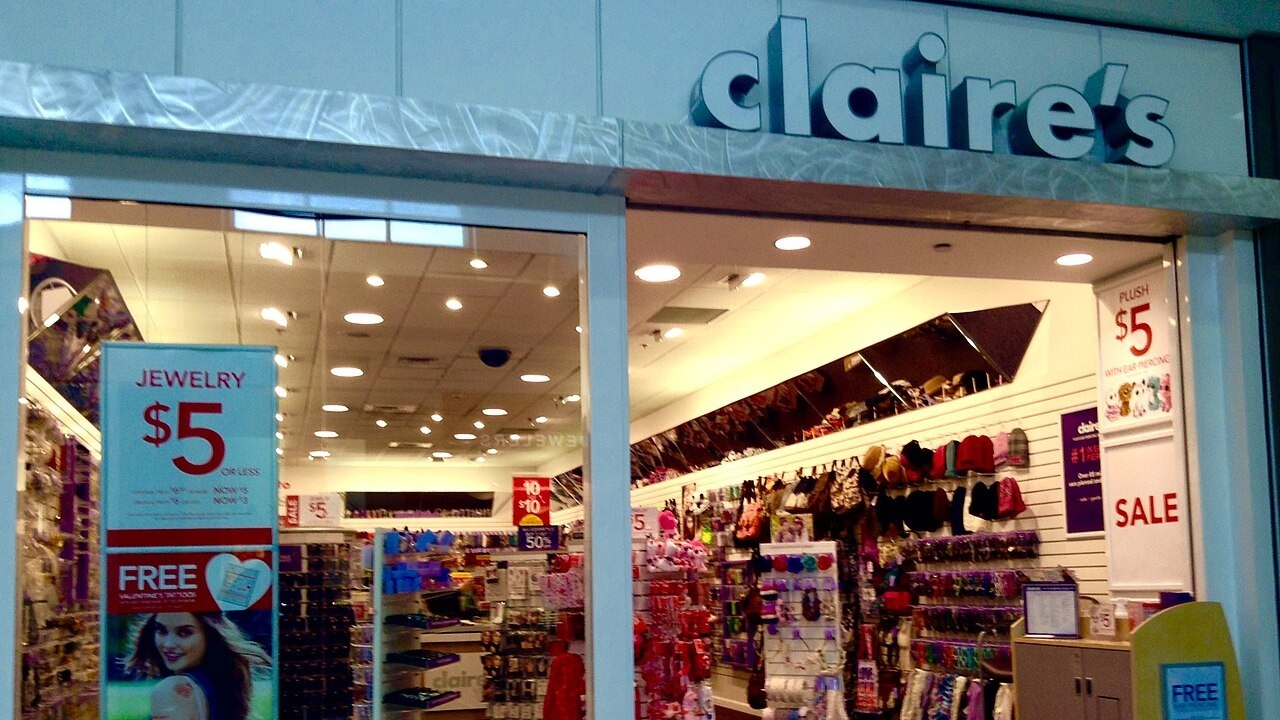
Claire’s, the accessories retailer known for ear piercings and jewelry aimed at teens and tweens, has filed for Chapter 11 bankruptcy protection for the second time in seven years. The company will close at least 18 U.S. stores as part of the restructuring. CEO Chris Cramer framed the filing as a move to maximize business value while operations continue, but the repeat bankruptcy raises hard questions about whether a mall-heavy retail model can survive when foot traffic keeps declining and younger consumers spend more online.
A second Chapter 11 filing and what it signals for Claire’s future
The company initiated voluntary Chapter 11 proceedings, stating the goal is to pursue strategic alternatives that preserve the business. Court documents are being made available through the Omni agent site for U.S. proceedings and the KSV monitor site for Canadian operations. Claire’s says it will keep stores open and continue paying employees during the process, a standard assurance in Chapter 11 cases designed to prevent an immediate customer and staff exodus.
But the fact that Claire’s is back in bankruptcy court so soon after its first filing tells a sharper story. The retailer emerged from its initial Chapter 11 in 2018 after shedding roughly $2 billion in debt accumulated during a leveraged buyout. That restructuring was supposed to give the company breathing room. Seven years later, the same tool is being used again, which suggests the underlying business has not generated enough cash or growth to stay solvent under its post-2018 capital structure.
One working theory worth tracking is that this second filing could accelerate a shift toward online-only or online-heavy sales channels faster than Claire’s own leadership projects. If the company sheds physical stores through bankruptcy, its e-commerce revenue share will rise by default. Quarterly reports filed during and after the proceedings will show whether that shift is strategic or simply the result of shrinking the store footprint. Readers who follow retail restructurings should watch for post-filing disclosures on channel-level revenue to gauge whether Claire’s is building a viable digital business or just contracting.
Store closures, executive statements, and the filing record
At least 18 U.S. locations are slated for closure, though the exact list of stores and a precise timeline have not been made public through the court filings referenced in the company’s announcement. That gap matters for employees and mall landlords who need to plan. Claire’s corporate statement confirmed the filing and included a quote from CEO Chris Cramer, who described the proceedings as a path to maximize value for stakeholders. The release did not detail the company’s total debt load, creditor composition, or projected timeline for exiting bankruptcy.
Independent reporting has confirmed the filing and placed it in the context of competitive pressures and broader economic factors weighing on brick-and-mortar retail. Claire’s operates in a segment where discretionary spending by younger consumers is especially sensitive to economic shifts, and where online competitors like Shein and Amazon offer similar products at lower prices with fast delivery. Coverage in the national business press underscores how this second trip to bankruptcy court reflects those pressures in concrete financial terms.
Open questions about jobs, leases, and what comes next
Several pieces of information that matter most to workers and landlords remain unresolved. Claire’s has not publicly specified how many jobs could be eliminated as part of the restructuring, beyond the positions tied directly to the 18 confirmed store closures. Store associates and field managers are left to infer their risk from local mall performance and the relative strength of nearby locations. Until a full store list appears in court filings or company disclosures, employees in marginal malls will have little clarity.
Lease negotiations are another major unknown. Many of Claire’s stores are located in traditional enclosed malls, a format already under strain from declining traffic. Chapter 11 gives the company leverage to reject or renegotiate leases that no longer make economic sense. Landlords, in turn, must weigh whether to offer rent reductions or other concessions to keep Claire’s as a tenant, or to gamble on finding a replacement retailer in a soft market for small-format fashion and accessories.
For creditors, the key questions revolve around how much of their claims will be repaid and in what form. The 2018 restructuring wiped out a large portion of the company’s legacy debt, yet the new filing indicates that the capital structure that replaced it has also become unsustainable. Secured lenders will look to the value of Claire’s remaining inventory, intellectual property, and profitable stores, while unsecured creditors may have to accept steep haircuts or equity stakes in a reorganized entity.
Customers may notice fewer locations and more promotional activity as Claire’s works to keep traffic flowing during the case. Gift cards, loyalty points, and ear-piercing services are expected to remain valid under the company’s current assurances, but shoppers in markets with only one nearby store could lose convenient access if that location lands on a closure list. At the same time, Claire’s has an incentive to push shoppers toward its website and any emerging partnerships or shop-in-shop concepts that require less fixed overhead than a traditional mall lease.
Ultimately, the second Chapter 11 filing forces a decision Claire’s avoided in 2018: whether it is primarily a mall-based chain that happens to sell online, or a youth-focused accessories brand that can meet customers wherever they are, including digital platforms and non-mall venues. The answer will become clearer as the court docket fills in with store lists, lease motions, and a proposed reorganization plan. Until then, employees, landlords, and customers are watching closely to see whether this restructuring marks a genuine reset or merely postpones a deeper reckoning with how much the retail landscape has changed.
Free tool for readers: It’s free, takes about five minutes, and there’s no sign-up to see your result: get your free Retirement Safety Score — a 0–100 number plus a few personalized steps for making your money last.