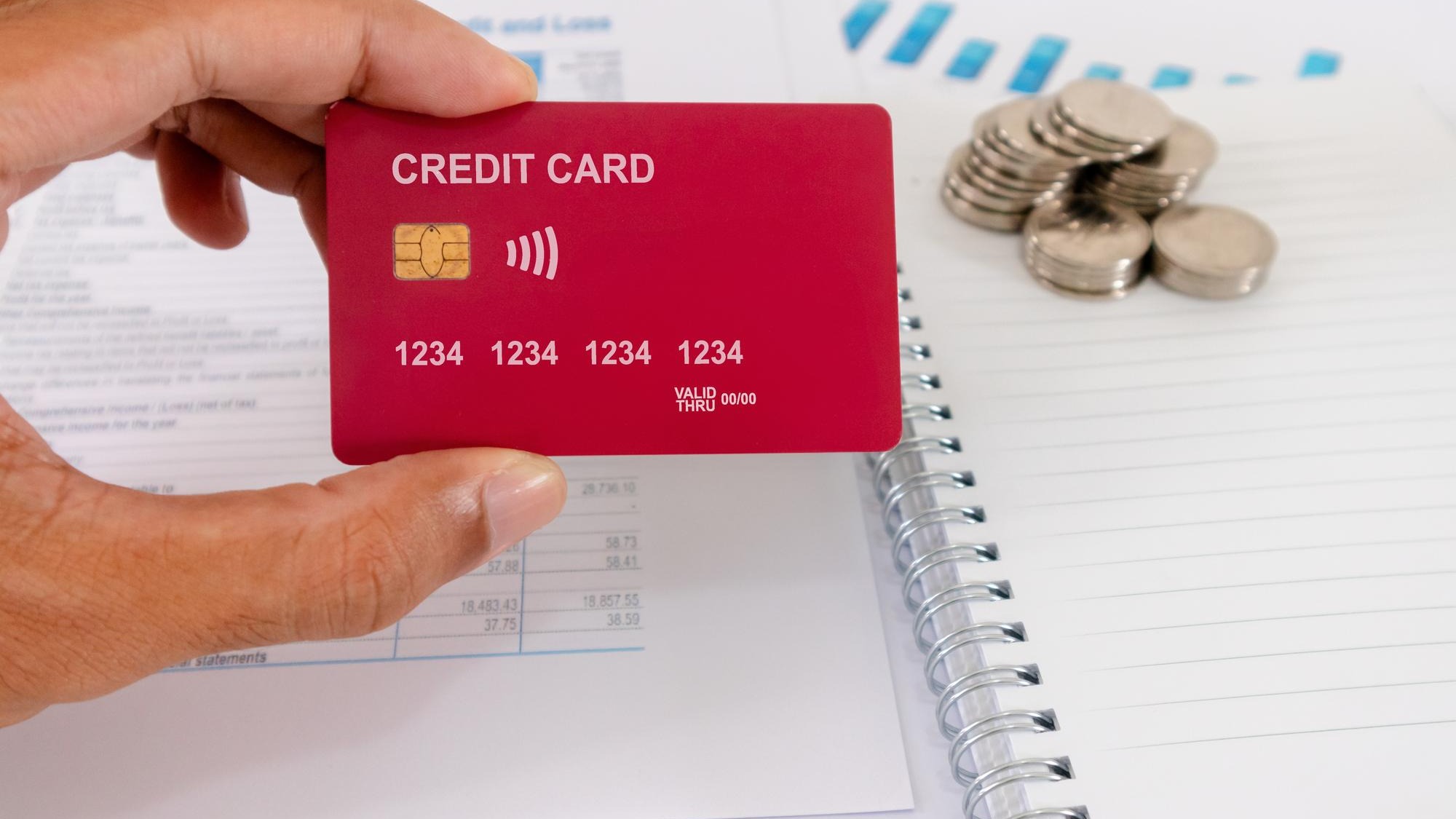
If you’re carrying a $6,600 credit card balance at 21.5 percent interest, you’ll hand your card issuer roughly $1,462 over the next 12 months without knocking a single dollar off what you owe. That’s more than many households spend on groceries in a quarter, and every cent of it disappears into finance charges.
The 21.5 percent figure comes from the Federal Reserve’s G.19 statistical release, which tracks the average annual percentage rate on credit card accounts that actually carry a balance. The $6,600 balance reflects recent averages reported by major credit bureaus, including TransUnion and Experian, whose Q3 and Q4 2024 reports placed average card balances between roughly $6,300 and $6,600. The arithmetic is straightforward: $6,600 multiplied by 0.215 equals $1,419 in simple interest. Factor in monthly compounding and the true annual cost edges closer to $1,462.
Neither number is abstract. As of May 2026, the Fed’s rate series shows credit card APRs hovering near record territory, a sharp climb from the roughly 13 percent average that prevailed a decade ago. For the tens of millions of Americans who revolve a balance each month, that increase translates directly into higher monthly statements and slower progress toward payoff.
How the Fed measures what you’re actually paying
The Fed collects credit card rate data through Form FR 2835a, a quarterly survey completed by a sample of roughly 50 card-issuing banks. Reporting months fall in February, May, August, and November. The form captures two key metrics: a nominal finance rate averaged across all accounts and a computed rate that divides total finance charges by the balances on which those charges were assessed, then annualizes the result.
That second metric, the computed rate for accounts assessed interest, is the one that matters most if you’re carrying debt. According to the survey’s official instructions, late fees and over-limit fees are excluded from the calculation. The published rate reflects pure interest cost, not penalty revenue, giving a cleaner picture of what revolving debt actually costs.
Because the G.19 separates all accounts from those assessed interest, the rate isn’t diluted by people who pay their statement in full every month and never owe a dime of interest. It represents the price paid specifically by revolvers, which makes it the right benchmark for estimating annual interest on a carried balance.
A $130 billion problem that’s likely grown
The Fed’s rate data lines up with a broader finding from the Consumer Financial Protection Bureau. In a 2023 report analyzing 2022 data, the CFPB found that credit card companies charged consumers a record $130 billion in interest and fees that year. Consumers who carried a balance paid roughly 20 percent of their average balance in combined interest and fees, a figure that tracks closely with the Fed’s APR readings once partial payments and compounding are accounted for.
That $130 billion figure is now several years old, and both outstanding credit card debt and APRs have risen since. Total revolving credit surpassed $1.35 trillion by late 2024, according to the Fed’s own data, suggesting the annual interest burden on American households has only grown larger.
The two datasets aren’t identical. The CFPB’s methodology includes certain fees the Fed strips out, and the bureau’s analysis covers a broader swath of the market than the Fed’s 50-bank panel. Still, both point in the same direction: revolving credit card debt is one of the most expensive forms of consumer borrowing available, routinely consuming a fifth or more of the outstanding balance every year.
Why your cost could be higher or lower
A single average masks a wide range of individual experiences. Borrowers with strong credit who locked in a low-rate card years ago may be paying 14 or 15 percent. Someone with a retail store card or a penalty rate triggered by a missed payment could be paying 29 percent or more. The Fed’s published data is aggregated, so there’s no way to see the full distribution from the primary source alone.
The $6,600 balance figure is also a midpoint. Households juggling multiple cards may owe $10,000 or $15,000, pushing annual interest costs well above $2,000. Others may carry only a few hundred dollars and barely notice the charge on a monthly statement.
Timing matters, too. The Fed surveys rates in specific months and annualizes the results, but balances and payment patterns shift throughout the year. Holiday spending spikes, tax refund paydowns, and changes in the federal funds rate all move the target. Any single interest figure should be read as a well-grounded estimate, not a precise invoice for every household.
What cardholders can actually do about it
The math is punishing, but it isn’t inevitable. Several strategies can cut the cost of revolving debt significantly:
- Balance transfer cards. Many issuers offer 0 percent introductory APR periods of 12 to 21 months on transferred balances. Moving a $6,600 balance to one of these cards and paying it down during the promotional window can eliminate hundreds or even the full $1,462 in annual interest. Watch for transfer fees, typically 3 to 5 percent of the amount moved.
- Debt consolidation loans. A fixed-rate personal loan from a bank or credit union often carries an APR in the 8 to 12 percent range for borrowers with fair to good credit, roughly half the cost of a typical credit card. Consolidating card debt into a single loan also sets a defined payoff date, which open-ended credit card billing does not.
- Calling your issuer. It costs nothing to ask for a lower rate. A 2024 LendingTree survey found that 76 percent of cardholders who requested an APR reduction received one. Even a few percentage points shaved off the rate saves real money over time.
- Paying more than the minimum. Minimum payments on a $6,600 balance at 21.5 percent can stretch repayment past 17 years and roughly triple the total amount paid. Doubling or tripling the minimum payment compresses the timeline dramatically and slashes total interest.
The ratchet effect: why rates climb fast and fall slow
Credit card APRs are typically pegged to the prime rate, which moves in lockstep with the Federal Reserve’s federal funds rate. During the Fed’s aggressive tightening cycle from early 2022 through mid-2023, the benchmark rate rose by more than five percentage points, and card APRs followed almost dollar for dollar.
Even after the Fed began cutting rates in late 2024, card APRs have been slow to follow. Issuers aren’t required to pass along reductions on existing variable-rate accounts at any particular speed, and many have widened the margin they charge above the prime rate. The result is a ratchet effect: rates climb quickly when the Fed tightens and drift down slowly, if at all, when it eases.
For consumers already carrying a balance, each quarter of elevated rates compounds the damage. That’s why financial planners consistently rank high-interest credit card debt as the first liability to attack, ahead of student loans, auto loans, or mortgage prepayment.
What $1,462 a year really costs you
The most corrosive thing about credit card interest isn’t the dollar amount on any single statement. It’s the opportunity cost. That $1,462 a year, invested in a broad stock index fund earning a historical average of roughly 7 percent annually after inflation, would grow to more than $20,000 over a decade. Left on a credit card, it buys nothing. It doesn’t reduce the balance. It doesn’t build equity. It simply transfers wealth from the cardholder to the issuer.
And because minimum payments are designed to keep balances alive, not eliminate them, a cardholder who pays only the minimum on a $6,600 balance at 21.5 percent can spend years writing checks without meaningfully reducing what they owe.
The verified data from the Federal Reserve and the CFPB leave little room for doubt about the scale of the problem. The precise dollar figure for any individual will vary with their rate, balance, and payment habits. But the core reality holds: carrying revolving credit card debt at today’s rates is one of the most expensive financial decisions a household can make, and every month of delay makes the hole a little deeper.