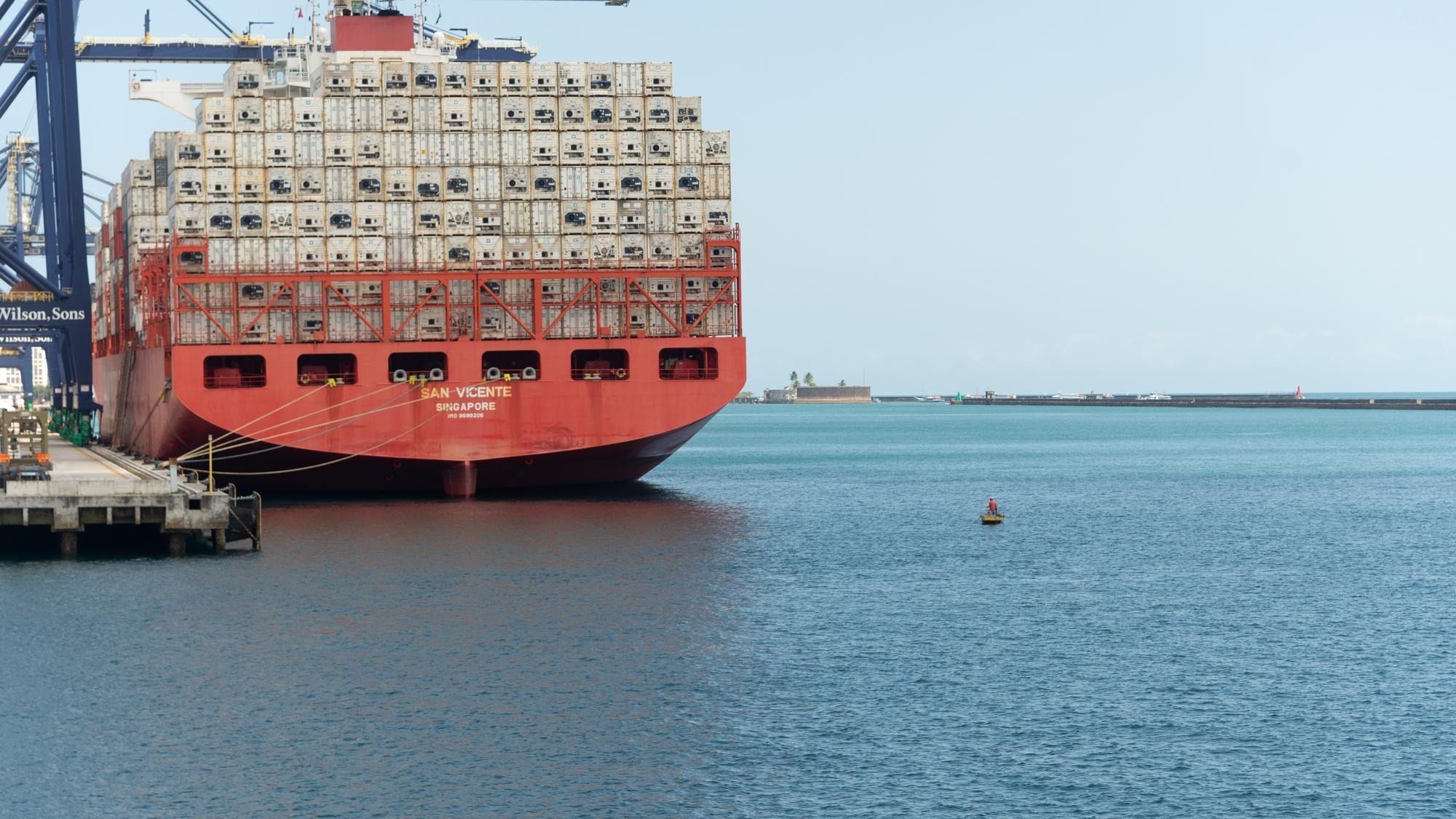
The Supreme Court struck down President Trump’s tariff authority under the International Emergency Economic Powers Act in February 2026. Within weeks, American importers began filing for refunds on duties they should never have owed. By June 2026, roughly 330,000 companies, according to court filings in Learning Resources, Inc. v. Trump, had submitted claims to U.S. Customs and Border Protection covering about 53 million shipments and an estimated $166 billion in duties now in dispute and eligible for return, though no public data yet confirms how much has actually been disbursed. General Motors alone expects to collect $500 million, according to the company’s own projections as reported by AP News.
American consumers who spent months paying inflated prices on cars, appliances, electronics, and everyday household goods are not in line for anything.
Consider a family in suburban Ohio that bought a new washing machine in late 2025. The model’s price had climbed roughly $150 over the previous year, a jump the retailer attributed to rising import costs on components sourced from China. After the Supreme Court ruling, the appliance manufacturer that paid the tariff on those parts became eligible for a refund. The family that absorbed the price increase at the register has no claim, no refund form to fill out, and no expectation of a discount on the machine already sitting in their laundry room.
The ruling that triggered the refund wave
On Feb. 20, 2026, the Court ruled in Learning Resources, Inc. v. Trump (No. 24-1287) that IEEPA does not grant the president the power to impose tariffs or duties. The decision invalidated a broad set of levies that had been applied to imports across dozens of product categories.
Under customs law, the importer of record is the entity that pays duties at the border. That legal designation determines who gets the refund. Automakers, electronics distributors, retailers, and manufacturers that source components overseas wrote the original checks to CBP, so the refund checks go back to them. A family that paid $2,000 more for a car because tariff-inflated parts drove up the sticker price has no standing to file a claim and no administrative channel to recover that money.
How tariff costs reached consumers
Tariffs never appear as a separate line item on a store receipt. When an importer pays a duty, that cost gets folded into the wholesale price of the product, then marked up again at the retail level. By the time a shopper picks up a power tool or a pair of sneakers, the tariff is invisible, buried in the price tag.
A widely cited 2019 study from the National Bureau of Economic Research (Working Paper 25672, by Amiti, Redding, and Weinstein) found that the costs of 2018 tariffs were “almost entirely” passed through to U.S. buyers, with little evidence that foreign exporters absorbed the hit by lowering their own prices. That research examined an earlier round of trade levies, not the specific IEEPA duties the Court invalidated this year. But the underlying mechanics are the same: the same supply chains, the same pricing structures, and the same pattern of importers passing costs downstream to the people buying their products.
If that pattern held for the IEEPA tariffs, then American households effectively financed a significant share of the $166 billion in disputed duties now eligible to flow back to corporate balance sheets.
A gap with no modern precedent
The asymmetry between corporate refunds and consumer losses is not new in concept, but its scale is unprecedented. In prior trade disputes, tariff refunds have occasionally been issued after successful challenges at the U.S. Court of International Trade, but those cases typically involved narrow product categories and individual importers, not an economy-wide rollback. The 2018 steel and aluminum tariffs under Section 232, for example, generated exclusion requests and some refunds for specific companies, but no broad refund wave and no mechanism for consumer recovery. Congress has never enacted a law requiring importers to pass tariff refunds downstream to the buyers who ultimately bore the cost. The current situation, with $166 billion in dispute across virtually every consumer product category, dwarfs any prior episode and makes the absence of a consumer remedy more conspicuous than ever.
Why consumers have no path to recovery
The asymmetry is structural, not accidental. Customs law defines the importer of record as the only party with standing to seek a refund. Consumers are not party to the customs transaction and have no legal claim on the returned duties.
Even creative legal theories face steep obstacles. A class-action lawsuit alleging unjust enrichment would require individual shoppers to prove how much of a product’s price was attributable to the tariff. Retailers rarely disclose that breakdown. Pricing decisions involve dozens of variables beyond import duties, from shipping costs to currency fluctuations to promotional strategy. Without a clear paper trail linking a specific purchase to a specific tariff cost, the evidentiary burden is enormous.
No consumer-advocacy organization has published an estimate of total household-level losses tied specifically to the IEEPA duties. That gap makes it difficult to put a precise dollar figure on what families paid, even as the corporate refund pool carries a clear price tag.
Will companies pass the savings along?
Nothing in the Supreme Court’s ruling or in customs regulations requires importers to lower prices after receiving a refund. Whether consumers see any indirect benefit depends entirely on competitive dynamics within each industry.
In highly competitive retail categories, some companies may cut prices to gain market share once their costs drop. In sectors where a few large players dominate, the refund is more likely to land on the balance sheet as recovered margin. GM has framed its projected $500 million refund in terms of financial performance, not consumer pricing. The company has not announced plans to reduce vehicle prices in response.
The federal budget implications are significant as well. The $166 billion in duties under dispute represents revenue the Treasury collected and, in many cases, already spent. Returning that money to importers creates a fiscal hole that Congress will eventually need to address, whether through spending cuts, borrowing, or new revenue sources.
What happens next
The refund process is far from complete. CBP must reconcile claims across roughly 53 million shipments, according to court filings, a task that could stretch well into 2027. Large importers with dedicated trade-compliance teams are best positioned to file quickly and accurately. Smaller businesses, many of which lack in-house customs expertise, face longer timelines and higher administrative costs to recover what they are owed.
On Capitol Hill, the ruling has revived debate over how tariff costs and refunds should be distributed. Some lawmakers have discussed requiring that a portion of large-scale tariff refunds be channeled into consumer relief, such as temporary tax credits or targeted rebates. Others have called for more granular disclosure of tariff costs along supply chains, so that when trade policies are imposed or reversed, the public can see who pays and who benefits. None of those proposals have advanced beyond early discussion as of June 2026.
Who absorbs the loss when the refund checks stop at the border
For now, the outcome is straightforward. The companies that paid the tariffs are getting their money back. The consumers who absorbed those costs through higher prices are not. The courts have spoken on IEEPA. Whether anyone in Washington moves to close the gap between corporate refunds and consumer losses is a question that remains, for the moment, unanswered.