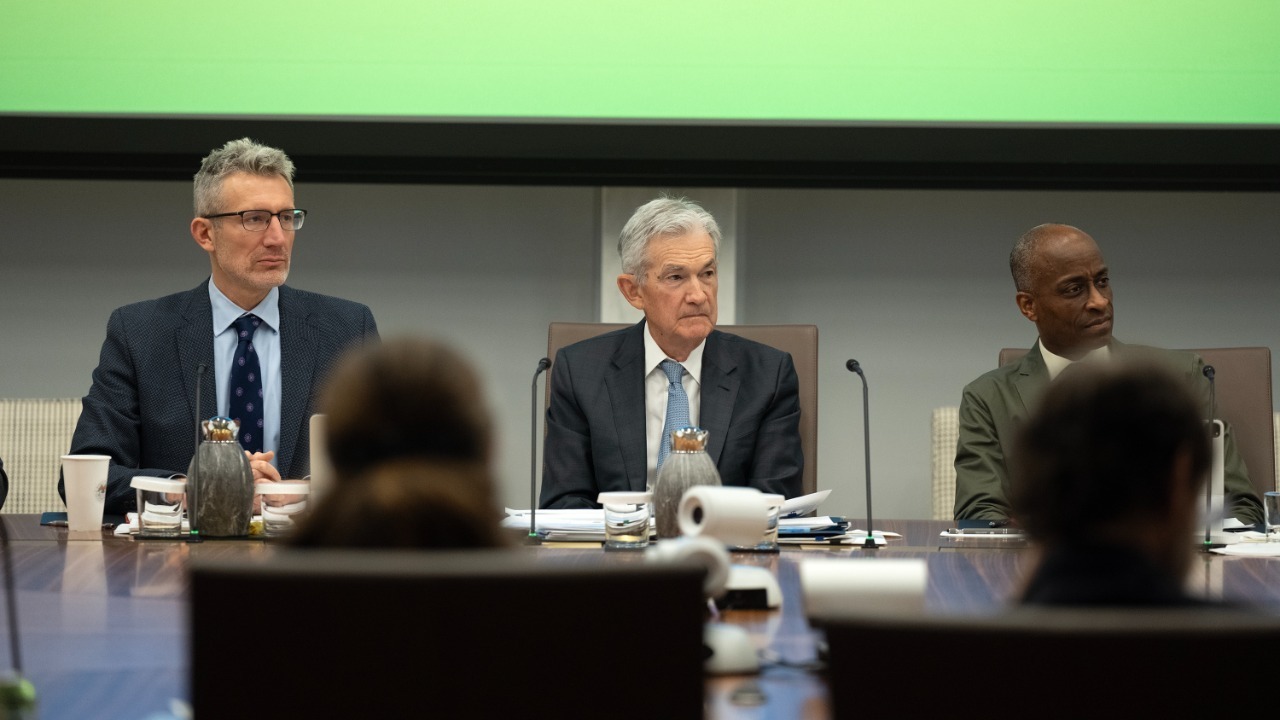
The Federal Reserve’s April 28-29 meeting ended with a fractured vote and a leadership transition already underway. On Wednesday, May 20, the public gets to see what happened inside the room. The FOMC minutes, scheduled for 2 p.m. ET, will detail the internal debate at what was effectively Jerome Powell’s final meeting as full chair before Kevin Warsh assumes the role. The committee held the federal funds rate steady at its current target range of 4.25%-4.50%, but the vote was split: four members dissented, pulling in opposite directions. That kind of fracture is rare, and it lands squarely in the lap of a new chair who has not yet spoken publicly about how he reads it.
What the April statement already tells us
The April 29 policy statement confirmed the committee voted to keep the federal funds rate unchanged. According to the statement, one member dissented in favor of a 25-basis-point reduction, arguing that recent data supported a modest move lower. Three other members dissented from the opposite direction, objecting not to the rate hold itself but to newly inserted language suggesting the committee was leaning toward easing at upcoming meetings.
Multi-directional dissents at a single FOMC meeting are unusual. One of the clearest recent precedents came in September 2019, when James Bullard pushed for a larger cut while Esther George and Eric Rosengren voted against any reduction at all. That split signaled genuine uncertainty about the economy’s direction rather than a clean hawk-dove divide. The April 2026 pattern carries a similar implication: the majority held the center, but the committee’s edges pulled hard in opposite directions on what should come next.
The leadership transition sharpens the stakes. Powell’s tenure as chair has been winding down as Warsh prepares to take office following his Senate Banking Committee confirmation process, and the April meeting was Powell’s last chance to shape the committee’s consensus language from the chair’s seat. Whether he forged a durable agreement or smoothed over a deeper rift is precisely what the minutes will show.
Three questions the minutes need to answer
How much company did the rate-cut dissenter have? The formal vote shows one member wanted to cut. But FOMC minutes use carefully calibrated language to describe the room’s mood. If “several” or “many” participants expressed sympathy for a reduction before ultimately voting with the majority, the committee is closer to cutting than the headline hold suggests. If the dissenter is described as largely isolated, Warsh inherits a committee more comfortable with patience.
Was the forward-guidance objection about substance or process? The three members who voted against the easing-bias language could have been motivated by genuine concern that inflation remains too sticky to signal cuts. Or they could have been making a narrower argument: that the committee should not appear to pre-commit when incoming data could shift the picture between meetings. The difference is significant. A substantive objection points to a real policy rift. A process objection suggests the committee broadly agrees on the destination but disagrees about how loudly to advertise the route.
What did the staff economic projections show? Fed staff forecasts, summarized in every set of minutes, often surface tensions that the policy statement papers over. If the staff projected inflation drifting back toward 2% more slowly than the committee’s median expectation, that would lend weight to the hawkish dissenters. If the staff flagged rising downside risks to growth or employment, it would strengthen the case for the dovish dissent. These projections rarely drive headlines, but they form the analytical foundation of the committee’s debate.
What Warsh inherits
Warsh served as a Fed governor from 2006 to 2011, a stretch that included the financial crisis and the early rounds of quantitative easing. His public speeches and writings since leaving the Board have generally stressed the risks of prolonged accommodation and the value of clear, rules-based communication. During his Senate Banking Committee hearings, he acknowledged the need for data dependence but stopped short of telegraphing a specific policy direction. Those positions were staked out as a nominee and outside commentator, not as the person responsible for assembling a voting majority on a divided committee.
The practical question is whether the April split represents a group that can coalesce around a shared framework with modest disagreements on timing, or one that is genuinely divided over the right policy path. A committee in the first category can be managed through careful consensus-building and small adjustments to the statement. A committee in the second category forces a new chair to pick sides early, spending political capital before he has had time to establish his own credibility in the role.
Derek Tang, an economist at LH Meyer/Monetary Policy Analytics, noted in a May 19 client briefing that “the real tell in these minutes will be whether the majority’s hold vote was a confident pause or a reluctant compromise,” adding that the distinction “matters enormously for June pricing.” Market pricing offers one external benchmark. Fed funds futures, tracked through tools like the CME FedWatch tool, will update rapidly after the minutes land. Any shift in the probability assigned to a cut at the June 17-18 meeting will reflect traders’ real-time reading of how close the committee came to moving in April. Warsh will be watching those moves closely, because they will shape the expectations he has to manage at his first meeting as chair.
Why the May 20 release lands differently than a routine minutes drop
FOMC minutes are always dissected on Wall Street, but most arrive during periods of relative institutional stability. This set drops during a leadership handover with no close recent precedent in terms of the policy uncertainty surrounding it. The last time a new chair inherited a committee with active multi-directional dissents was arguably when Powell himself took over from Janet Yellen in early 2018, and even then the disagreements were narrower in scope.
The minutes will not provide a definitive answer on what the Fed does next. They never do. But they will reveal the texture of the April debate in a way the bare vote count cannot. They will show whether the four dissenters were outliers pushing against a confident majority or the visible edge of a broader unease that the committee’s current stance is either too tight or too loosely communicated. That distinction will shape how Warsh approaches his first rate decision and whether traders, portfolio managers, and ordinary borrowers should treat the June meeting as a live one.