Three ships were hit or seized in the world’s most important oil corridor on a single day, and the president said the truce was fine.
On Friday, May 8, 2026, U.S. forces fired on and disabled two Iranian-flagged tankers near the Strait of Hormuz. Hours later, Iran’s navy boarded and seized a separate vessel, the Ocean Koi, in the Gulf of Oman. By evening, President Trump stood before reporters on the White House grounds and declared the ceasefire with Tehran “is holding.” The three incidents, compressed into fewer than 12 hours in a corridor that carries roughly one-fifth of the world’s daily oil supply, expose a stark disconnect between the administration’s language and what is actually happening on the water.
What U.S. Central Command confirmed
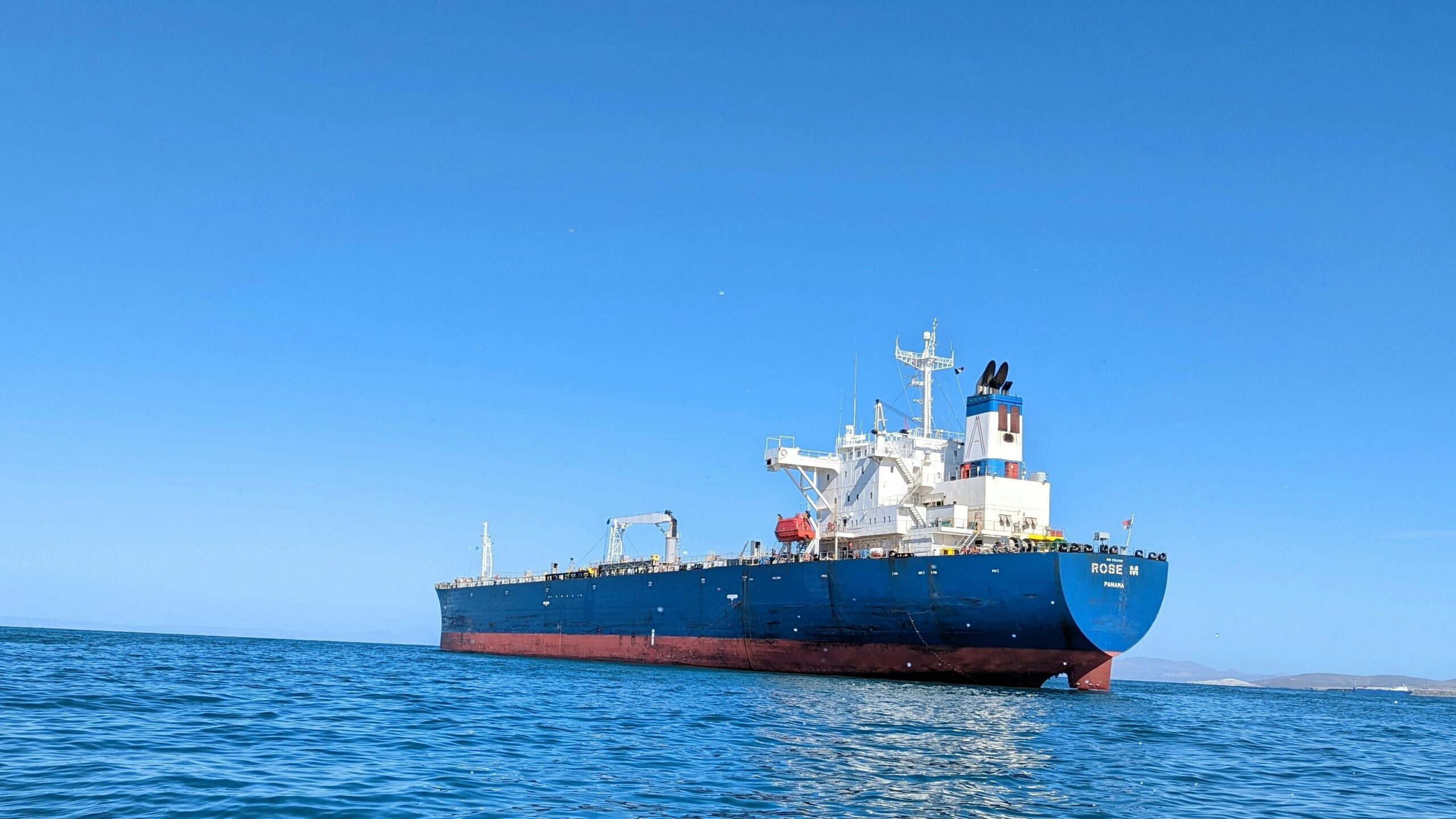
U.S. Central Command said its forces disabled two Iranian-flagged tankers on May 8 as part of enforcement operations in the Strait of Hormuz region. The Associated Press, citing CENTCOM directly, reported the strikes but noted the command did not specify what weapons were used, whether warnings were issued beforehand, or what the tankers were carrying.
No photographs, satellite imagery, or damage assessments have been released as of May 9. The condition and nationality of the crews remain unknown. CENTCOM’s statement also left open the legal rationale: it is unclear whether the tankers were targeted to block weapons transfers, interrupt sanctioned oil shipments, or enforce some other restriction. Without that explanation, the proportionality of the strikes and the immediate risk of oil spills in one of the narrowest and busiest chokepoints on Earth cannot be independently evaluated.
Iran’s seizure of the Ocean Koi
The same day, Iran’s army detained the tanker Ocean Koi in the Gulf of Oman. Iran’s Tasnim news agency said the seizure was carried out for unspecified “violations.” IRNA, another state outlet, reported the vessel was carrying Iranian crude and was being directed toward Iran’s southern coast. Bloomberg corroborated the cargo description.
Seizing a ship reportedly loaded with your own country’s crude is an unusual move. The action looks less like an attempt to recover property than a signal that Tehran can disrupt commercial traffic in contested waters at will. No customs documents, port records, or independent cargo inspections have been made public to verify the Ocean Koi’s full manifest or ownership chain. The “violations” cited by Tasnim remain undefined. The AP placed the seizure in the Gulf of Oman but did not publish coordinates or third-party tracking data. That distinction matters: if Iran acted inside its own territorial waters, the legal footing is different than if the seizure occurred in international shipping lanes or within another nation’s exclusive economic zone.
The ceasefire claim and what it leaves out
Trump’s remark came after both the U.S. strikes and the Iranian seizure had already taken place. No senior administration official has publicly explained how disabling foreign-flagged tankers and a rival power boarding a commercial vessel fit within whatever terms define the current truce. The White House has not released a text, a timeline of commitments, or a list of what each side agreed to stop doing.
Without that baseline, there is no way for journalists, lawmakers, or the public to measure whether the truce is intact, fraying, or already broken. If the ceasefire applies only to missile strikes on each other’s territory, then maritime skirmishes may technically fall outside its scope. But that would make the word “ceasefire” do far less work than most people assume it does.
What is still missing from the public record
Key gaps remain on both sides. For the U.S. strikes, there is no independent satellite imagery, no Automatic Identification System tracking data, and no on-the-record account from the tanker crews or their employers. The volume and type of oil aboard the two vessels have not been disclosed. Even a partial hull breach in the Strait of Hormuz, where tankers pass within miles of each other, could threaten marine ecosystems and force rerouting of global oil shipments. No verified reports of slicks or cleanup operations had surfaced as of May 9.
For the Ocean Koi, the record is equally thin. Regional governments, including the UAE and Oman, have not issued detailed public statements about the day’s events or shared radar or tracking data. That silence makes it difficult to reconstruct the full timeline or determine whether additional confrontations occurred that have not yet been reported.
Oil market exposure and shipping risk
Roughly 20 to 21 million barrels of crude and refined products transit the Strait of Hormuz each day, according to the U.S. Energy Information Administration. Any sustained pattern of vessel seizures or disabling strikes in the corridor tends to push war-risk insurance premiums higher and can ripple into fuel prices within days. As of May 9, no major shipping association had issued a formal advisory tied to the May 8 events, and publicly available oil-price data for the session immediately following the incidents had not yet been fully reported. The industry’s response in the coming days will signal how seriously commercial operators view the escalation risk.
When “holding” and “escalating” look the same
Taken together, the events of May 8 show that both Washington and Tehran are willing to use force at sea even under a declared truce. Trump’s framing may be technically defensible if the ceasefire is measured only by the absence of large-scale missile exchanges or direct strikes on sovereign territory. But disabling tankers and seizing commercial ships are not minor incidents. They are the kinds of actions that, historically, have preceded broader escalations in the Persian Gulf.
For now, the ceasefire appears to function less as a pause in hostilities than as an unspoken agreement about which kinds of force are acceptable and which are not. Until the White House or Tehran defines those boundaries publicly, every new maritime incident will raise the same question: if this is what “holding” looks like, what does breaking look like?