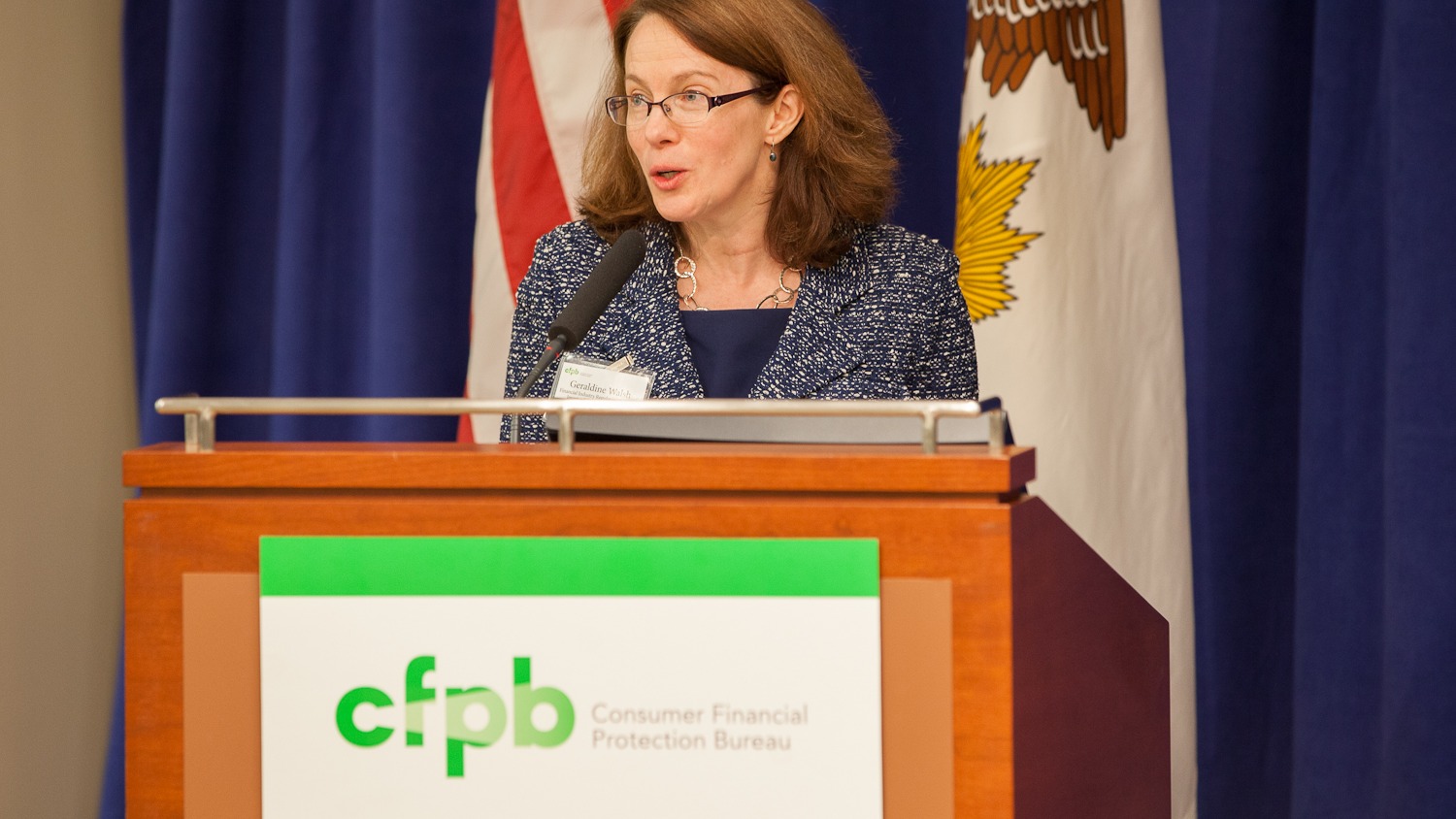
A borrower in Texas who falls behind on a payday loan can still look up the federal rule that is supposed to stop lenders from draining her bank account with repeated withdrawal attempts. The rule is right there on the Consumer Financial Protection Bureau’s website. But as of early 2026, no one at the bureau is enforcing it.
That payday lending provision is one of at least 13 consumer finance protections that remain on the books as active federal regulations but have gone functionally dormant since January 2025. Overdraft fee caps for large banks, junk fee disclosure requirements, a registry designed to track repeat corporate offenders: all still codified, none actively enforced. The CFPB, now operating under acting director Russell Vought with a staff hollowed out by cuts tied to the Department of Government Efficiency, has not repealed these rules. It has simply stopped showing up to back them.
The result is a consumer protection framework that looks intact from the outside but operates like a building with the lights off. The structure is still standing. Nobody is home.
How the bureau walked away
The broadest single move came on May 12, 2025, when the CFPB published a Federal Register notice withdrawing 67 interpretive rules, policy statements, and advisory opinions in one filing. These were not obscure footnotes. They were the documents that banks, fintech companies, and consumer attorneys relied on to understand how the bureau would apply its authority on everything from debt collection to fee disclosures. Years of accumulated guidance vanished in a single entry.
The payday lending pullback was narrower but just as consequential. On March 28, 2025, the bureau announced it would not prioritize supervision or enforcement of key provisions in its Payday Lending Rule, specifically the requirements governing repeated payment withdrawals from borrower accounts and related disclosure obligations. The agency called it “regulatory relief for small loan providers.” The rule itself was never amended or rescinded. It simply stopped mattering to the companies it was supposed to regulate.
Overdraft protections followed the same pattern. The CFPB’s final rule on overdraft lending for very large financial institutions, codified under 12 CFR Part 1026, treats certain overdraft credit as subject to Regulations E and Z unless fees fall below a small threshold or reflect actual costs. The compliance date of October 1, 2025, still appears on the agency’s website. But the bureau’s broader retreat from enforcement has effectively removed the practical risk for large banks that continue charging overdraft fees well above what the rule contemplated.
A separate notice extended the hands-off approach to the nonbank registry, a rule requiring certain nonbank financial companies to report enforcement actions taken against them by other regulators. The CFPB stated it would not pursue companies that missed future registration deadlines, even though the registry rule remains in effect.
Why the count of 13 is approximate
The CFPB has not published an official list of every rule it has stopped enforcing. The 67 withdrawn guidance documents are a distinct category from the enforcement deprioritization statements covering payday lending, overdraft fees, and the nonbank registry. Some guidance withdrawals affect how multiple rules are interpreted; some deprioritization statements cover only specific provisions within a single rulemaking.
The count of “at least 13” is drawn from a review of the bureau’s public Federal Register filings, deprioritization announcements, and compliance resource pages between January and May 2025. It includes the overdraft lending rule (12 CFR Part 1026), the Payday Lending Rule’s payment withdrawal and disclosure provisions, the nonbank registry rule, junk fee disclosure requirements under Regulation Z, and multiple rules whose enforcement depended on interpretive guidance documents that were among the 67 withdrawn on May 12. Because some of those guidance withdrawals affect the practical enforceability of more than one underlying regulation, and because the bureau has not drawn a bright line between “deprioritized” and “still active,” the precise total depends on how individual provisions are grouped. The figure represents a conservative floor, not a ceiling.
What is not in dispute is the direction. Across overdraft lending, payday loans, junk fee disclosures, and nonbank oversight, the bureau has systematically signaled that compliance is now functionally optional for the provisions it has named.
What this means for borrowers and bank customers
Before the CFPB began pressuring banks to lower overdraft charges, the average fee at large U.S. institutions hovered around $35 per incident, according to Bankrate’s annual checking account survey. Several major banks, including Capital One and Ally, voluntarily eliminated or sharply reduced overdraft fees in 2022 and 2023 under regulatory pressure. With that pressure lifted, the open question is whether holdouts will follow their lead or reverse course.
“Millions of families are one overdraft fee away from a financial crisis, and the bureau’s decision to look the other way is unconscionable,” Chi Chi Wu, a senior attorney at the National Consumer Law Center, said in a public statement responding to the CFPB’s enforcement pullback. (The statement was issued through the NCLC; a direct link to the specific release was not publicly available at the time of publication.)
In the payday lending market, the stakes hit faster. The provisions the CFPB deprioritized were designed to prevent lenders from repeatedly attempting to withdraw payments from a borrower’s bank account after failed tries, a practice that can trigger cascading insufficient-funds fees and push already-struggling borrowers deeper into debt. Without active enforcement, that federal guardrail exists only on paper.
Industry groups see it differently. The Community Financial Services Association of America, the primary trade group for payday lenders, called the bureau’s March 2025 announcement “a welcome step toward right-sizing regulation for small-dollar lenders who serve communities that traditional banks have abandoned.” (The quoted language is drawn from the trade group’s public response; a direct link to the specific release was not publicly available at the time of publication.)
Hard data on how lender behavior has shifted since the pullback remains limited. The CFPB’s public consumer complaint database continues to accept submissions, but the bureau has not published updated analyses tying complaint volumes to its enforcement changes. Industry earnings reports filed through early 2026 have not broken out fee revenue in ways that isolate the effect of the CFPB’s retreat.
States are stepping in, but coverage is uneven
Several state attorneys general have signaled they intend to pick up enforcement where the federal bureau left off. California Attorney General Rob Bonta said in a May 2025 statement that his office would “use every tool available under California law to protect consumers from predatory financial practices, regardless of what happens at the federal level.” New York Attorney General Letitia James has made similar pledges. Illinois and Minnesota have moved to strengthen state-level payday lending oversight through new legislation and expanded regulatory authority.
But state enforcement is inherently patchy. A borrower in California may have meaningful recourse through the state’s Department of Financial Protection and Innovation. A borrower in a state with weaker consumer protection statutes and a smaller regulatory staff may have none. No consolidated public database tracks which states have taken specific actions in response to the CFPB’s pullback, making it difficult to assess how much of the federal gap is actually being covered.
That unevenness matters because payday lending and overdraft fees disproportionately affect lower-income households, which are concentrated in states that historically have fewer consumer protection resources.
The legal gray zone ahead
Deprioritization statements are not formal rulemaking. A future CFPB director could reverse them without going through notice-and-comment procedures, potentially restoring active enforcement relatively quickly. The withdrawn guidance documents are a different problem. Reissuing 67 interpretive rules, policy statements, and advisory opinions would require deliberate effort, institutional knowledge, and staff time, all of which have been depleted at the bureau over the past year.
There is also a reliance question that could complicate any future crackdown. Financial institutions that adjusted their practices based on the CFPB’s public statements could argue they acted in good faith during the period of announced leniency. That argument would make it harder for a future administration to retroactively penalize conduct that occurred while the bureau was publicly saying it would not enforce the rules in question.
Meanwhile, the Supreme Court’s 2024 decision in CFPB v. Community Financial Services Association, which upheld the bureau’s funding mechanism as constitutional, remains the law of the land. The CFPB has the legal authority and the budget structure to enforce these rules. What it lacks, for now, is the institutional will.
A regulatory vacuum with no clear expiration date
The CFPB’s consumer finance rules now exist in two versions: the one written in the Code of Federal Regulations and the one that actually governs day-to-day behavior. The written rules on overdraft fees, payday lending, junk fee disclosures, and nonbank registries can still be cited by advocates, state regulators, and plaintiffs’ attorneys. But the bureau’s own actions, from rescinding guidance to announcing enforcement “relief,” have drained those rules of practical force.
Congress has the power to intervene, either by codifying the enforcement pullback or by directing the bureau to resume oversight. So far, neither chamber has moved legislation to do either. Until the agency resumes active enforcement, formally repeals the underlying regulations, or is compelled to act by Congress or the courts, consumers and the financial industry will continue operating in a space where the law says one thing and the regulator does another. For the borrowers these rules were written to protect, the distinction between a repealed rule and an unenforced one is academic. The effect is the same.