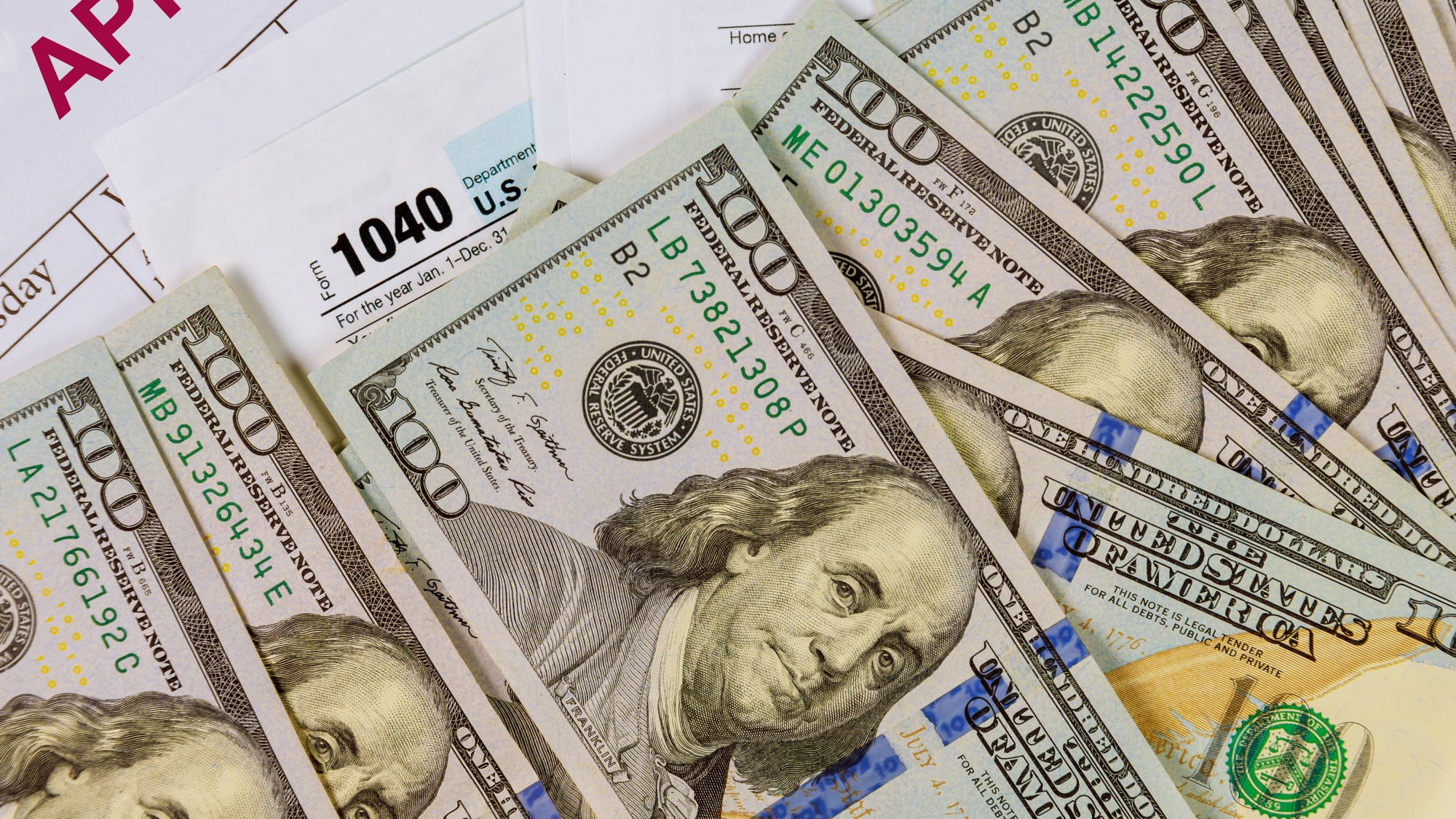
When the Treasury Department closed its books on fiscal year 2025 last September, one line buried in the ledger told a story that no amount of political spin could soften: the federal government paid more than $1 trillion in interest on its debt over the preceding twelve months. That single expense, which bought no aircraft carriers, funded no schools, and paved no highways, exceeded the entire national defense budget for the first time in modern American history.
Every dollar of it came from the same revenue stream that funds Social Security checks, Medicare reimbursements, and military paychecks. And as of mid-2026, the trajectory has not reversed.
How fast the bill doubled
The speed of the increase is what makes the number so jarring. As recently as fiscal year 2022, the annual interest bill sat around $475 billion to $500 billion. Three years and a historic Federal Reserve rate-hiking cycle later, it doubled.
The government was not simply borrowing more. It was refinancing older, cheaper debt at sharply higher rates, swapping Treasury securities that had carried coupons below 2% for new ones priced at 4% or 5%. The arithmetic was relentless: more principal multiplied by higher rates equals a compounding cost that grows even when Congress passes no new spending.
Three sources, one conclusion
The trillion-dollar figure is not a projection or a campaign talking point. It rests on overlapping confirmation from three separate government bodies.
The Congressional Budget Office, in its Monthly Budget Review covering the full fiscal year, reported that net interest on the public debt crossed the $1 trillion threshold during the twelve months ending September 30, 2025. That total reflects payments on marketable Treasury bills, notes, and bonds held outside the federal government itself.
Separately, the Government Accountability Office audited the Treasury Department’s consolidated financial statements as part of its annual review of the U.S. government’s finances. The GAO’s examination of the Bureau of the Fiscal Service’s records confirmed that interest on debt held by the public nearly doubled between fiscal year 2022 and fiscal year 2025, landing at roughly $1.0 trillion.
Treasury’s own monthly interest expense reports provide a third layer of confirmation, showing the steady buildup of payments across the fiscal year as large volumes of securities rolled over at higher coupon rates.
When three agencies with distinct mandates and independent methodologies converge on the same number, the figure is about as solid as federal accounting gets.
Bigger than the Pentagon
To understand what $1 trillion in interest means in practical terms, set it next to the spending category it just overtook. National defense outlays, classified under budget function 050 in the president’s budget, totaled roughly $874 billion in fiscal year 2025, according to CBO estimates. That covers every branch of the military, every overseas base, every weapons system, and every service member’s paycheck.
Interest now exceeds all of it. And unlike defense spending, which Congress debates line by line through annual appropriations, interest is mandatory. The Treasury must pay bondholders on schedule regardless of what else is happening in Washington. There is no committee hearing, no floor vote. The payments go out automatically, by law.
That distinction matters because it shrinks the room available for everything else. Each additional dollar devoted to interest is a dollar that cannot go toward infrastructure, veterans’ care, or scientific research without either raising taxes or borrowing still more, which would generate yet more interest.
The two forces behind the surge
Two forces collided to produce the doubling, and neither has fully subsided.
The first is the sheer mass of the debt. Federal debt held by the public stood near $28 trillion by the end of fiscal year 2025, swollen by pandemic-era emergency spending, successive rounds of tax policy changes, and persistent annual deficits that stacked new borrowing on top of old.
The second is the interest rate environment. Between March 2022 and July 2023, the Federal Reserve raised its benchmark rate from near zero to a target range of 5.25% to 5.50%, the most aggressive tightening campaign in four decades. Every Treasury security issued or refinanced during and after that period carried a far higher coupon than the debt it replaced.
The last time interest consumed a comparable share of the federal budget was the early 1990s, when rates were also elevated and deficits were climbing. But the scale is different now. The outstanding debt is several multiples larger than it was three decades ago, so even a moderate rate increase translates into hundreds of billions in additional annual cost.
The Fed did begin easing its benchmark rate in late 2024, and further cuts have followed into 2026. But rate reductions take time to filter through the Treasury’s debt portfolio. Much of the government’s borrowing is locked into securities with maturities of two, five, or ten years, meaning the higher coupons issued during 2022 through 2024 will keep generating interest payments for years, even if new issuance eventually comes at lower rates.
What the numbers leave out
The audited figures answer the “how much” question clearly. They are less helpful on “who pays” and “what happens next.”
No official source provides a clean per-taxpayer breakdown of the $1 trillion cost. Dividing it evenly across roughly 150 million individual filers produces a figure north of $6,600, but that is a rough average, not a reflection of how the burden actually falls. Federal revenue comes from a mix of individual income taxes, payroll taxes, corporate taxes, and excise levies, and the share each household contributes varies enormously by income bracket and filing status. Without a formal distributional analysis from the IRS or CBO, any per-capita number is illustrative, not precise.
Forward projections carry their own uncertainty. If average rates on new Treasury issuance remain near recent levels, the interest bill will keep climbing as older, cheaper securities mature and roll over at current prices. A sustained decline in market rates or a meaningful shift in fiscal policy could slow that growth. But the audited record stops at fiscal year 2025 totals, and no official sensitivity analysis tied to specific future rate paths has been published.
Nor do the primary sources spell out what the executive branch or Congress plans to do about the rising cost, whether through changes in borrowing strategy, debt management tools, or broader fiscal negotiations.
The bill that resets every year
Set aside the partisan arguments about how the debt reached this size. One fact stands on its own: in fiscal year 2025, the United States spent more money paying interest to its creditors than it spent defending itself. That expense was not voted on, cannot be vetoed, and will appear again in fiscal year 2026, almost certainly larger.
For the roughly 150 million Americans who file federal tax returns, the practical meaning is hard to miss. A growing share of the revenue Washington collects each April is spoken for before a single discretionary dollar is allocated. The interest bill now functions like a household mortgage payment that resets higher each year, except the borrower has no plan to pay down the principal and no intention of selling the house.