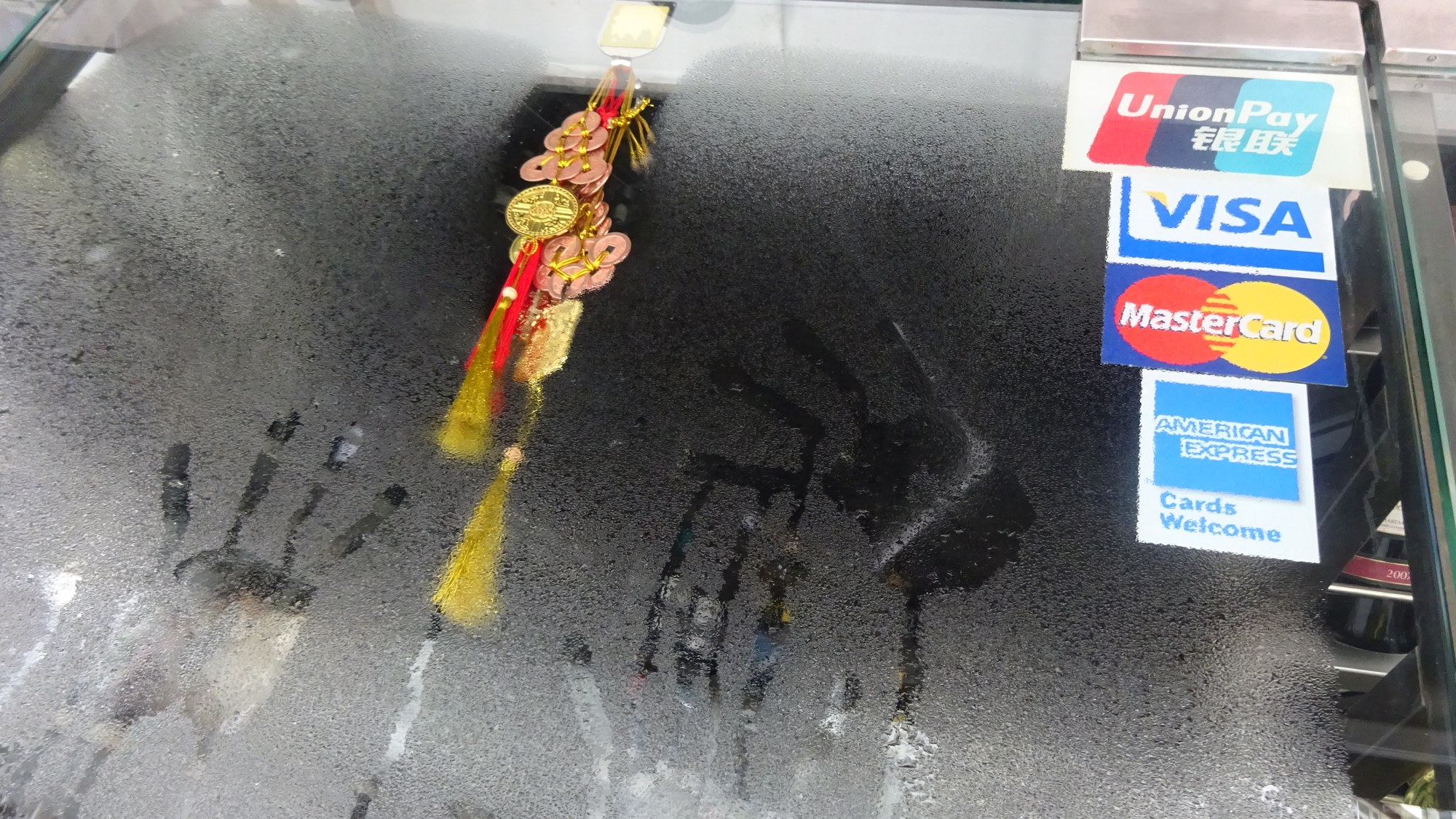
Order an $80 dinner in Chicago, and the final credit card charge might hit $104 after tax and a 20 percent tip. The bank that issued the card collects an interchange fee on every dollar of that total, including the portion headed to the city treasury and the portion headed to the server. Illinois lawmakers decided that was wrong and passed a law to stop it, effective July 1, 2026. But one day before that statute kicks in, a federal rule will render it meaningless for nearly every major card-issuing bank in the country.
On June 30, the Office of the Comptroller of the Currency activates a rule reaffirming that nationally chartered banks and federal savings associations set their own card-fee structures without interference from state legislatures. A companion order names Illinois’s Interchange Fee Prohibition Act by name and declares it preempted. The timing is not coincidental, and the consequences stretch well beyond one state’s restaurant tabs.
What the OCC actually did
The agency published two coordinated actions in May 2026. The first is an interim final rule amending 12 CFR 7.4002, the regulation governing non-interest charges that national banks can impose. The revised language codifies a principle the OCC has asserted for years: federally chartered banks determine their own fee schedules, provided those fees meet safety-and-soundness standards and comply with other federal law. It takes effect June 30, 2026.
The second action is a preemption order aimed squarely at Illinois. The OCC concluded that Article 150 of Public Act 104-0004, the Interchange Fee Prohibition Act (IFPA), conflicts with federal authority over bank charges. The state law would have barred interchange fees calculated on the tax and tip portions of card transactions and restricted how banks use transaction data. Under the OCC’s order, nationally chartered institutions are bound by neither provision.
In its public announcement, the agency framed both actions as necessary to prevent “operational complexity and fragmentation” in payment-card systems. The subtext for other statehouses is blunt: try to cap or carve out portions of interchange fees for federally chartered banks, and expect the same preemption wall.
Why these fees hit harder than most people realize
Interchange is the single largest component of the processing cost merchants pay every time a customer taps, swipes, or dips a card. For credit cards, the average rate runs roughly 2 percent of the transaction value, according to the Nilson Report, an industry publication that tracks payment-card data. Across the U.S. economy, merchants paid more than $100 billion in total card-processing fees in 2023, the most recent full year of Federal Reserve payment-system data, with interchange accounting for the bulk of that figure.
Shoppers almost never see these charges. Unlike a sales tax printed on a receipt, interchange is baked into the sticker price. Merchants absorb it, pass it along through higher prices, or do some of both. The practical result: every consumer, including those paying with cash or debit, helps cover the cost of credit-card acceptance whether they know it or not.
Illinois’s IFPA targeted a narrow but symbolically potent slice of that cost: the fee collected on the tax and gratuity portions of a sale. Supporters argued that banks should not earn interchange on money destined for the government or for tipped workers. The OCC’s preemption means nationally chartered banks, which include the largest card issuers in the country (JPMorgan Chase, Citibank, Bank of America, and Capital One are all federally chartered), can continue collecting fees on the full transaction amount, taxes and tips included, in Illinois and everywhere else.
The broader federal landscape
The OCC’s move lands in the middle of a fight over interchange that has been grinding on for more than a decade at the federal level. The Durbin Amendment, enacted as part of the 2010 Dodd-Frank Act and codified at 15 U.S.C. § 1693o-2, capped debit-card interchange for banks with more than $10 billion in assets but left credit-card fees entirely untouched. Since 2022, Senators Dick Durbin and Roger Marshall have repeatedly introduced the Credit Card Competition Act, which would require large credit-card-issuing banks to offer merchants a choice of at least two unaffiliated processing networks, a mechanism designed to push interchange rates down through competition. As of June 2026, the bill has not reached a floor vote in either chamber.
Separately, Visa and Mastercard agreed in 2024 to a proposed settlement valued at roughly $30 billion over five years in a long-running merchant antitrust case. A federal judge rejected the deal, calling the relief insufficient for the merchant class. That litigation remains unresolved. Against this backdrop, the OCC’s rule reinforces the status quo for credit-card interchange at the federal level while shutting down state-by-state experimentation for nationally chartered institutions.
What stays unresolved
Several practical questions remain open. No public data from the OCC, Visa, or Mastercard quantifies how much consumers pay in interchange specifically on the tax-and-tip portions of transactions. Illinois legislators who championed the IFPA have not released estimates of the savings merchants or diners would have seen if the law had applied to national banks. Without those numbers, the real dollar impact of the preemption on Illinois businesses and their customers is impossible to measure.
The rule also creates a jurisdictional split. State-chartered banks and credit unions fall outside the OCC’s authority. Illinois could still enforce the IFPA against those institutions when the state law takes effect July 1. That raises the prospect of a two-tier system: a community bank must exclude tax and tip from its interchange calculation while a nationally chartered bank across the street does not. Neither regulators nor payment processors have publicly addressed how that disparity would work in practice.
For merchants, the uncertainty is operational. Large retailers and restaurant chains that prepared for Illinois-style rules may have already invested in point-of-sale upgrades capable of splitting tax and tip amounts out of the interchange calculation. The OCC’s action removes the obligation for national banks to honor those splits, but it does not automatically unwind private contracts between merchants and their payment processors. How those agreements adapt will come down to individual negotiations, not federal rulemaking.
There is also the question of legal challenge. Illinois Attorney General Kwame Raoul has not publicly stated whether the state plans to contest the OCC’s preemption order in court. Preemption disputes between federal banking regulators and state governments have a long and contested history, and a challenge is plausible, though no filing had been announced as of late May 2026.
What this means for the next state that tries
Nothing will change on a receipt or a credit-card statement on July 1. Interchange fees are invisible to cardholders by design. Even if the Illinois law had taken full effect for all banks, some merchants might have passed savings through to customers in the form of lower prices, but the statute contained no requirement to do so. The OCC’s preemption preserves the existing pricing structure for transactions processed through national banks, which handle the vast majority of U.S. credit-card volume.
The more lasting consequence may be political. The OCC has now set a clear, public precedent: states cannot regulate the interchange fees that federally chartered banks charge. Any future state effort to limit swipe fees, whether on taxes, tips, or the full transaction, will run into that precedent or be forced to target only the smaller universe of state-chartered institutions. Illinois is unlikely to be the last state to try; similar proposals have surfaced in legislative sessions in New York and California in recent years. But the OCC has made the obstacle course considerably harder to navigate.
For consumers and merchants who want interchange reform, the viable path now runs almost exclusively through Congress, where the Credit Card Competition Act and similar proposals have stalled session after session. The 37-day countdown to June 30 is not just a regulatory deadline. It is a declaration about where the real authority over swipe fees resides, and it is not in any statehouse.