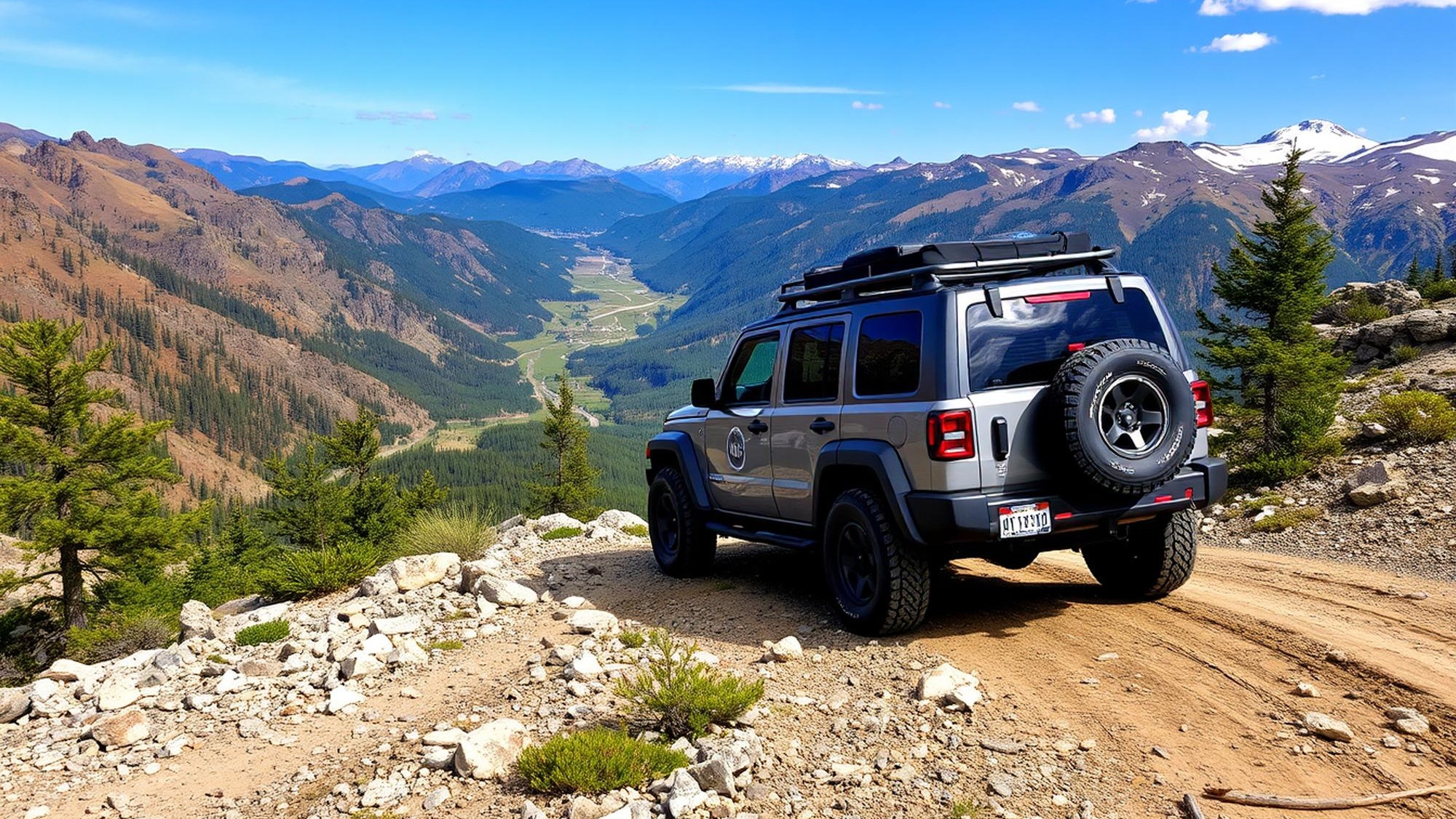
More than a million Jeep Wrangler and Gladiator owners now face an unusual and urgent directive: park outside and away from any building. The National Highway Traffic Safety Administration has issued a recall covering 1,076,999 vehicles from model years 2021 through 2025 after confirming that an electrical defect can trigger fires even when the ignition is off. The agency has counted 51 fires tied to the problem and one injury it considers likely related. For owners who routinely store these trucks in attached garages, the risk is immediate and the required changes to daily life are real.
Why a fire-while-parked defect forced NHTSA to act
The core danger is straightforward: heat can build inside the vehicle’s electrical system with the engine off and the key removed. That means a Wrangler or Gladiator sitting in a garage overnight or parked against a house can ignite without warning. NHTSA’s consumer alert explicitly tells owners to park affected vehicles outside and away from structures until a dealer repair is completed. The recall, filed under Campaign 26V363000, spans five model years and two nameplates, making it one of the larger safety actions tied to a single fire-related defect in recent memory.
Fifty-one confirmed fires across a fleet of that size may sound like a low rate, but the nature of the failure changes the calculus. Most vehicle fires occur during or shortly after driving, when fuel lines, exhaust components, and electrical loads are active. A fire that starts while a truck is parked and switched off removes the driver’s ability to notice warning signs like smoke or unusual smells. It also places the risk squarely in residential settings where a garage fire can spread to a home within minutes.
One open question is whether the defect concentrates in vehicles built during a specific production window. If a supplier change or component revision introduced the fault partway through the 2021 to 2025 run, fire reports should cluster around certain build dates once VIN-level data is cross-referenced with NHTSA complaint records. The agency has not released that granularity publicly, and no Part 573 manufacturer submission detailing the root-cause engineering analysis has appeared in the available recall documentation. Without that data, owners of any affected model year should treat the risk as applying equally to their vehicle.
Fifty-one fires and one injury across five model years
NHTSA’s own tally provides the clearest measure of severity. The agency reports awareness of 51 fires and one injury it describes as likely due to the defect, spread across the full population of 1,076,999 Jeep Wrangler and Gladiator trucks. The official recall page gives owners a VIN lookup tool to confirm whether their specific vehicle falls within the campaign. Owners who have not yet received a mailed notice from the manufacturer can use that tool immediately.
What the public record does not yet include is a detailed breakdown of the electrical component at fault, the repair procedure dealers will perform, or a timeline for parts availability. Stellantis has not released a public statement specifying when owners can expect appointments or how long the fix will take. For a recall of this scale, parts supply and dealer scheduling often stretch across months, leaving owners in a prolonged period of uncertainty about when they can safely return to normal parking habits.
In the meantime, the guidance from regulators is unambiguous. Owners are told not to park these vehicles in garages, carports, or any enclosed structure attached to a home or workplace. For apartment dwellers and urban drivers who rely on structured parking, that instruction can be difficult to follow. Some may have no realistic option other than a shared garage, raising questions about how property managers and employers will respond to vehicles subject to an active fire-risk recall.
What owners should do now
Until more technical details emerge, the most practical steps are administrative and behavioral. Owners should confirm their vehicle’s status using the NHTSA lookup, then contact a Jeep dealer to register for recall repairs as soon as scheduling opens. Keeping documentation of those contacts may prove useful if future disputes arise over delays or interim transportation needs.
Drivers also need to consider where and how long they leave these trucks parked. Choosing open-air spaces away from buildings, avoiding parking beneath residential units, and steering clear of dry vegetation can all reduce the chance that a vehicle fire will spread. While such precautions cannot eliminate the defect risk, they can significantly limit the potential for property damage or injury.
Insurance implications remain another gray area. Auto policies typically cover fire damage to the vehicle itself, and homeowners or renters coverage may apply to structures and personal property. However, claim outcomes can vary depending on policy language and whether an insurer believes an owner failed to follow a clear safety directive. Proactively documenting recall notices and any steps taken to comply could help if a loss occurs.
For Stellantis, the recall underscores the stakes of modern vehicle electrical design. As trucks and SUVs add ever more powered accessories and control modules, a single fault can have consequences that extend far beyond drivability. For owners, the lesson is more immediate: when a safety agency warns that a parked vehicle can catch fire without warning, treating that risk as theoretical is not an option. Parking outside, monitoring recall updates, and pushing for timely repairs are now part of daily life for more than a million Jeep households, and will remain so until a verified fix is in place.