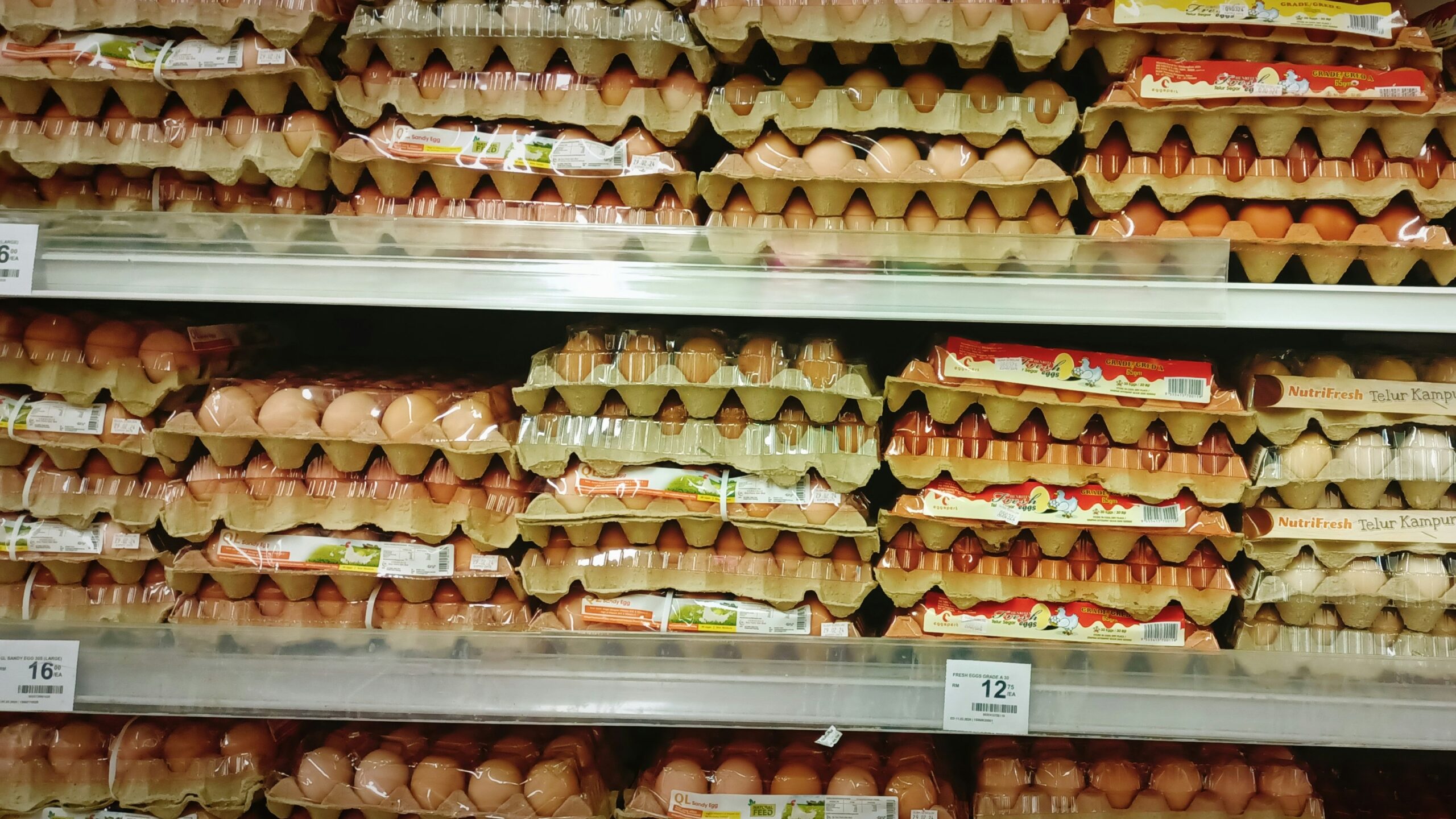
American grocery shoppers are getting relief at the egg case. The average price of a dozen Grade A large eggs has dropped 7.9% over the past year, according to the Bureau of Labor Statistics average-price series tracked on the Federal Reserve Economic Data platform. The BLS May 2026 Consumer Price Index release, published today, places egg prices within the broader meats, poultry, fish, and eggs category, where food-at-home costs have been a persistent pressure point for household budgets. Reports have attributed a projected 27% decline for 2026 to the USDA, though no primary USDA forecast document appears in the available source set to confirm that specific figure.
Why falling egg prices hit household budgets right now
Eggs occupy a unique spot in the American diet. They are one of the cheapest animal proteins available, which means price swings hit lower-income households hardest. The 7.9% year-over-year decline recorded in the BLS price series for Grade A large eggs reverses part of the sharp run-up that pushed per-dozen costs to record levels during earlier avian influenza outbreaks. That series, identified as APU0000708111, tracks the city-average cost per dozen using the same price-collection system behind the official Consumer Price Index.
The decline matters because egg prices had been one of the most visible drivers of food inflation. When a carton of eggs costs noticeably more, consumers feel it at every breakfast and in every recipe that calls for them. A sustained drop eases that pressure, but the question is whether the relief will last or whether it reflects a temporary rebound in egg supply that could reverse with the next disease outbreak or feed-cost spike.
One testable way to gauge durability is to compare monthly layer-hen inventory data against the BLS price series over the next two quarters. If flock numbers plateau or dip while prices keep falling, the decline is likely driven by weakening demand or cheaper feed rather than a simple supply bounce. If flock recovery stalls and prices stabilize, the relief could prove short-lived. For households, the distinction is crucial: a brief sale-like window encourages stocking up and menu changes, while a more durable shift allows families to plan longer-term budgets and potentially reintroduce egg-heavy dishes that had been cut back.
BLS data and the CPI food indexes behind the 7.9% figure
The 7.9% year-over-year drop is grounded in the BLS average-price program, which collects retail prices from the same outlets sampled for the CPI. The May 2026 CPI report provides the broader inflation context, situating egg-price movements within the meats, poultry, fish, and eggs index and the overall food-at-home category. BLS documentation explains that the average-price series covers large, Grade A eggs on a city-average basis, making it a standard benchmark for media and analysts tracking retail egg costs.
Within the CPI framework, eggs are only one line item among many, but they punch above their statistical weight. Because they are a staple in both direct consumption and processed foods, their price volatility can influence perceptions of inflation even when their formal contribution to the index is modest. When eggs surge, consumers tend to extrapolate that pain to the rest of the grocery cart, and when they ease, it can soften attitudes about overall price levels.
The headline also references a USDA expectation of a 27% decline across 2026. No primary USDA forecast table, Economic Research Service outlook, or official statement containing that exact projection appears in the available source documents. Readers should treat the 27% figure as reported but not independently confirmed through the primary data reviewed here. The USDA’s monthly egg-market reports and its food price outlooks would be the natural places to verify or challenge that number when updated data becomes available.
What could stall or accelerate the egg-price decline
Several forces could interrupt the current relief. The most immediate risk is a renewed wave of highly pathogenic avian influenza, which can trigger mass culling of layer hens and rapidly tighten supply. Past outbreaks turned what had been steady price trends into spikes within a few months. Even without disease, a sharp increase in feed costs, often tied to corn and soybean markets, would raise production expenses and eventually filter through to retail shelves.
On the demand side, shifts in consumer behavior can also matter. If falling prices encourage restaurants, bakeries, and food manufacturers to use more eggs, wholesale demand could absorb some of the supply cushion now helping to hold prices down. Conversely, if households continue to economize by substituting cheaper plant-based proteins or stretching recipes, demand growth could remain subdued, reinforcing the downward pressure.
Policy and labor conditions form a quieter but important backdrop. Wage trends, workplace rules, and enforcement priorities overseen by the U.S. Department of Labor influence labor costs throughout the egg supply chain, from farm workers to truck drivers to grocery staff. Information on federal labor standards and guidance is consolidated on the department’s main labor policy site, which employers use to interpret compliance obligations that can indirectly affect operating costs. While these factors rarely move egg prices month to month, they help set the floor under long-run production and distribution expenses.
For now, the data show clear, measurable relief at the egg case, anchored in official BLS price tracking. Whether that relief becomes a new normal or a brief pause in a volatile market will depend on how disease risks, feed markets, labor costs, and consumer habits interact over the rest of the year. Shoppers watching their grocery bills may not follow every data release, but the trend in a simple dozen eggs will remain one of the clearest signals they see.