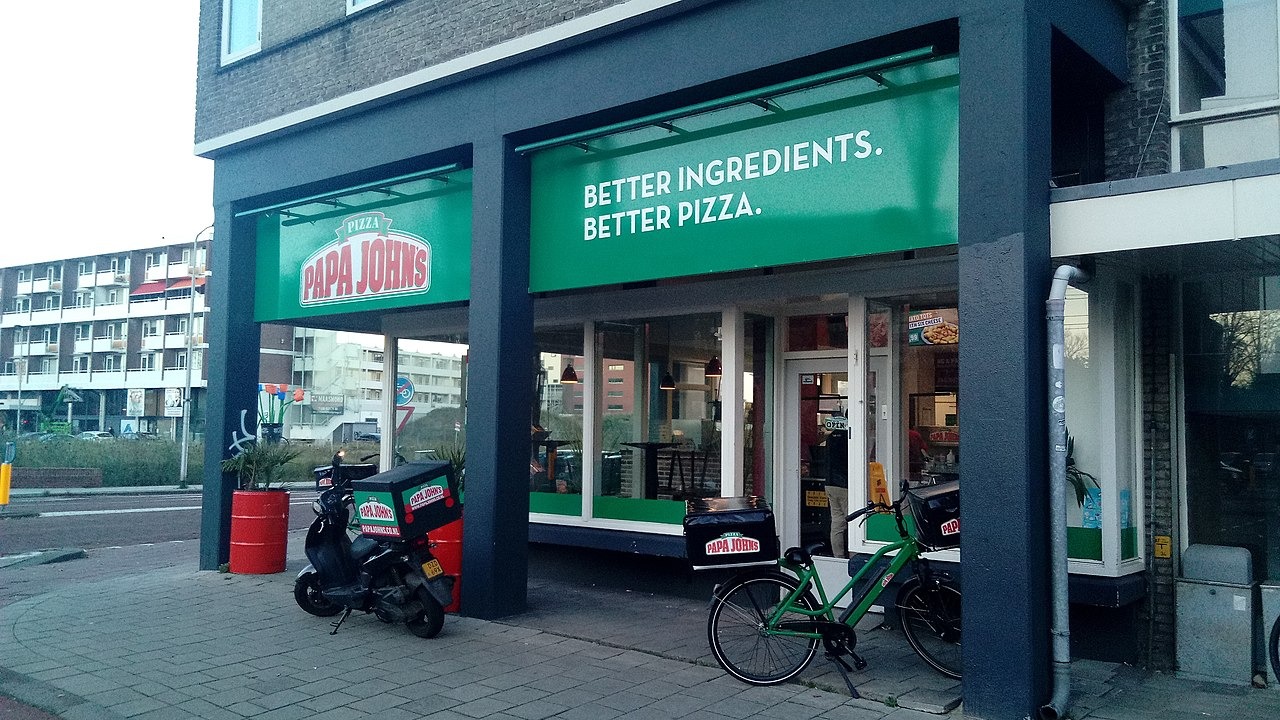
Papa John’s has shut down close to 50 company-owned restaurants spread across 17 states and eliminated roughly 7% of its corporate workforce, a pair of moves that signal deepening pressure on the pizza chain’s margins and operating structure. The closures target underperforming locations while leaving the broader franchise network intact, but the scale of the cuts raises pointed questions about how the company positioned itself financially to absorb this contraction without tripping debt covenants or triggering investor alarm.
Why the closures and staff cuts carry weight right now
The restaurant shutdowns and corporate layoffs land at a moment when labor costs, commodity prices, and consumer spending patterns continue to squeeze quick-service chains across the United States. Papa John’s decision to shed company-owned stores rather than franchise units points to a deliberate effort to reduce fixed overhead where the company bears direct operating risk. Franchise locations, by contrast, shift most day-to-day cost exposure to independent operators while still generating royalty and fee income for the parent company.
Because company-owned restaurants sit directly on the corporate balance sheet, closing dozens of them in a short span can trigger scrutiny from lenders. Loan agreements for restaurant operators frequently cap how many units can be shuttered or sold in a given period, or they require borrowers to maintain certain coverage and leverage ratios that can be affected by impairment charges and restructuring costs. Against that backdrop, Papa John’s ability to execute a multi-state retrenchment without disclosing a covenant breach suggests that the company had already laid legal and financial groundwork for a smaller company-operated footprint.
A review of the company’s SEC filings over the past decade reveals a pattern of corporate governance and debt instrument amendments that appear designed to preserve financial flexibility. Papa John’s filed amended articles in 2014, followed by a subsequent governance exhibit filed in 2015. Those filings, referenced in the company’s most recent Form 10-K for the fiscal year ended December 28, 2025, coincide with periods when the chain was actively adjusting its mix of company-owned and franchised stores. The hypothesis worth testing is whether the timing of those amendments gave Papa John’s the contractual room to accelerate divestitures or closures of company-owned restaurants without violating loan covenants, a question that can be examined by mapping amendment dates against store-count disclosures in annual reports.
SEC filings trace a decade of structural preparation
The paper trail in Papa John’s regulatory filings stretches from 2014 through at least 2021 and includes repeated updates to both governance documents and debt-related exhibits. A 2015 amendment to the articles of incorporation was followed by additional exhibits in 2017 and 2018 that adjusted the company’s debt terms and related corporate mechanics. Each of those documents was later cited in the Form 10-K covering fiscal year 2025, which indicates the company still considers them operative parts of its capital structure and governance framework.
Debt covenants typically restrict how many assets a restaurant company can sell or close within a given period, and they often limit incremental borrowing secured by existing collateral. By amending those instruments across multiple filing cycles, Papa John’s appears to have built incremental room to shrink its company-owned footprint without breaching lender thresholds. The 2017 debt exhibit and a 2018 governance filing both arrived during a turbulent stretch for the brand, when leadership turnover and public controversy were already weighing on same-store sales. A 2021 debt-related exhibit extended that pattern into a period shaped by pandemic recovery costs, elevated delivery expenses, and shifting consumer habits.
These documents, taken together, suggest a company methodically retooling its legal scaffolding to accommodate operational swings. Amendments to articles of incorporation can clarify board authority over asset dispositions, authorize new classes of securities, or refine voting thresholds for major transactions. Debt exhibits, meanwhile, can reset leverage limits, redefine EBITDA for covenant calculations, or carve out exceptions for restructuring charges tied to store closures. While the exact language in Papa John’s instruments varies by year, their continued incorporation by reference into later 10-Ks underscores their relevance to how the company manages today’s retrenchment.
None of the available SEC exhibits include a specific board resolution authorizing the current round of closures or the 7% staff reduction. That gap means the precise financial impact of the cuts, including lease termination costs, severance obligations, write-downs of right-of-use assets, and projected ongoing savings, has not been publicly detailed through primary filings accessible at this time. Investors and creditors will likely have to wait for the next quarterly or annual report to see how management classifies these moves within restructuring or impairment lines, and whether the company discloses any related one-time covenant waivers.
In the meantime, the pattern visible in a decade of filings offers context for the latest belt-tightening. Rather than reacting ad hoc to near-term traffic and cost pressures, Papa John’s appears to have spent years adjusting its governance and debt architecture to keep options open: selling weak stores to franchisees, closing chronic underperformers, and trimming corporate overhead when necessary. The latest closures and layoffs may be painful for affected employees and communities, but from a structural standpoint they fit into a longer-running strategy of shifting risk away from the corporate balance sheet and toward a leaner, more franchise-heavy model.