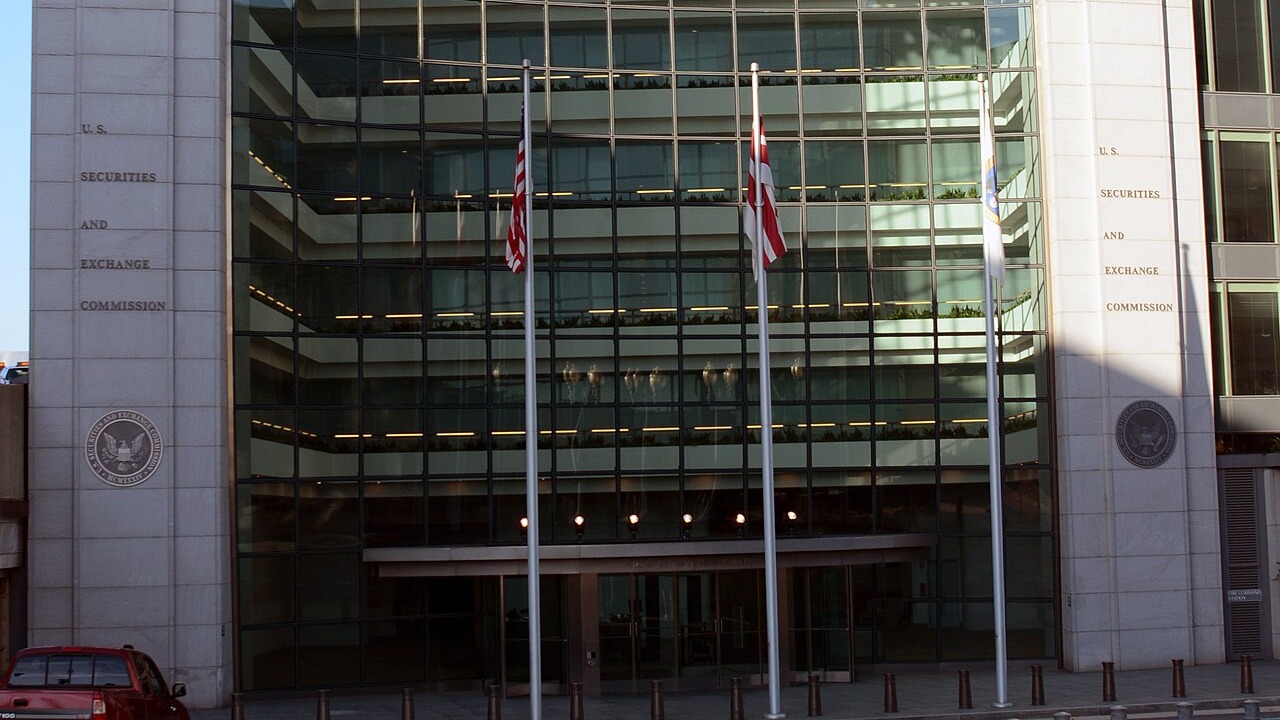
Investors who watched their accounts grow by a steady percentage every single month, regardless of whether the S&P 500 surged or cratered, lost billions when Bernard L. Madoff’s operation collapsed. The SEC charged Madoff with running a multi-billion dollar Ponzi scheme, alleging that returns to certain investors were paid out of principal from other investors rather than from any actual trading profits. That pattern of impossibly smooth performance, repeated across cases from Wall Street to Bitcoin, remains the single clearest warning sign federal regulators identify for fraud.
Smooth returns as a fraud signal in SEC enforcement
A fund that never posts a losing month sounds appealing, but the SEC’s own investor education materials flag it as a core red flag. The agency warns that overly consistent returns regardless of market moves are a hallmark of Ponzi operations. Legitimate portfolios tied to equities, bonds, or any traded asset will reflect the volatility of those markets. When reported performance decouples entirely from market swings for years on end, the most likely explanation is that the numbers are fabricated.
That observation leads to a testable idea: funds publishing monthly returns with a standard deviation below 1% for 36 consecutive months should show a disproportionately high ratio of new investor inflows to reported assets under management compared with peer funds whose returns track normal market volatility. The data to test this exists in Form ADV filings and N-PORT reports submitted to the SEC. No published study has yet run that specific screen across the full regulatory dataset, but the logic follows directly from Ponzi mechanics. If returns are not generated by real trades, the only source of cash to pay redemptions is fresh money coming in the door.
In practice, smooth-return strategies can exist legitimately-such as certain market-neutral, arbitrage, or fixed-income funds-but even those should show some variation over time. Interest rates change, counterparties fail, and unexpected market events ripple through every portfolio. When a manager’s numbers glide upward through crises, rate shocks, and sector crashes with barely a wobble, investors should assume the burden is on the promoter to prove authenticity, not on skeptics to prove fraud.
Madoff and Shavers: the same pitch across eras
The Madoff case remains the most thoroughly documented example. The SEC filed charges under an enforcement release in December 2008, and Madoff pleaded guilty on March 12, 2009, to an 11-count criminal information in SDNY case 1:09-cr-00213-DC. According to a press statement from the FBI’s New York office, he admitted that client funds were not invested as promised, that money from a bank account was used to pay redemptions and reported profits, and that false trade confirmations and account statements were generated to maintain the illusion.
The same structure appeared in digital assets when the SEC brought an enforcement action against Trendon T. Shavers and his Bitcoin Savings and Trust operation. BTCST promised fixed or very high periodic returns to investors, paid from deposits made by newer participants. The asset class changed from equities to Bitcoin, but the pitch was identical: guaranteed, steady gains with no apparent risk. Both cases confirm that the “no-dip” sales approach is not limited to one market, one decade, or one type of promoter.
In each scheme, the promise of stability did as much work as the promise of high returns. Investors who had lived through bursting bubbles and flash crashes were reassured by statements that their accounts “never went down.” That psychological comfort-seeing the same gentle upward slope month after month-helped override skepticism that might have surfaced if the track records had looked more like real markets, with jagged peaks and valleys.
Gaps in the data and what investors should watch
Despite decades of enforcement, regulators have not published a systematic count of how many active funds currently advertise zero-volatility track records. The SEC maintains an extensive database of adviser registrations and fund reports, but those filings are not routinely screened and reported to the public in a way that highlights unusually smooth performance. As a result, investors cannot simply look up a list of suspiciously consistent funds and avoid them. Instead, they have to apply the core lessons of past cases themselves.
First, treat any offer of “guaranteed” or “can’t lose” monthly gains with extreme caution, especially when the strategy is described as complex or proprietary. Second, compare the fund’s reported results with relevant benchmarks over the same period; if a portfolio tied to risky assets shows almost no drawdowns while the benchmark whipsaws, that divergence demands an explanation supported by transparent positions and verifiable execution. Third, pay attention to how returns are audited and who controls the cash. Independent custodians, reputable auditors, and clear segregation of client assets do not eliminate risk, but they make it harder to fabricate account statements wholesale.
The history of Madoff, Shavers, and other Ponzi promoters shows that the most dangerous frauds rarely look volatile on the surface. They look safe, predictable, and boring-until the inflows stop and the entire structure collapses at once. Investors who learn to see “too smooth” returns as a warning rather than a comfort are far better positioned to step aside before the crash.