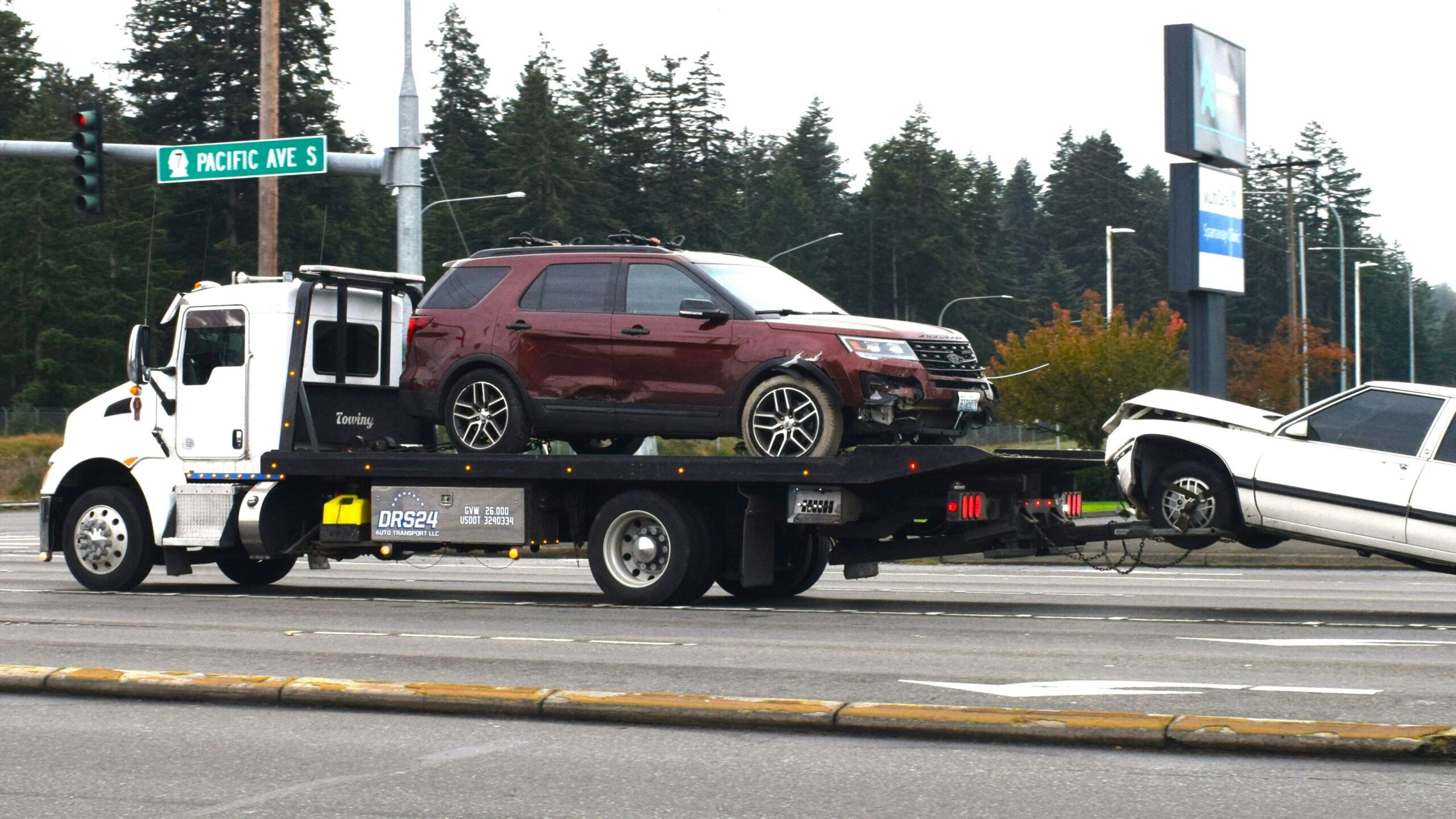
American borrowers lost roughly 1.73 million vehicles to repossession in 2024, the highest annual total since 2009 and a 16 percent jump from the prior year. The estimate, produced by Cox Automotive, signals that the financial strain from pandemic-era vehicle purchases is now hitting households hard enough to cost them their cars. Behind the numbers is a straightforward mechanism: vehicle prices surged, loan balances followed, and monthly payments climbed beyond what many borrowers can sustain.
Why 1.73 Million Seized Vehicles Signal Deeper Auto-Loan Stress
The 2024 repossession count did not appear overnight. It reflects loans written during a period of record vehicle prices, when inventory shortages pushed buyers into larger financing packages. The Federal Reserve has directly linked rising auto-loan delinquencies to higher monthly payments driven largely by elevated vehicle prices and bigger loan amounts. Borrowers who financed at the top of the market in 2021 and 2022, often with terms stretching 72 months or longer, are now deep into repayment schedules on cars that have depreciated faster than their balances have shrunk.
That mismatch creates a specific risk. When a borrower falls behind and the vehicle is worth less than the remaining loan balance, lenders have less incentive to offer workout terms and more incentive to repossess quickly to limit losses. The result is a feedback loop: negative equity discourages voluntary trade-ins, traps owners in unaffordable payments, and eventually pushes delinquent accounts toward seizure. Whether repos are rising fastest among those longer-term loans originated in 2021 and 2022 is a testable question, but confirming it requires cohort-level performance data that the Consumer Financial Protection Bureau’s Auto Finance Data Pilot is designed to produce.
Cox Automotive Data and Federal Reserve Findings Behind the Surge
Cox Automotive’s estimate of 1.73 million repossessions in 2024 represents a 43 percent increase from 2022 levels. That two-year acceleration is steeper than the year-over-year rise alone suggests, pointing to a trend that has been building rather than a single-year shock. Reporting from major financial outlets has cited the same Cox Automotive figure, reinforcing confidence in the estimate and underscoring that the spike is broad-based rather than confined to a single lender or region.
The Federal Reserve’s analysis, published in a September 2026 research note, provides the causal framework. Higher vehicle prices forced buyers into larger loans. Larger loans produced higher monthly payments. Higher monthly payments, in turn, pushed delinquency rates upward across borrower segments. The Fed’s research does not isolate a single credit tier as the primary driver, but the pattern is clear: payment size, not interest rates alone, is straining household budgets. Even borrowers with relatively strong credit profiles can struggle when monthly obligations crowd out rent, groceries, and other essentials.
The Consumer Financial Protection Bureau’s Auto Finance Data Pilot adds another layer. The bureau has been collecting repossession records from auto-finance companies to build a more granular picture of when, where, and how seizures occur. Its public materials on repossession practices describe a data effort aimed at capturing the full life cycle of an auto loan, including delinquency, default, and eventual disposition of the vehicle. While the agency has not yet released detailed cohort performance tables, the framework is intended to show which loan structures and business models are most closely associated with loss of a vehicle.
Household Budgets Under Pressure
For individual borrowers, the surge in repossessions is less about abstract credit cycles and more about day-to-day cash flow. Many households that stretched to afford a car in 2021 or 2022 did so against a backdrop of temporary income supports, elevated savings, and unusually strong used-car values. As those supports faded and other costs of living rose, the fixed car payment remained. A loan that once fit comfortably into a monthly budget can become untenable when wages lag inflation or when hours are cut.
Because vehicles are essential for commuting in much of the United States, borrowers often prioritize auto payments ahead of other bills. The rise in repossessions despite that tendency suggests that a growing share of borrowers are hitting an absolute affordability wall. Once a payment is missed, fees, late charges, and the possibility of accelerated balances can make catching up even harder, especially on loans that were already stretched over six or seven years.
Implications for Lenders and Policymakers
The 1.73 million seized vehicles in 2024 highlight risks for lenders as well as borrowers. High repossession volumes can erode the value of loan portfolios, particularly when used-car prices soften and recovery values fall. That dynamic may prompt tighter underwriting, higher required down payments, or shorter loan terms for future borrowers, potentially limiting access to financing for lower-income households who already face steep barriers to car ownership.
For policymakers, the data strengthens the case for closer scrutiny of loan structures that routinely leave borrowers with negative equity deep into the term. The combination of long maturities, high markups over vehicle sticker prices, and add-on products financed into the loan can turn a necessary purchase into a prolonged financial drag. As the CFPB’s data collection matures and the Federal Reserve continues to track delinquencies, regulators will have more tools to distinguish between sustainable credit and practices that systematically lead to repossession.
Ultimately, the surge in repossessions is a lagging indicator of choices made earlier in the decade-by automakers, lenders, and households alike. It will take time for the industry to work through the backlog of stressed loans written at the peak of the market. How lenders, regulators, and borrowers respond now will determine whether 2024 marks the high-water mark for auto repossessions or the start of a more prolonged period of elevated losses.