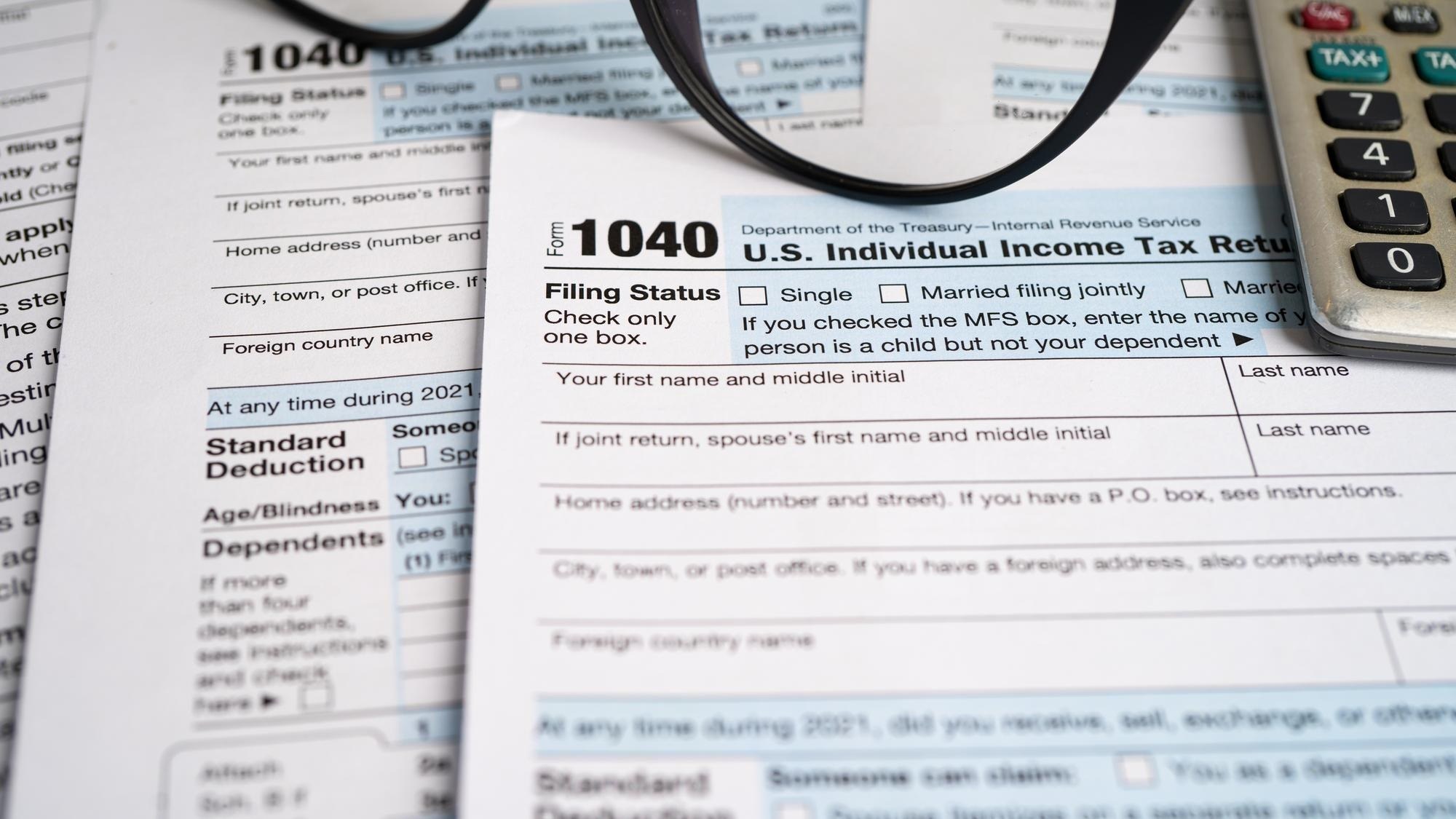
The financial shock of losing a spouse is usually measured in the missing paycheck, pension, or Social Security check. A quieter blow arrives at tax time. When a spouse dies, the survivor’s filing status changes — often to single — and the same household income that was comfortable on a joint return can suddenly carry a noticeably higher tax bill. Tax preparers call it the widow’s penalty, and it can cost a surviving spouse thousands of dollars a year while nothing about their actual income has changed.
How the shift from joint to single filing happens
Married couples file jointly, which spreads income across the wider brackets and the larger standard deduction that two people share. For the calendar year in which one spouse dies, the survivor can generally still file a final joint return. It is the years that follow where the penalty bites: the survivor moves to single filing, or to “qualifying surviving spouse” status for up to two years only if they are supporting a dependent child.
Once single rates apply, the same dollars are taxed in a compressed structure. As IRS Publication 501 details, a single filer’s standard deduction is roughly half the joint amount, and the single tax brackets reach higher rates at lower income thresholds. Income that sat in a low joint bracket can cross into a higher single bracket without the household earning an extra cent.
Free retirement updates: One number can cost or save hundreds a month in retirement. The free Retirement Shield newsletter surfaces the ones worth knowing. Sign up free.
Why the same income costs more
The penalty compounds because retirement income does not fall in half when a spouse dies. A surviving spouse often keeps the larger of the two Social Security benefits and continues to draw from the same retirement accounts, so taxable income may drop only modestly even as the filing status flips to single. Required minimum distributions from a traditional IRA or 401(k) do not shrink simply because one account holder has died, and the survivor may inherit the deceased spouse’s accounts on top of their own.
That combination — steady income, but half the brackets and half the standard deduction — is what turns an unchanged financial picture into a larger bill. It can also raise the share of Social Security benefits that is taxable and, for higher-income retirees, push a survivor across the income thresholds that trigger Medicare’s high-income premium surcharges two years later.
The ripple into Medicare premiums and taxed benefits
The widow’s penalty does not stop at the income-tax return. Two adjacent systems key off the same filing status and income, and both can turn against a survivor. The first is the taxation of Social Security benefits: the income thresholds that determine how much of a benefit is taxable are lower for a single filer than for a couple, so a survivor with an unchanged benefit can see a larger share of it pulled into taxable income. The second is Medicare. The high-income surcharges added to Part B and Part D premiums, known as the income-related monthly adjustment amount, are set from a tax return filed two years earlier and use single-filer brackets for a widow or widower. A one-time spike in income during the year of a spouse’s death — from selling a home, cashing out an account, or an inherited distribution — can push a survivor over a surcharge threshold and raise Medicare premiums for a full year, two years later.
Because these effects arrive on a delay, they are easy to miss in the immediate aftermath of a death, and a survivor may not connect a higher Medicare premium in one year to a financial event two years prior. Mapping the income for the year of death against both the Social Security taxation thresholds and the Medicare surcharge brackets is what keeps a survivor from being surprised twice.
Moves that soften the blow
The widow’s penalty is predictable, which means it can be planned for while both spouses are living. Some couples convert part of a traditional IRA to a Roth during their joint-filing years, paying tax at the lower married rates so that future withdrawals — taken later as a single filer — come out tax-free. Others time the realization of capital gains or larger withdrawals to the years when joint brackets are still available.
Coordinating survivor benefits matters as well. The Social Security Administration’s survivors benefits rules govern which check a widow or widower keeps and when claiming a survivor benefit rather than a personal benefit produces more monthly income. Because the two interact with the tax brackets, the claiming decision and the withdrawal plan are best considered together rather than in isolation.
Why the paperwork deserves attention now
For a surviving spouse already managing an estate, the tax consequence is easy to overlook until a return comes due the following spring. Reviewing the projected single-filer brackets, the smaller standard deduction, and the timing of any Roth conversions before the transition — rather than after — is what separates a manageable adjustment from an unwelcome surprise. The mechanics are spelled out plainly in the IRS filing-status guidance, and the numbers reward households that run them ahead of time instead of discovering the penalty on the first return filed alone.
This article was produced with the assistance of artificial intelligence and reviewed by The Financial Wire editorial team.
More Financial Reading
- Bank statements: how long to keep them and when to toss them
- How many CDs can you park at 1 bank? FDIC rules you must know