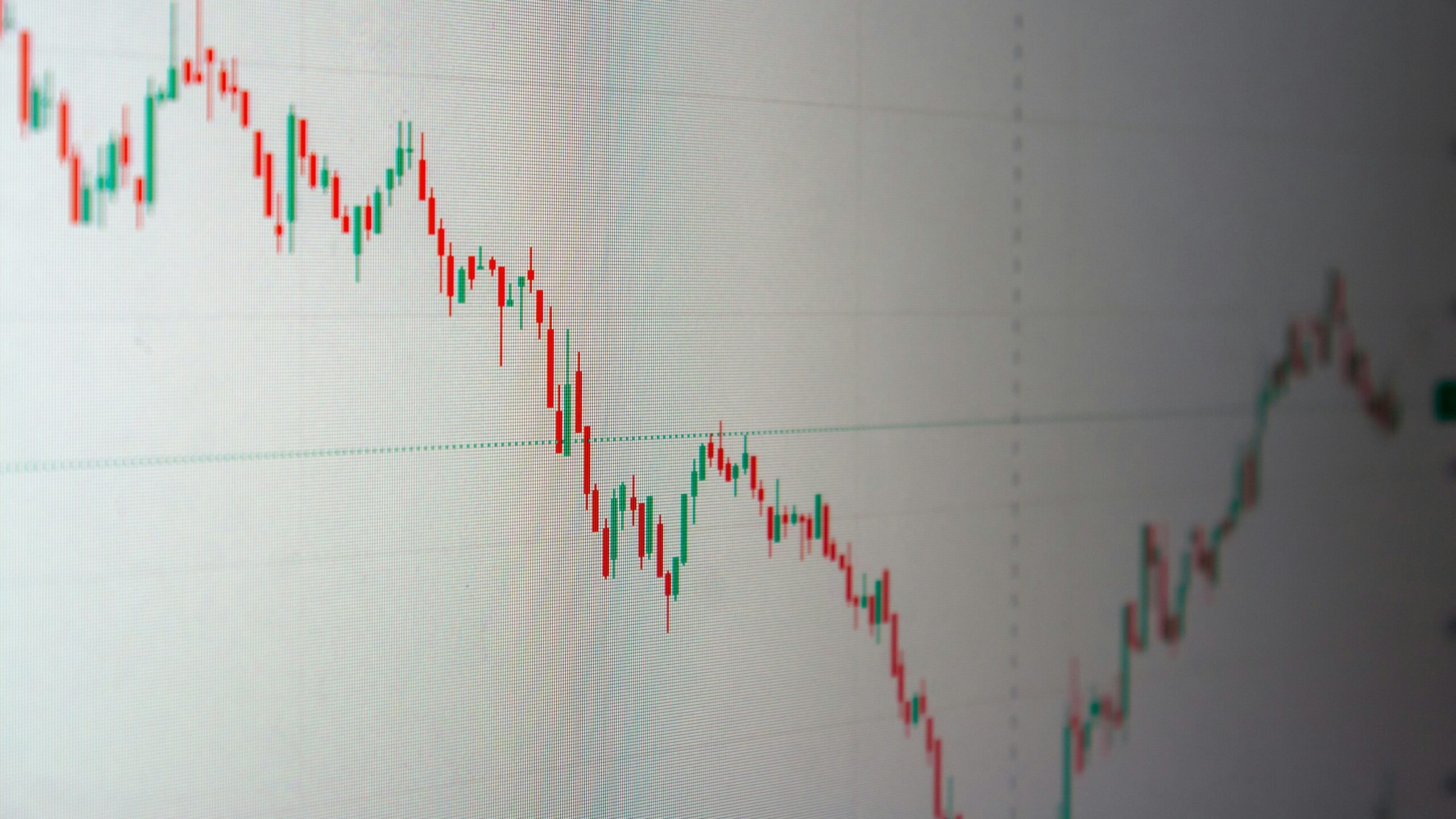
Michael Burry, the investor who famously predicted the 2008 financial crisis, declared on May 11, 2026, that the stock market has “jumped the shark” and that the current tech rally mirrors the conditions that preceded the dot-com crash of 2000. Burry pointed to the Nasdaq 100’s steep climb and a sharp run in semiconductor stocks since late March as evidence that speculation has overtaken fundamentals. For anyone holding index funds or retirement accounts heavy on tech, the comparison to 2000 carries a direct and uncomfortable question: is this rally built on earnings or on air?
Why Burry’s dot-com comparison carries weight in May 2026
Burry’s track record gives his warnings an audience that most market commentators do not command. He built his reputation by shorting subprime mortgage securities before the 2008 collapse, a bet dramatized in “The Big Short.” When he writes that the current environment looks like the top of the dot-com bubble, institutional and retail investors alike pay attention. His latest warning, published in a Substack post and reported by Bloomberg, described the Nasdaq 100 and broader tech surge as “parabolic,” a term that in market analysis signals unsustainable acceleration.
The tension behind the headline is straightforward. If valuations keep expanding while actual revenue growth in key sectors like semiconductors fails to keep pace, the gap between price and profit becomes a trap. In 2000, the Nasdaq Composite peaked in March and then lost roughly three-quarters of its value over the next two and a half years. Burry’s argument is that the shape of the current rally, not just the level, echoes that period. The SOX semiconductor index, which tracks chip stocks, has moved sharply since the end of March 2026, a pattern Burry flagged as part of the overheating signal.
For individual investors, the practical consequence is real. Target-date retirement funds, 401(k) plans, and passive index strategies are all heavily weighted toward the same tech names driving the Nasdaq 100 higher. A sharp reversal would not be limited to active traders; it would hit anyone whose savings track the index. That is why a warning framed around bubble dynamics, rather than short-term volatility, resonates so strongly with savers who may not consider themselves speculators at all.
Nasdaq 100 data and the SOX index since late March
Burry’s claim that the rally is parabolic can be checked against public data. The Nasdaq 100 daily index series published by the Federal Reserve Bank of St. Louis, sourced from Nasdaq, Inc., covers the late March through May 2026 window Burry referenced. The trajectory visible in that dataset aligns with the scale he described: a steep, accelerating upward slope that compresses months of gains into weeks.
Burry also singled out the SOX index, which tracks major semiconductor companies. Since the end of March, chip stocks have surged in a pattern he compared to the final leg of the 2000 bubble. In that earlier episode, semiconductor shares were among the last to peak and among the hardest to fall. Burry’s read is that the same dynamic is playing out now, with momentum chasing replacing fundamental analysis as the primary driver of prices.
The hypothesis that forward price-to-earnings ratios could expand indefinitely without a corresponding surge in earnings rests on increasingly fragile assumptions. In a late-stage bull market, investors often justify stretched multiples by pointing to long-term growth narratives, cost-cutting potential, or future breakthroughs that have yet to appear in current financial statements. Burry’s critique is that these justifications are being pushed beyond reasonable bounds, particularly in segments tied to artificial intelligence and high-performance computing chips, where expectations for demand growth are already extraordinary.
Another element of his warning concerns market structure. Passive index funds and exchange-traded funds automatically allocate more capital to companies whose share prices have already risen, reinforcing trends. As the largest technology and semiconductor names rally, they draw in additional passive flows, which can detach prices further from underlying cash flows. This feedback loop, Burry argues, resembles the concentration and crowding that marked the late 1990s, when a small cluster of high-flying tech stocks dominated major indices.
What Burry’s warning means for investors now
For investors, the question is not whether the current environment perfectly replicates 2000, but whether portfolio risk matches personal tolerance. Burry is not merely predicting volatility; he is flagging the possibility of a prolonged drawdown in which broad indices, led by tech, could lose a large share of their value before stabilizing. In that scenario, investors who assumed that diversified index funds guaranteed smooth long-term returns might discover that diversification within one crowded sector is not diversification at all.
Responding to such a warning does not necessarily mean exiting the market. It can mean reassessing concentration in the most richly valued tech and semiconductor names, stress-testing retirement projections against a severe bear market, and considering whether exposure to other sectors or asset classes is sufficient. Investors who lived through the dot-com bust remember that the recovery took years, not months, and that many once-dominant companies never regained their prior peaks.
Burry’s comparison to the dot-com era is ultimately an argument about time horizons. If the rally is being driven by speculative fervor more than by sustainable earnings growth, then future returns may have been pulled forward, leaving a leaner path ahead. For savers counting on steady compounding, that possibility is not abstract. It is a reminder that even in an age of passive investing and algorithmic trading, classic bubble dynamics can still emerge – and that, as in 2000, they often become most convincing just before they break.