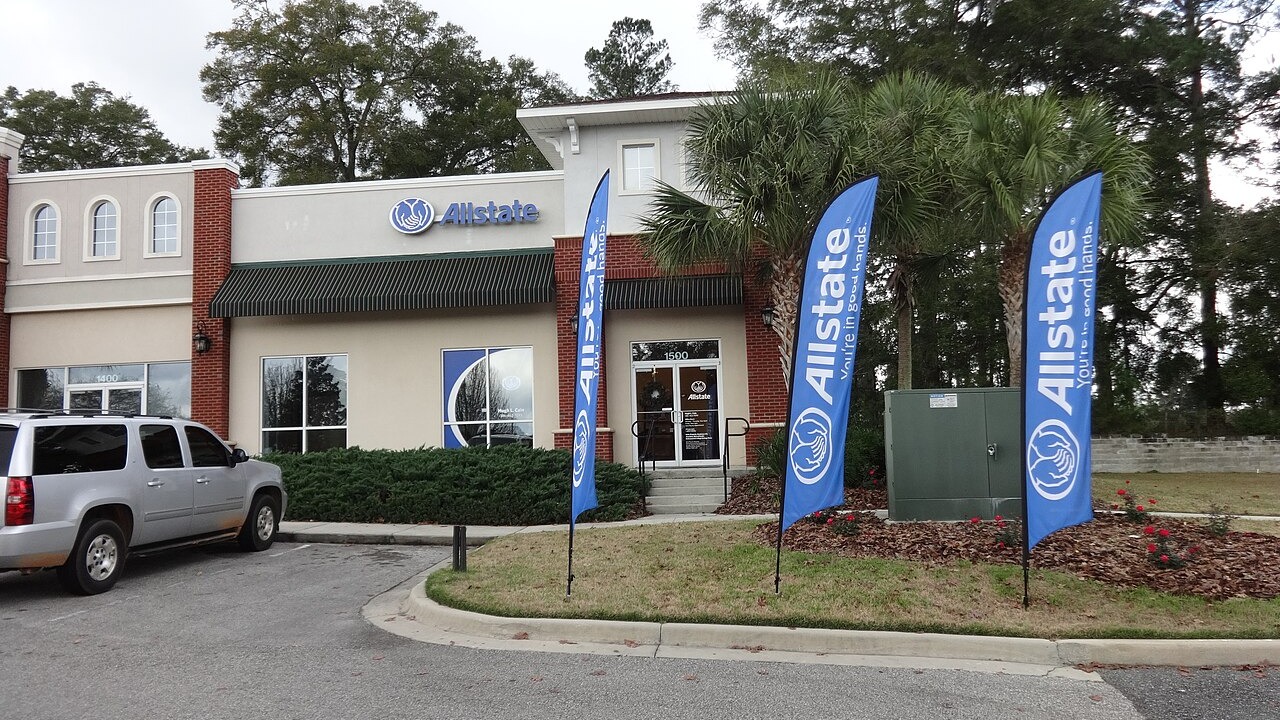
More than 209,000 Illinois homeowners insured by Allstate face an 8.8 percent premium increase, a rate hike filed with state regulators at a time when Illinois officials are pressing major carriers for far more detailed pricing data. The filing lands in the middle of a broader fight over transparency in homeowners insurance, with Attorney General Kwame Raoul suing another top insurer to force disclosure of zip-code-level loss information and state lawmakers advancing legislation that would trigger new requirements for double-digit rate increases.
Statewide rate hike meets a push for zip-code-level data
Allstate’s 8.8 percent increase applies uniformly across its Illinois homeowners book, but the actual cost burden will not fall evenly. Severe-weather exposure, rebuilding costs, and claims history vary sharply from one county or zip code to the next. That variation is exactly what Illinois regulators want to see. The Illinois Department of Insurance conducted a 2024 examination into homeowners insurance and, as part of that review, sought zip-code-level nationwide homeowners data from State Farm. When the company declined to provide the full dataset, Attorney General Kwame Raoul filed suit to compel disclosure to state regulators, according to a statement from his office.
The dispute with State Farm sets a precedent that could extend to every large carrier writing policies in Illinois, Allstate included. If regulators eventually receive granular territorial data from all filers, a flat 8.8 percent statewide number would need to be broken open so officials and consumers can see which territories are driving losses and whether the increase is proportional to local risk. That level of detail could reveal whether certain neighborhoods, including communities with lower median incomes or higher percentages of renters turned first-time buyers, are absorbing outsized increases relative to their actual claims experience.
Legislative and federal pressure on premium transparency
State lawmakers are moving on a parallel track. Senate Bill 2684 in the 104th General Assembly includes provisions requiring advance notice for premium increases of 10 percent or more on homeowners policies, along with an affordability assistance pilot aimed at policyholders struggling to keep coverage. At 8.8 percent, Allstate’s filing falls just below that threshold. If the bill becomes law, carriers would face a higher bar for transparency on large hikes, and future Allstate filings that cross the 10 percent line would trigger the new notice and review requirements.
The legislative debate is unfolding against a national backdrop. A U.S. Government Accountability Office report, GAO-26-107867, found that homeowners insurance premiums across the country have generally kept pace with inflation but increased more steeply in disaster-prone regions. That conclusion raises a direct question about Illinois: the state spans low-risk farmland and higher-risk tornado and flood corridors, yet a single statewide percentage obscures whether policyholders in relatively safer areas are subsidizing losses elsewhere, or whether high-risk counties are bearing a disproportionate share of the costs.
For consumer advocates, the combination of a sizable statewide hike and the absence of territorial detail underscores the stakes of both the State Farm lawsuit and the pending legislation. If regulators gain access to detailed loss and premium data and lawmakers add new notice requirements, Illinois could move closer to a system where homeowners can see how their location, home characteristics, and claims history feed into the price they pay each year.
Gaps in the public record around Allstate’s filing
Several pieces of evidence that would allow a fuller assessment of the 8.8 percent increase are not publicly available. No actuarial memorandum or loss-ratio breakdown from Allstate’s filing has surfaced in the public record, leaving questions about how much of the hike is driven by higher reinsurance costs, updated catastrophe models, inflation in construction materials, or simple margin expansion. Without those details, outside analysts cannot easily test whether the proposed rates align with recent claim trends in Illinois or mirror broader national patterns identified by federal watchdogs.
It is also unclear how the increase will interact with non-rate tools that insurers routinely use to manage risk, such as higher deductibles, roof age restrictions, or limits on new business in certain counties. An 8.8 percent average premium change could land very differently for a homeowner in a region where coverage terms are tightening than for one whose policy remains otherwise unchanged. The lack of public documentation around Allstate’s underwriting plans in Illinois makes it difficult to gauge the combined impact of pricing and coverage shifts on household budgets.
Consumer groups and local officials have argued that these blind spots make it harder to hold carriers accountable. Without zip-code-level loss and premium data, communities cannot easily determine whether they are being charged more because they file more claims, because they face objectively higher catastrophe risk, or because of broader company strategies that spread costs across territories. The Attorney General’s push for granular data from State Farm, and the Department of Insurance’s broader examination, signal that state officials want the tools to answer those questions before approving or monitoring significant rate changes.
For now, Allstate’s 8.8 percent increase sits at the intersection of these emerging transparency efforts. It is large enough to matter for hundreds of thousands of households but calibrated just below the level that would trigger the proposed state notice requirements. As litigation over data access proceeds and lawmakers weigh new consumer protections, the outcome will shape how much Illinois homeowners can see-and contest-about the next round of premium hikes.