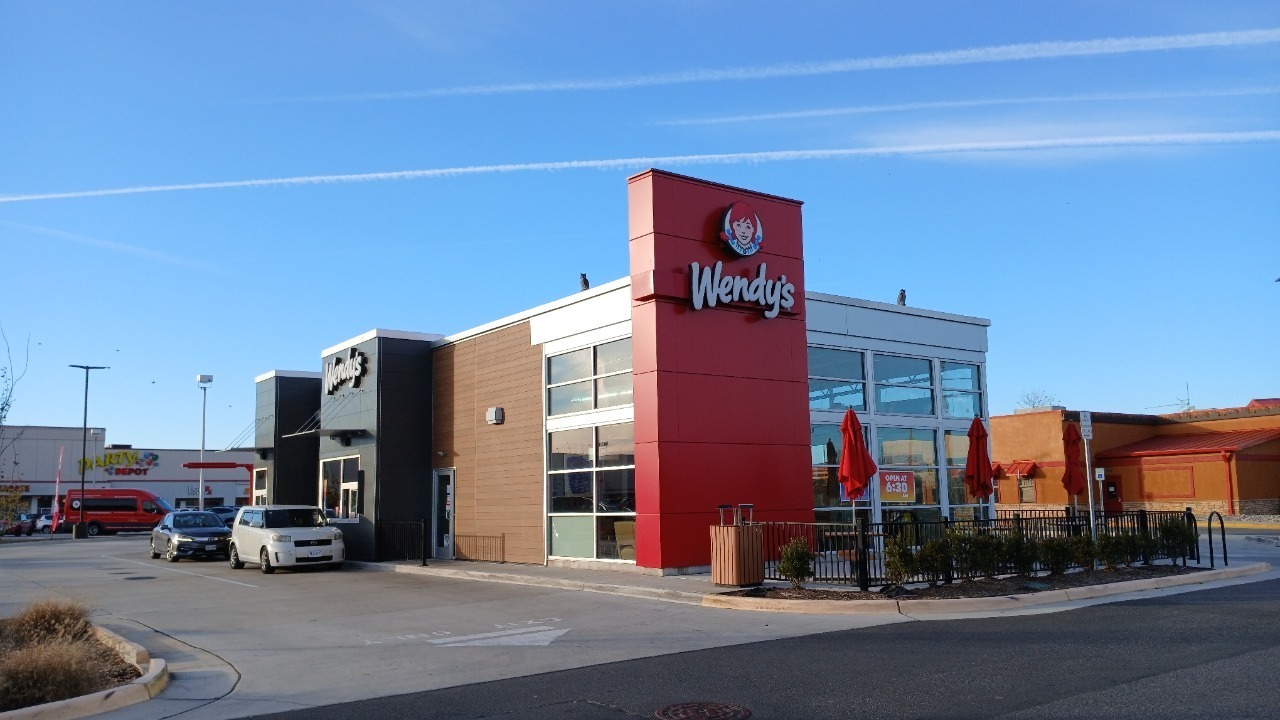
Wendy’s expects to close 5% to 6% of its U.S. restaurants this year, a cut that translates to hundreds of locations shutting their doors as the chain fights declining same-store sales. The closures follow a formal portfolio review led by interim CEO Ken Cook, who described the plan as affecting a “mid-single-digit percentage” of domestic locations. Wendy’s had already closed 28 U.S. restaurants in the fourth quarter of its fiscal year, which ended December 28, 2025.
Why Wendy’s closure plan hits now
The scale of the pullback reflects a company under real pressure. Wendy’s reported same-store sales declines, meaning existing locations brought in less revenue than the prior year. That trend squeezes both the company and its franchisees, who operate the vast majority of Wendy’s roughly 5,700 domestic restaurants. Closing the weakest-performing stores is a direct attempt to stop the financial drag those locations create across the system.
The strategic logic is straightforward: removing underperforming restaurants should lift the average sales volume of the locations that remain open. If Wendy’s sheds sites that pull down systemwide averages, the surviving footprint could show stronger per-unit economics within a year, even if total revenue across the chain stays flat or dips slightly. That math depends on which locations close. If the cuts concentrate on low-traffic urban or rural sites while preserving busier suburban stores, the remaining network would look healthier on paper. But that outcome is not guaranteed, and the company has not publicly detailed which markets or store types will bear the brunt.
Filings and earnings data behind the closures
Wendy’s latest annual report for the fiscal year ended December 28, 2025, provides the audited baseline for the chain’s restaurant count, including a multi-year table of openings and closings. That filing shows how the company has cycled between modest expansion and contraction, with recent years tilting toward net reductions as weaker units come off the books.
The forward-looking closure target of 5% to 6% of U.S. restaurants came from the company’s earnings disclosure and was described by the Associated Press as amounting to hundreds of locations. The 28 restaurants already closed in the fourth quarter represent the first wave of a broader effort that Cook had previewed after completing the portfolio review. His “mid-single-digit percentage” comment aligns with the formal range, signaling that the company sees this as a deliberate reset rather than a one-off trimming.
The closures are paired with a shift toward value-oriented menu offerings designed to hold onto price-sensitive customers. Executives have emphasized lower-priced bundles and deals as a way to keep traffic flowing even as consumers trade down or visit less often. Wendy’s has not disclosed specific per-store sales thresholds, profitability metrics, or lease-expiration triggers that will determine which restaurants are marked for closure. Instead, franchisees and company operators will make individual decisions about which sites stay open, but the corporate target sets the overall pace and expectations.
Open questions about which Wendy’s locations will close
Several gaps in the public record make it hard to predict where the closures will land. Wendy’s has not broken down its closure projections by company-operated versus franchised locations. That distinction matters because franchisees may have very different financial profiles and lease obligations than corporate stores, affecting how quickly they can exit underperforming sites.
The company also has not provided a market-by-market roadmap. Investors and local communities do not yet know whether the pullback will be concentrated in older, saturated regions or spread more evenly across the country. Historically, chains under pressure have tended to prune marginal suburban and rural stores first, where traffic may be thinner and fixed costs harder to cover. But without detailed guidance, it is unclear whether Wendy’s will follow that pattern or take a more opportunistic approach based on lease terms and landlord negotiations.
What is clear is that the closures will be noticeable. In a separate report on the restructuring, the Associated Press said the plan would touch a significant share of the domestic base, underscoring that this is not a handful of isolated exits but a coordinated retrenchment. The company has framed the move as a way to focus resources on stronger restaurants, invest in digital ordering and drive-thru capacity, and support new menu initiatives.
For customers, the impact will vary by neighborhood. Some diners may see their nearest Wendy’s shuttered and have to travel farther, while others could benefit if surviving locations receive upgrades or expanded value offerings. For workers, the picture is more uncertain. Wendy’s has not released detailed job-impact figures or a national relocation plan, leaving it to franchisees and local operators to determine whether employees at closing stores can be reassigned.
Communities and commercial landlords will be watching closely. A Wendy’s closing can leave a noticeable gap in a strip center or on a busy corner, especially in smaller towns where the brand may be one of only a few quick-service options. Re-tenanting those spaces can take time, and replacement concepts may not generate the same traffic. Local officials may therefore press franchisees for clarity as closure decisions move from corporate guidance to specific addresses.
For now, the only firm numbers are the current restaurant count, the 28 closures already completed, and the 5% to 6% target for the year. As additional details emerge in future earnings calls and regulatory filings, investors and local stakeholders will gain a clearer view of which parts of the Wendy’s map are shrinking-and whether the streamlined footprint can deliver the stronger unit economics the company is counting on.