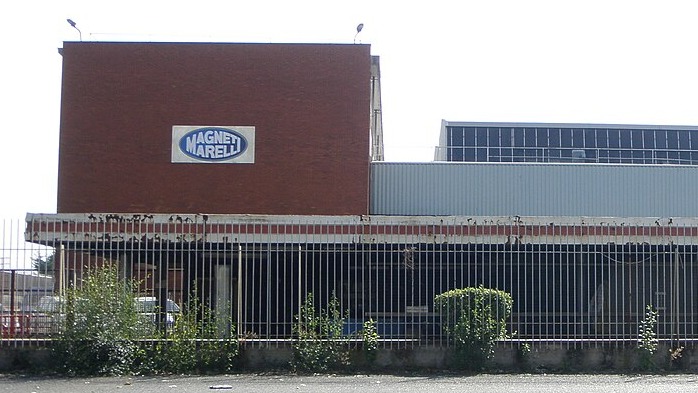
Marelli Holdings, a major auto-parts manufacturer supplying Nissan and Stellantis, filed for Chapter 11 bankruptcy protection on June 11, 2025, listing approximately $4.9 billion in liabilities. The company simultaneously secured $1.1 billion in new financing to keep its factories running during restructuring. The filing will transfer ownership from current stakeholders to the company’s lenders, reshaping one of the largest supplier relationships in the global auto industry.
Why Marelli’s $4.9 billion collapse hits Nissan and Stellantis hard
Marelli produces lighting systems, electronics, and exhaust components that feed directly into assembly lines at Nissan and Stellantis. When a supplier of that scale enters bankruptcy, the immediate risk is not theoretical. Production schedules at those automakers depend on uninterrupted parts flow, and any hiccup during restructuring could force line stoppages at plants already operating with lean inventories.
The $1.1 billion in debtor-in-possession financing is designed to prevent exactly that scenario, keeping Marelli’s operations funded while courts sort out creditor claims. According to court disclosures, the financing package is structured to prioritize operational continuity so that key customers do not face immediate shortages.
Still, the bankruptcy exposes how concentrated Nissan and Stellantis have become in certain high-value components. Automakers have spent years leaning on suppliers for just-in-time delivery and cost reductions, but Marelli’s collapse underscores the downside of that model when a critical partner runs out of financial runway. Even if parts keep flowing through the restructuring, the episode is likely to trigger internal reviews of single-supplier dependencies, contingency inventories, and dual-sourcing strategies.
A reasonable expectation is that both automakers will accelerate efforts to bring some component production in-house or acquire smaller, financially stable suppliers. Any move toward vertical integration, especially in electronics and lighting modules, would signal that Marelli’s bankruptcy has become a catalyst for rethinking how much financial and operational risk carmakers are willing to outsource.
Court filings, $1.1 billion lifeline, and the lender takeover
Court documents show Marelli entered Chapter 11 carrying roughly $4.9 billion in debt. That figure, drawn from the bankruptcy petition itself, reflects the accumulated financial strain on a company squeezed between rising input costs and automakers demanding lower prices. The $1.1 billion in new financing, structured as debtor-in-possession funding, gives Marelli the cash to continue operating while it works through the restructuring process and seeks court approval for a reorganization plan.
The filing is structured to transfer ownership of the company to its lenders, ending the current ownership arrangement. This is not a reorganization aimed at preserving existing equity holders. Creditors will emerge as the new owners, a common outcome when debt loads dwarf a company’s ability to generate sufficient cash flow.
For Marelli’s workforce and its OEM customers, the practical effect is that new owners with different financial incentives will soon be making decisions about which plants stay open, which contracts get renegotiated, and where capital gets invested. Lenders may push for aggressive cost cuts, portfolio rationalization, or divestitures of non-core units to recover value. That could alter long-standing supply programs, especially where margins are thin or volumes are uncertain.
At the same time, lenders now have a direct interest in preserving Marelli’s revenue base. Nissan and Stellantis account for a meaningful share of that revenue, giving those automakers leverage in negotiations over pricing, investment commitments, and long-term supply guarantees. How that balance of power plays out will shape not only Marelli’s future, but also the economics of major component contracts across the industry.
Open questions after Marelli’s Chapter 11 filing
Several significant gaps remain in the public record. The breakdown of Marelli’s $4.9 billion in liabilities by creditor class or geography has not been detailed in available court summaries. Without that information, it is difficult to assess which lenders hold the strongest position and what the post-bankruptcy company will look like in terms of geographic footprint or product focus.
Key questions also surround Marelli’s global manufacturing network. The company operates plants in multiple regions, but the filing materials released so far do not specify which facilities are considered core to the go-forward business. Any eventual plant closures or asset sales would ripple through local labor markets and could force customers to reconfigure logistics and sourcing plans.
For Nissan and Stellantis, another unknown is how quickly the new lender-controlled Marelli will be able to invest in next-generation technologies. Automakers are rapidly shifting toward electrification, advanced driver-assistance systems, and software-defined vehicles. If Marelli’s capital spending is constrained during and after restructuring, it could fall behind in areas where customers need innovation rather than just low-cost production.
Finally, there is the broader industry question: whether Marelli’s collapse is an isolated case of overleveraging, or an early warning sign for other mid-tier suppliers facing similar cost pressures and investment demands. The answer will emerge only as more financial details surface in court and as other suppliers either shore up their balance sheets or seek their own restructurings. For now, Marelli’s bankruptcy stands as a clear reminder that the modern auto supply chain is only as resilient as its most financially stressed link.
Free tool for readers: Not sure whether your own retirement is on track? You can check your free Retirement Safety Score — a 0–100 number plus a few personalized steps — in about five minutes, with no sign-up required to see your score.