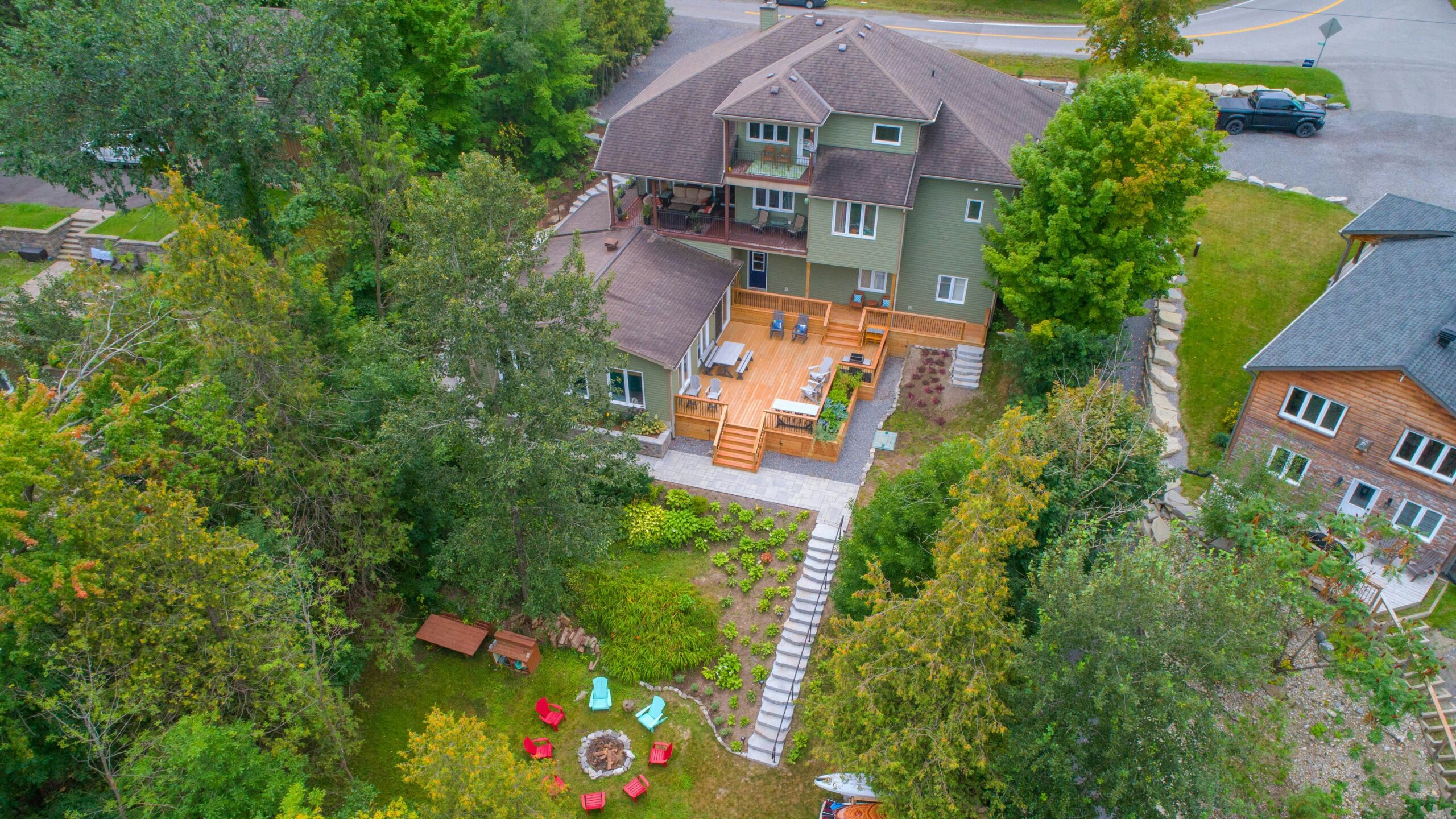
A growing number of homeowners are learning that their insurance coverage can be canceled because of a photograph taken from the sky, not an inspector at the door. Insurers increasingly rely on aerial images from drones, planes, and satellites to decide whether to keep covering a home, and some of those decisions rest on a blurry roof stain or a misread shadow. For older homeowners on fixed incomes, an unexpected non-renewal can be both a financial shock and a scramble to find replacement coverage.
How insurers are using the images
Aerial imaging has become a routine underwriting tool. As Kiplinger’s reporting on drone and satellite images in home insurance describes, carriers use overhead photos to assess roof condition, spot debris or overhanging trees, and flag features they consider risky, then use those assessments to decide whether to renew a policy. In many cases the evaluation is made remotely, with no in-person visit and no conversation with the homeowner before a decision is reached.
The consumer advocacy group United Policyholders has documented the fallout. Its overview of how drones and aerial imaging affect homeowners describes policies dropped over moss, stains, or conditions that a ground-level inspection might have judged harmless, and it raises questions about accuracy, notice, and a homeowner’s ability to respond. Because the images can be low-resolution or outdated, a shadow, a water stain, or ordinary wear is sometimes read as damage that justifies non-renewal.
National reporting has captured how quickly the practice has spread. Coverage from public radio on insurers using aerial imagery for renewal decisions noted that homeowners in multiple states have been dropped based on overhead photos, and that in Texas the rate at which insurers declined to renew homeowner policies nearly doubled between 2020 and 2023. The trend has accelerated as imaging technology has become cheaper and more widely available.
Free for readers: Want plain-English help keeping more of your money in retirement? The free Retirement Shield newsletter covers scams, benefits, and money you’re owed, a couple times a week. Subscribe free.
Regulators are starting to respond
The practice has drawn the attention of state insurance regulators. In California, Insurance Commissioner Ricardo Lara has voiced support for legislation, Assembly Bill 75, that would require insurers to notify homeowners at least 30 days before taking or obtaining aerial images of their property and would give homeowners the right to request copies of any aerial images used in a coverage decision. The measure is aimed at bringing transparency to a process that has largely operated out of sight.
The California Department of Insurance has also fielded complaints from homeowners who were dropped based on flawed imagery. The department’s consumer resources point residents toward the complaint and review process available when a carrier’s decision appears to rest on inaccurate information. Regulatory scrutiny of this kind can pressure insurers to verify what an image actually shows before acting on it, though rules vary from state to state and remain a work in progress.
What a non-renewal costs a homeowner
Losing coverage is more than an inconvenience. A homeowner with a mortgage is typically required to carry insurance, and a lapse can trigger force-placed coverage arranged by the lender, which is usually far more expensive and less comprehensive. Even homeowners who own their property outright face the prospect of paying more for a new policy, since a prior non-renewal can make replacement coverage harder to obtain and pricier when it is found.
For retirees, the stakes are sharpened by budget. A sudden jump in premiums or a gap in coverage can strain a fixed income, and the home itself is often the household’s largest asset. That combination is why a decision made from an overhead photo, sometimes based on a feature that is not actually a problem, can carry outsized consequences.
How to push back
Homeowners are not without recourse. When a carrier cites aerial imagery, requesting the specific image and the reason for the decision is a reasonable first step, and in states moving toward disclosure requirements it may become a right. If the image misreads the roof’s condition, providing a recent professional roof inspection or dated photographs can rebut the finding and support a request to reconsider.
Filing a complaint with the state insurance department is another avenue, particularly when a decision appears to rest on inaccurate or outdated information, and regulators can review whether the carrier followed the rules. Shopping for replacement coverage early, before a policy lapses, helps avoid a gap and the costly force-placed insurance that can follow. Keeping the roof and yard maintained and documenting that upkeep also gives a homeowner evidence to counter an overhead photo. The broader lesson is to treat a renewal notice seriously and respond quickly, because the images that drive these decisions are increasingly the first, and sometimes only, look an insurer takes at a home.
Why the technology cuts both ways
Aerial imagery is not inherently harmful, and insurers argue it lets them assess risk efficiently and price coverage fairly across a large book of business. The problem arises when a decision that affects a family’s coverage rests entirely on a single overhead image, without a person ever inspecting the property or giving the homeowner a chance to explain what the picture shows. An image can be outdated, capture a temporary condition, or misread a harmless feature, and an automated review may treat that flawed input as fact.
The accuracy concerns are what have drawn regulators in. When a policy is dropped over a stain that is not damage, or a shadow mistaken for a defect, the homeowner bears the cost of an error made by a computer reading a photo. That imbalance, between an insurer’s efficiency and a homeowner’s right to a fair and accurate assessment, is at the heart of the emerging rules requiring notice and access to the images used.
Building a defensible record
Homeowners can protect themselves by documenting their property before a dispute arises. Keeping dated photographs of the roof and exterior, retaining receipts for repairs and maintenance, and scheduling periodic professional inspections create evidence that can rebut a misread aerial image. Maintaining the property visibly, clearing debris and moss, and addressing minor roof issues promptly also reduce the chance of being flagged in the first place. The National Association of Insurance Commissioners’ consumer guidance on home insurance can help a homeowner understand their rights and the complaint process in their state. Treating a renewal notice as something to engage with, rather than a formality, and responding quickly with documentation when a decision seems wrong, gives a homeowner the best chance of keeping coverage intact.
Free for readers: One number can cost or save you hundreds a month in retirement. The free Retirement Shield newsletter surfaces the ones worth knowing. Sign up free.
This article was researched and drafted with AI assistance and reviewed against the linked primary sources.