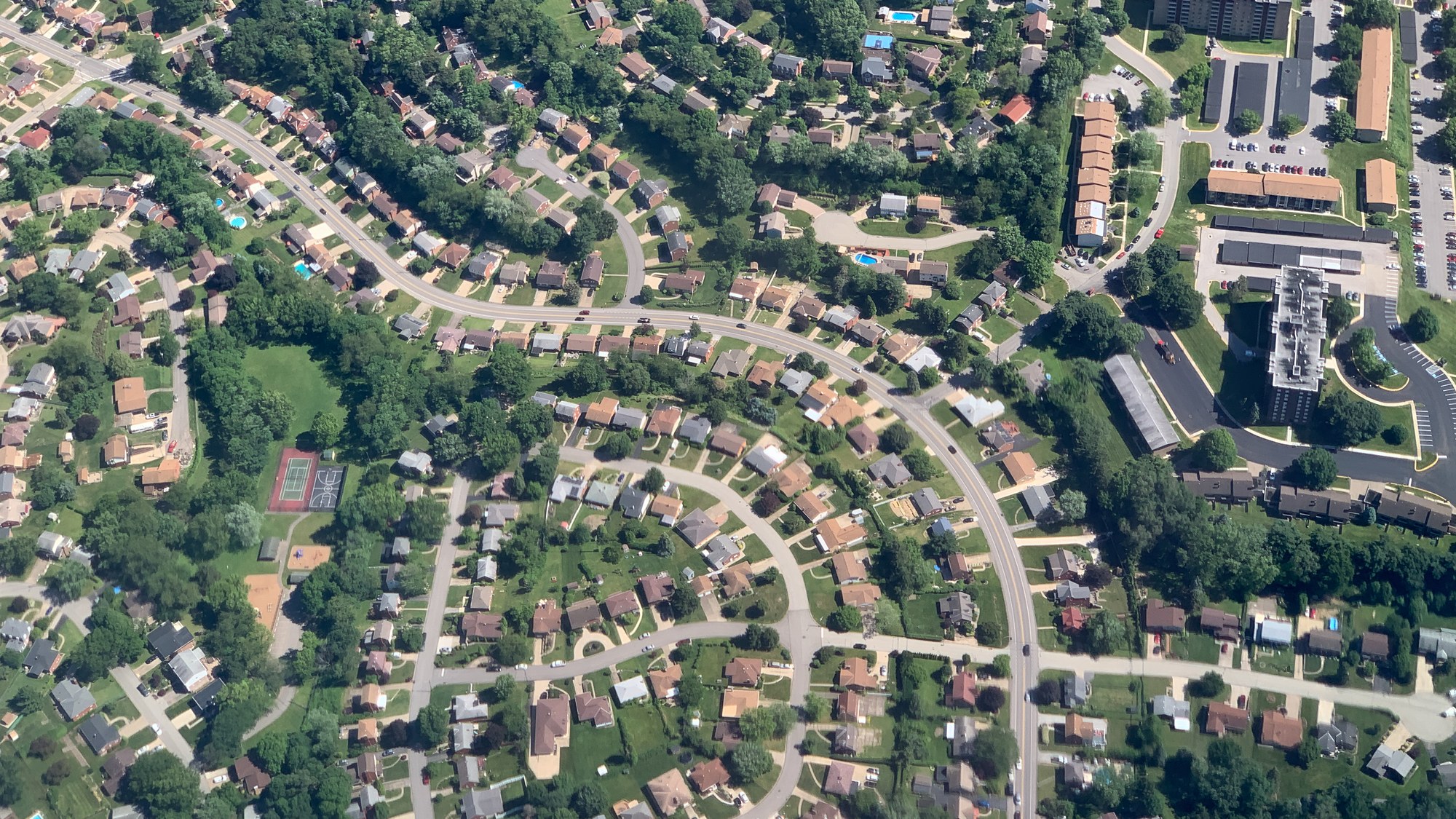
A roof can now fail an insurance inspection without an inspector climbing a ladder. Carriers use satellite and aircraft images, drones, and automated analysis to flag worn shingles, overhanging branches, debris, and other conditions before renewal. The financial risk arrives by mail: repair demands or a nonrenewal notice can leave a homeowner racing to prove that an image is wrong before coverage expires.
Aerial Underwriting Has Moved Into Ordinary Renewals
Insurers have long inspected property, but remote imagery makes broad, repeated reviews cheaper. United Policyholders’ July 2026 report describes carriers using aerial photographs and satellite data to assess homes without an in-person visit. The organization says a homeowner’s first notice is often a letter requiring roof or tree work within 30 to 60 days or announcing nonrenewal.
The image may identify a genuine hazard, but perspective and age can also mislead. A shadow can resemble roof damage, a skylight can confuse automated classification, and a repaired condition can remain visible in older imagery. The current United Policyholders review of aerial inspections notes regulatory concern that cosmetic conditions should not automatically determine whether coverage remains available.
Free retirement updates: Miss an enrollment or claim deadline and it may be gone. Our free Retirement Shield newsletter keeps readers ahead of the ones that matter. Get the free newsletter.
The Notice Period Is the Real Appeal Clock
Insurance notice rules vary by state, so 60 days is not a national appeal statute. It is a common outer edge in state notice systems and repair letters. New York requires a homeowners nonrenewal notice at least 45 days and no more than 60 days before expiration. The state’s Department of Financial Services guidance says the notice must explain the reason and allows a consumer who considers it unfair to file a complaint.
Other states use different periods. California generally requires a residential nonrenewal notice at least 75 days before expiration. That variation makes the date printed on the letter more important than any general rule. A homeowner who spends weeks arguing by telephone can lose time needed to document repairs, file a regulatory complaint, and shop for replacement insurance.
The Evidence File Should Answer the Image Directly
A useful challenge begins with obtaining the image, its date, and the underwriting condition it supposedly shows. Recent ground-level photographs can establish the current roof, tree, yard, or outbuilding condition. A licensed contractor’s written inspection can address whether a roof is functional, whether apparent staining is cosmetic, or whether work has corrected the hazard. Receipts and permits anchor repairs to dates.
The response should be written and sent through a trackable channel. It should identify the policy, property, disputed condition, supporting documents, and requested outcome. If the carrier refuses to supply the image or explain the underwriting standard, that refusal belongs in a complaint to the state insurance department. A phone call may start the process, but a documented file is what can be reviewed later.
State Regulators Are Challenging Image-Only Decisions
California’s insurance commissioner has described complaints involving outdated or imprecise drone and satellite images that led to incorrect cancellations or nonrenewals. The department backed legislation requiring advance notice before aerial imaging and access to images used in coverage decisions. Its consumer-protection announcement confirms that the dispute is not hypothetical: state investigators have seen flawed imagery affect real policies.
Massachusetts, Colorado, New Hampshire, and other regulators have also addressed the use of aerial data in underwriting. The emerging principle is that remote images can inform a decision but should be current, accurate, and supported when they do not clearly establish a property’s condition. State rules, bulletins, and complaint processes remain the practical enforcement tools because homeowners insurance is primarily state-regulated.
A Coverage Gap Can Put the Mortgage and Home Equity at Risk
Nonrenewal is not merely an inconvenience. A mortgaged homeowner generally must maintain property insurance. If the policy lapses, the lender may obtain force-placed coverage that protects the lender’s interest, often at a high cost and with narrower protection for the owner. A retirement household can face a premium shock at the same time it is paying for an unexpected roof or tree repair.
Shopping for replacement coverage should therefore begin while the dispute continues. Quotes, deductibles, exclusions, dwelling limits, and roof-payment terms need comparison; the cheapest premium can carry a much larger deductible or actual-cash-value roof provision. The source-led response is a two-track defense: challenge a bad image with dated evidence and protect the home from a gap by securing a fallback before the notice period ends.
An insurance agent can help assemble alternatives, but the homeowner should retain copies of every quote and declination. Those records show whether the disputed image is affecting the wider market and provide evidence if a regulator asks what replacement coverage was available.
This article was produced with AI assistance and reviewed by The Financial Wire editorial team.
More Financial Reading
- What really happens to your joint savings account when you die?
- Bank statements: how long to keep them and when to toss them