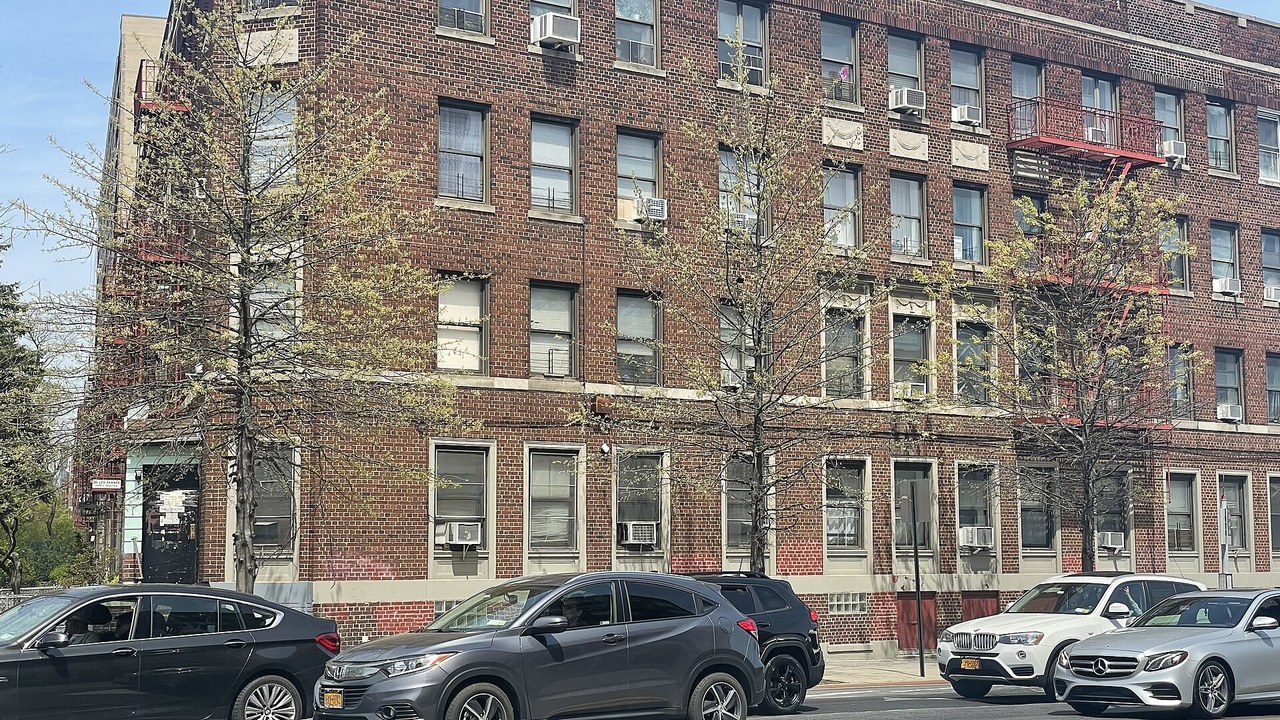
Buyers who put down payments on apartments in an unfinished Williamsburg condominium, then waited years with neither a home nor their money, will receive more than $6 million in refunds or purchase credits under a settlement announced Sept. 3 by New York Attorney General Letitia James. Her office found that developer 425 Marcy Avenue LLC and its principal, Ezra Unger, sold units at 427 Marcy Avenue before the state had accepted the building’s offering plan, then spent $6.715 million in residential down payments on construction and other costs instead of holding the money in escrow. Unger will also pay up to $824,000 in penalties and is barred from selling real estate securities in New York for six years.
How buyers’ deposits ended up outside escrow
New York’s Martin Act requires condominium developers to file an offering plan with the attorney general and have it accepted before they market or sell a single unit. The law also requires buyers’ deposits to be placed in a segregated escrow account, under state regulations within five business days, and kept there until the sale closes. Those rules exist so buyers can get their money back if a project stalls.
According to the attorney general’s announcement, the developer submitted an offering plan for 427 Marcy Avenue on Jan. 4, 2021, but the plan was never accepted for filing. The company nonetheless entered into contracts for 17 to-be-built residential units, three commercial units and three residential parking spaces. Residential buyers handed over $6.715 million in down payments. None of that money went into escrow. Instead, the state found, the developer used it to pay for construction and other expenses.
The investigation began after the attorney general’s office received a complaint that the developer was signing contracts for units in a building whose offering plan the state had never accepted. By the time of the September settlement, more than five years had passed since the plan was first submitted, and the residential buyers still had neither keys nor refunds.
After the closing, the tax bill. Buyers who eventually take title to a Brooklyn condo, like any new owner, face a property-tax bill and the exemptions that can shrink it, and the 5 kinds of property-tax relief laid out in The Senior Property Tax & Home-Cost Relief Kit map where to start.
Lawsuits, bankruptcy and a new owner
The project soon became tangled in litigation. The developer was sued in state Supreme Court in Kings County by parties who alleged, among other things, that it did not actually own the building and had defrauded the true owners. According to the settlement agreement, the buyers of the three commercial units, who had paid $4.2 million, resolved their claims separately through arbitration and a satisfied court judgment, and are not part of the new restitution.
On or about Jan. 16, 2023, a Chapter 11 bankruptcy petition was filed against 425 Marcy Avenue LLC in the U.S. Bankruptcy Court for the Eastern District of New York. Under the reorganization plan, Unger lost his ownership stake, the company’s equity passed to its lender, and the building was ultimately sold to 33 Walton Holdings LLC, which is now the project’s developer. The bankruptcy plan was confirmed in October 2024 and the case closed in April 2025. The settlement names 33 Walton Holdings as a relief respondent, and the company has represented to the state that it has no common ownership with Unger’s former firm.
What residential buyers can choose now
Under the agreement, each residential buyer can walk away and receive the full original down payment plus interest, calculated as if the money had been held in escrow all along. Alternatively, a buyer can apply that same amount as a credit toward purchasing the original unit once the new developer’s offering plan is accepted for filing. Buyers who stay in the deal receive added protection if the new purchase price is higher than the price in their original contract.
The new developer must deliver either the refund or the credit within seven business days after the attorney general’s office accepts the new offering plan. That means the timing of payments depends on that approval, which had not been announced as of the settlement date.
Unger’s penalties are split between the two violations: $324,000 for selling units and parking spaces before the offering plan was accepted, and $500,000 for failing to put buyers’ money in escrow. He acknowledged violating the Martin Act and Executive Law Section 63(12), the state’s broad statute against repeated fraud or illegality in business. The six-year ban bars him from marketing, offering or selling securities, including condominium units, in or from New York.
“When New Yorkers hand over their hard-earned savings for a down payment on a home, that money is not a piggy bank for developers to raid,” James said. “This developer broke the law by taking money from families before it was legally allowed to sell these homes, then left them waiting for years with nothing to show for it.”
Lessons for buyers of new-construction condos
The case is a reminder that a down payment on a new-construction condo is one of the largest checks many households ever write, and for retirees who sell a longtime home to downsize, it may represent a large share of their savings. The protections in New York law work only if developers follow them.
The attorney general’s office publishes an offering plan database on its website, which buyers can use to confirm whether a project’s plan has been accepted for filing before signing a contract. Buyers can also ask for the name of the attorney or bank holding the escrow account and written confirmation that the deposit has been placed there. Anyone who believes a developer in New York is selling units without an accepted plan, or is not escrowing deposits, can file a complaint with the attorney general’s Real Estate Finance Bureau, which handled this case through Chief of Enforcement Louis M. Solomon and former Assistant Attorney General Michelle M. Yong.
Owning the home is only the first cost
For buyers who finally close on a new condo, the escrow fight gives way to the ongoing costs of ownership: property taxes, utilities and repairs, each with its own relief programs and filing dates.
The Senior Property Tax & Home-Cost Relief Kit includes the 5 kinds of property-tax relief, heating, cooling and home-repair help, and an application log and renewal calendar for tracking which programs have been claimed.
Line up those programs with The Senior Property Tax & Home-Cost Relief Kit.
This article was prepared with AI assistance and reviewed against the linked official sources.