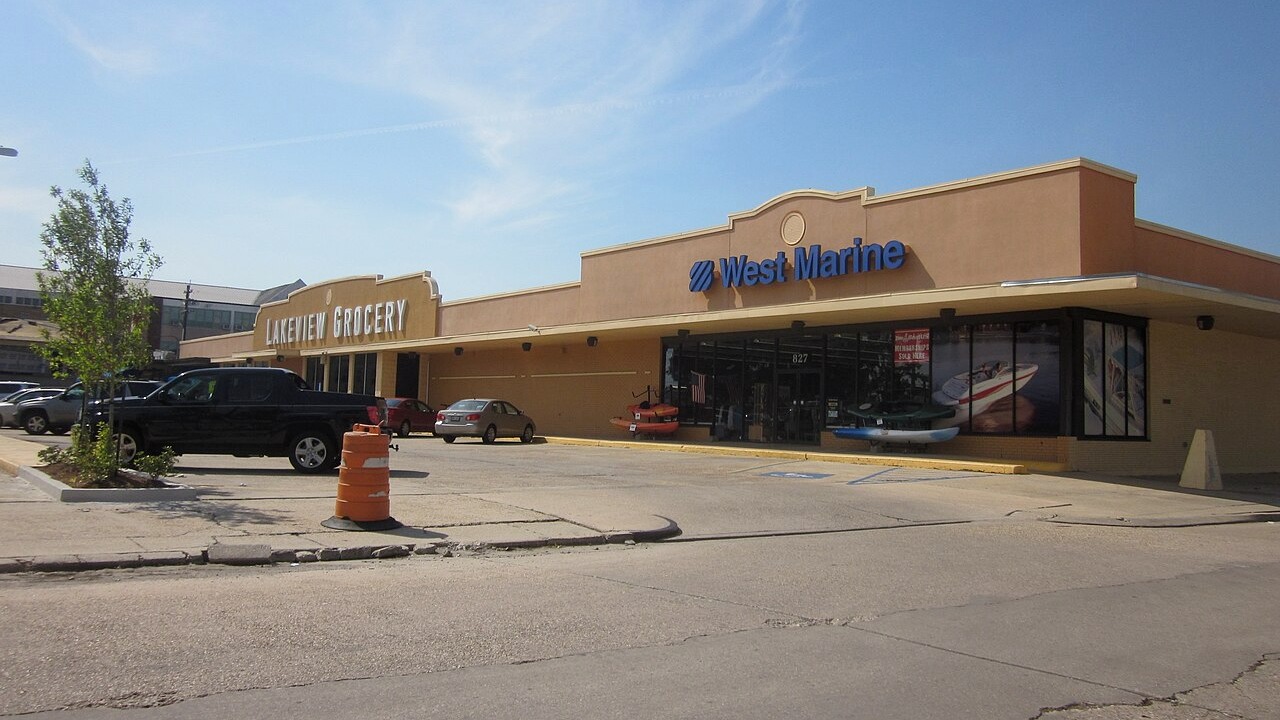
The country’s largest boating-supply retailer is shrinking fast under bankruptcy protection, and the store count is the clearest measure of it. West Marine, a fixture for boaters buying everything from safety gear to engine parts, entered Chapter 11 earlier this year and has now marked 91 of its roughly 200 locations for closure. For customers who paid ahead, hold store credit, or bought gear with a warranty attached, a bankruptcy is not just a business-page headline; it changes what they can expect to get back.
How large the closures have grown
West Marine filed for Chapter 11 protection on May 17, 2026, in the U.S. Bankruptcy Court for the District of Delaware, entering the process with a restructuring agreement already in hand. The closure list has expanded since then rather than shrunk, growing from an initial round of 59 stores as the case has progressed.
An additional 32 closures were later added, bringing the total to 91, according to Yahoo Finance. That is close to half of a chain that operated roughly 200 stores. The company has pointed to a broad slowdown in the boating market as the driver, with new-boat retail sales falling year over year, a decline that ripples through the accessories and maintenance business West Marine depends on. Trade coverage from TheStreet reported that the closures are being carried out as part of the restructuring rather than as a full liquidation, meaning some stores are expected to keep operating.
Free retirement updates: Want plain-English help keeping more of your money in retirement? The free Retirement Shield newsletter covers scams, benefits, and money many retirees may be owed, a couple times a week. Subscribe free.
What a bankruptcy does to gift cards and deposits
The part of a retail bankruptcy that catches ordinary customers off guard is how it treats money they have already handed over. A gift card, a store credit, or a deposit on a special order is, in legal terms, an unsecured claim against the company, which places the customer near the back of the line behind lenders and other secured creditors when assets are divided up. Retailers in Chapter 11 often keep honoring gift cards for a period, but they are not required to indefinitely, and the right to redeem one can be curtailed as the case proceeds.
The practical lesson is to treat any outstanding balance as money that should be spent sooner rather than later. A customer holding a West Marine gift card or store credit is generally better off redeeming it while stores remain open than waiting, because a card that cannot be used before a location closes may become difficult or impossible to recover. The same logic applies to a deposit left on a special-order item that has not yet arrived.
Location matters as much as timing. With 91 of roughly 200 stores slated to close, a card or credit is only useful at a store that stays open, so redeeming at a location on the closure list can leave a customer stranded if that store shuts before the balance is spent. Anyone unsure whether a nearby store is closing can confirm before making the trip, and can consider spending a balance at a store known to be remaining or on an online order that will actually ship, rather than assuming every location will honor it for the full life of the case.
Warranties and the money already spent
Warranty coverage is a second area where bankruptcy quietly shifts the ground. A manufacturer’s warranty on a product is generally backed by the manufacturer, not the retailer, so it typically survives a store’s closure. A store-branded protection plan or an extended warranty sold by the retailer itself is different, because that promise is only as good as the company standing behind it. When the seller is in Chapter 11, the value of a store-issued plan becomes uncertain.
For a retiree who paid for an extended service plan on a pricey piece of marine electronics or an engine component, the difference matters. Checking whether a warranty is a manufacturer’s obligation or a store’s promise determines whether the coverage is likely to hold. Where it is the manufacturer’s, the buyer registers or claims directly with that maker. Where it is the store’s, the coverage may be worth little once the closures are complete.
A related trap is the extended-warranty or protection plan sometimes underwritten by a third-party administrator rather than the retailer itself. Those plans can survive a store’s bankruptcy because a separate company backs them, but the only way to know is to read the plan document and identify who actually stands behind the promise. The paperwork tucked in a drawer at purchase is what answers that question, which is one more reason to locate and keep it rather than discard it when a familiar store lands in trouble.
The wider signal for shoppers and investors
West Marine is not a publicly traded stock today, so the immediate hit falls on customers and employees rather than on individual shareholders. Still, the filing carries a broader signal worth noting for older Americans who shop discretionary-goods retailers or hold their stocks. A wave of retail bankruptcies tends to arrive when consumer spending on non-essentials softens, and it tends to leave customers holding store credit, deposits and warranty promises that suddenly carry more risk than they appeared to.
The steady, unglamorous defense is the same one that applies to any retailer showing strain: spend down gift cards and store credit promptly, keep receipts and warranty paperwork, and understand which promises are backed by a manufacturer rather than the store. For a household on a fixed budget, those small habits are what keep a company’s financial trouble from quietly becoming the customer’s loss.
This article was created with AI assistance and was reviewed, edited, and fact-checked by The Financial Wire editorial team.
More Financial Reading
- Adding someone to your bank account: tax traps and smart moves
- The ideal retirement withdrawal rate so your savings actually last