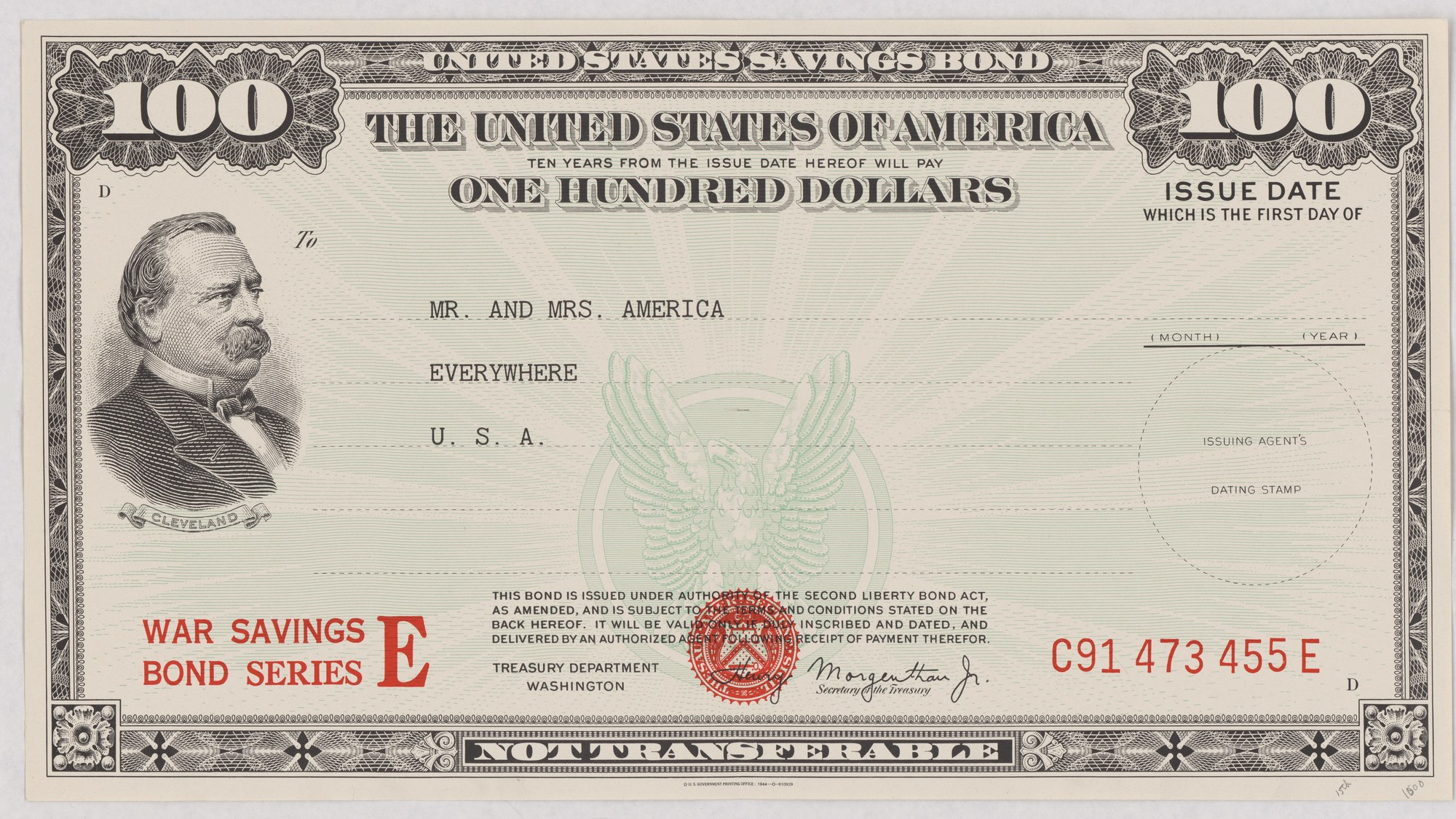
Nearly $29.7 billion in U.S. savings bonds have reached the end of their earning life and are simply sitting in the Treasury’s records — fully matured, drawing no interest, and waiting for owners or heirs who often do not know the bonds exist. Paper certificates tucked into drawers, safe deposit boxes, and old files quietly stop growing at a fixed point, and once that point passes, every month a bond goes unredeemed is money left completely idle.
When a savings bond stops paying
Savings bonds do not earn forever. Series EE and Series I bonds earn interest for 30 years and then reach final maturity, at which point they stop accruing anything at all. Older Series E bonds earned for as long as 40 years, and the paper Series H and HH bonds for 20; because all of those series are out of production, any still sitting in a drawer stopped growing years ago. A bond at final maturity is worth exactly what it is worth on that date and not a cent more.
That makes an unredeemed matured bond an unusual kind of asset: it holds its value but generates nothing, effectively a non-interest-bearing IOU from the government. There is also a tax dimension owners rarely anticipate. The interest on most savings bonds can be deferred until the bond is cashed, but that deferral ends at final maturity, when the accumulated interest becomes federally taxable whether or not the bond is redeemed. The Treasury’s materials on Series EE bonds lay out the 30-year earning span, and reaching the end of it is the practical signal to cash the bond in rather than keep holding it.
Free retirement updates: Keep more of your Social Security and savings with plain-English updates on the changes, deadlines, and costly mistakes retirees miss. Subscribe free.
The online tool that used to find them is gone
For years, the government offered a free lookup called Treasury Hunt that let people search for matured, unredeemed bonds. That tool was retired on September 30, 2025, as part of the retirement-law package known as SECURE Act 2.0. The government’s Treasury Hunt page now points searchers toward a different route rather than an instant database. Anyone who remembers plugging a Social Security number into the old search will not find it there anymore, and expecting it to still work is the first dead end many people hit.
How the search works now — through the states
The path to matured bonds now runs through state unclaimed-property programs. States can securely access the Treasury’s database of unredeemed or matured securities and help people identify and claim bonds, including any that may already have been reported to the state. In practice, that means the search for a forgotten bond looks much like the search for any other unclaimed asset: it starts at the official unclaimed-property office for each state where the owner has lived. The search is free, and no legitimate step requires paying a private “finder” a fee up front to locate a government bond. Keeping a few details on hand speeds the process: the approximate years the bonds were bought, the names and addresses used at the time, and the Social Security numbers of the owners all help a state office match a record. For an estate, the same information gathered for probate usually doubles as what is needed to trace a forgotten bond.
Cashing a matured bond
Redeeming a bond depends on its form. Paper bonds can often be cashed at a bank where the owner holds an account, or mailed to the Treasury with the required identity and ownership documentation when a bank will not handle them; electronic bonds are redeemed directly through a TreasuryDirect account. For an inherited bond, an heir generally needs the original owner’s death certificate and proof of their own claim. USA.gov’s guidance on U.S. savings bonds walks through the redemption steps. One detail catches heirs off guard: interest on savings bonds is subject to federal income tax in the year they are cashed, so the payout is not entirely free money. Owners who can no longer find a paper bond they know they own are not out of luck either; the Treasury can reissue or replace bonds that were lost, stolen, or destroyed once the owner supplies enough identifying detail, such as the approximate issue date, the names on the bond, and the Social Security number tied to it.
Why so much of it stays lost
The sheer scale of unredeemed bonds grows out of how they were bought and stored. Many were purchased as gifts for children or through workplace payroll plans, then forgotten as families moved, owners died, and paper certificates were misfiled. Because a matured bond produces no statement and no reminder, nothing nudges the owner to act. The bonds do not expire and the money is not forfeited, so it waits indefinitely — but every year it waits is a year the funds sit still instead of being spent or reinvested at current rates. Financial advisers and estate attorneys increasingly treat a savings-bond search as a routine box to check when an older relative dies, precisely because the money is so easy to overlook and so simple to reclaim once it is found. For older owners and the relatives settling their affairs, the takeaway is plain: a drawer of old certificates is worth digging through, and a bond that has stopped earning is worth cashing the moment it turns up.
This article was produced with the assistance of artificial intelligence and reviewed by The Financial Wire editorial team.
More Financial Reading
- What really happens to your joint savings account when you die?
- The ideal retirement withdrawal rate so your savings actually last