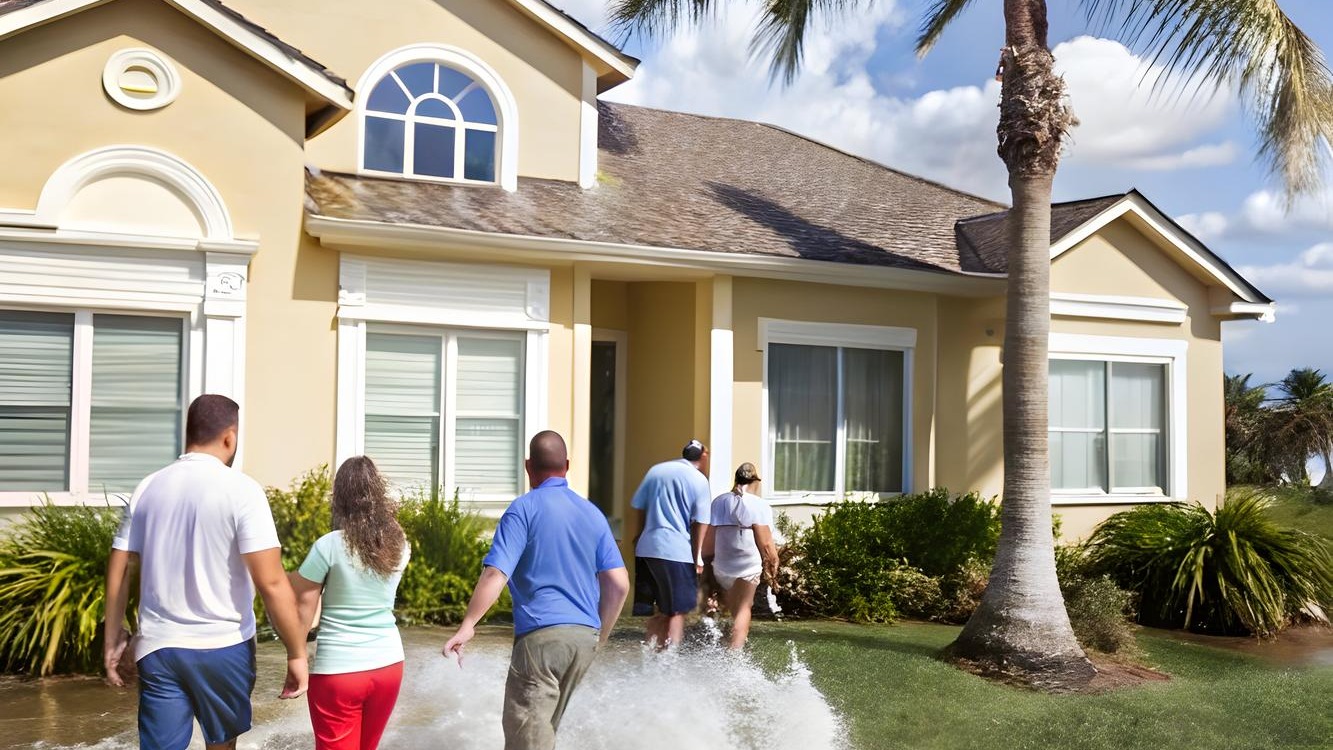
Many homeowners assume the policy that protects the house from fire, wind, and theft also protects it from rising water. It does not. A standard homeowners policy excludes flood damage, and that gap is one older owners often discover only after a storm, when the adjuster explains that the ruined floors and drywall are not covered. For a retiree whose home is the largest asset, the surprise can be financially devastating.
The coverage gap hiding in a homeowners policy
Flooding is treated as a separate peril from the water damage a homeowners policy typically covers, such as a burst pipe. Damage from external floodwater, whether from a hurricane, an overflowing river, or heavy rain that overwhelms drainage, generally falls outside a standard policy. To cover it, an owner needs a separate flood insurance policy, most commonly through the National Flood Insurance Program run by the Federal Emergency Management Agency, which explains the coverage on its consumer site, FloodSmart.gov. Private flood insurers also exist, but the underlying point is the same: flood protection is bought separately.
The exposure is broader than many people think. FEMA notes that flooding can happen almost anywhere it rains, and that a large share of flood claims come from outside the highest-risk zones, a reality it lays out in its explanation of why flood insurance matters. A home that has never flooded, on ground that seems safe, can still take on water when an unusual storm hits, and the homeowners policy will not respond.
The cost of even a modest flood is easy to underestimate. FEMA’s flood program points out that just one inch of water inside a home can cause roughly $25,000 in damage, and a few feet can gut a house down to the studs. A standard National Flood Insurance Program policy for a single-family home covers up to $250,000 for the building itself and, bought separately, up to $100,000 for its contents. An owner who insures the structure but skips the contents portion can still be left paying out of pocket for ruined furniture, appliances, and personal belongings.
Free retirement updates: Miss an enrollment or claim deadline and it may be gone. The free Retirement Shield newsletter keeps readers ahead of the ones that matter. Get the free newsletter.
Why disaster aid is not a substitute
Some homeowners count on federal disaster assistance to fill the gap, but that is a thin safety net. FEMA disaster grants become available only when the president declares a major disaster, and even then the help is capped and intended to cover basic needs, not to rebuild a home to its former condition. Other federal aid often comes as a loan that has to be repaid with interest. For an older owner on a fixed income, taking on new debt to repair a flooded home is a far worse outcome than an insurance payout would have been.
Flood insurance, by contrast, is designed to pay to repair or rebuild after a covered flood, up to the policy limits. That difference, between a capped grant or a loan and a policy that pays a claim, is the whole reason the coverage exists as a separate product.
The waiting period that punishes procrastination
The most costly mistake with flood insurance is waiting until a storm is on the way. A new National Flood Insurance Program policy generally does not take effect for 30 days after purchase, a timing rule FEMA spells out in its guidance on how to buy flood insurance. An owner who buys a policy as a hurricane approaches will usually find it does not cover that storm. The coverage has to be in place well before the water rises, which makes flood insurance a decision to handle in calm weather, not during a warning. The 30-day wait falls away in only a few narrow cases, such as when a policy is bought to satisfy a lender making, increasing, or renewing a loan; for an owner buying voluntarily ahead of an approaching storm, the delay is the rule rather than the exception.
Understanding a property’s actual risk is the starting point. FEMA publishes official flood maps that show a property’s flood zone, and lenders use those maps to decide whether flood insurance is mandatory for a mortgage. Even where it is not required, the map gives an owner a factual basis for weighing the cost of a policy against the risk of paying for flood damage alone.
What paid-off homeowners tend to overlook
Owners with a mortgage in a high-risk zone are usually required to carry flood insurance, so the lender enforces the decision for them. Retirees who have paid off their homes lose that prompt. Once the mortgage is gone, no one is requiring flood coverage, and it is easy to let it lapse or never buy it. Yet a paid-off home is precisely the asset an older household can least afford to lose, and the absence of a lender’s mandate makes the choice to carry flood protection an active one that only the owner can make.
The math is unforgiving on a fixed income. A retiree whose paid-off home floods without coverage can face a repair bill running well into the tens of thousands of dollars, with no lender’s requirement having forced the protection into place and no guaranteed payout to draw on. Rebuilding then competes directly with the savings meant to last the rest of retirement. That is the real reason a debt-free home deserves an active decision about flood coverage rather than a quiet assumption that the risk will never arrive.
This article was researched and drafted with the assistance of AI and reviewed by The Financial Wire editorial team.
More Financial Reading
- What really happens to your joint savings account when you die?
- Bank statements: how long to keep them and when to toss them