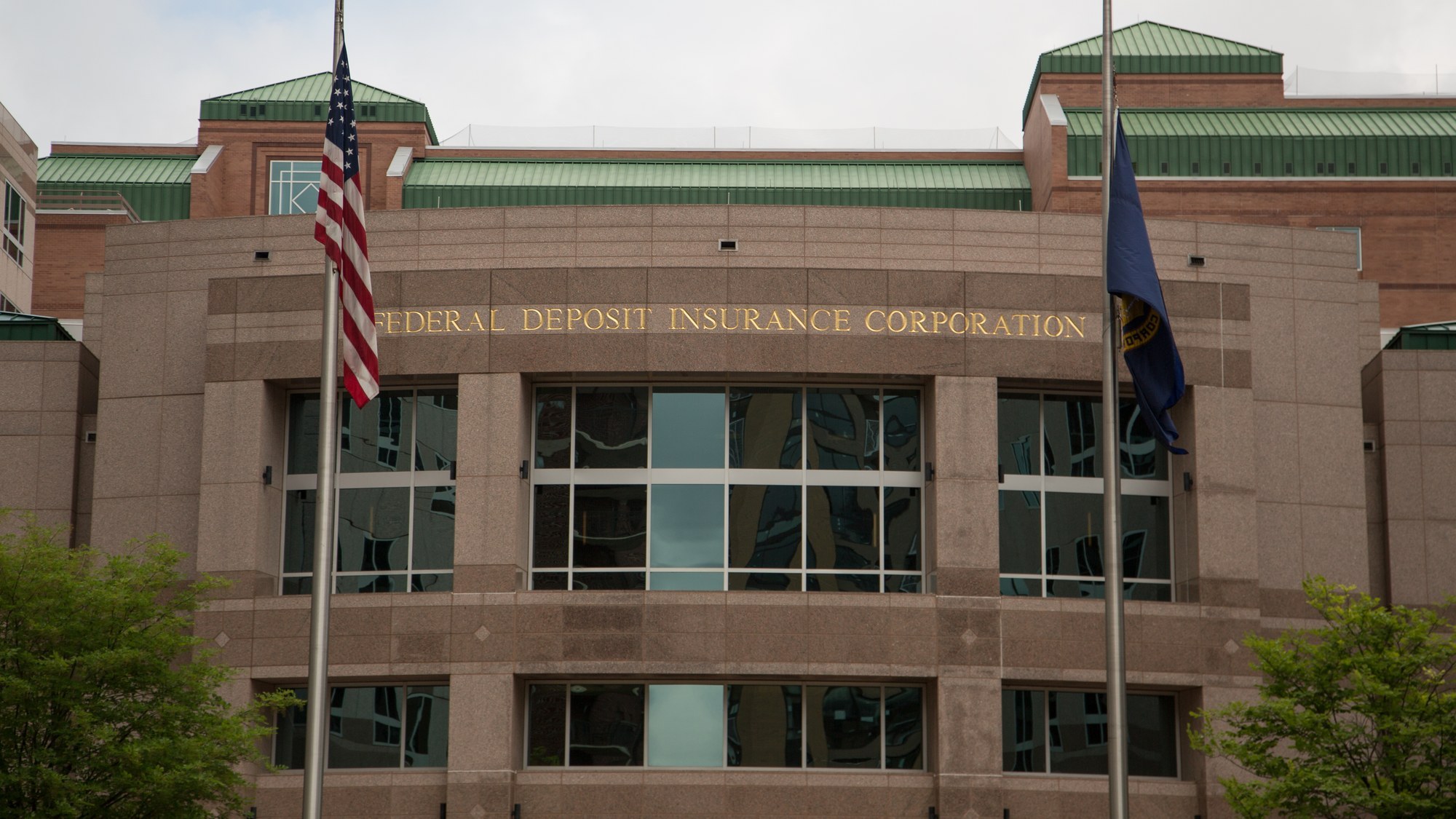
Five small U.S. banks have closed their doors so far in 2026, and in every case the customers who banked there never lost access to an insured dollar. Regulators shut each institution on a Friday, handed control to a healthy acquiring bank over the weekend, and reopened the same branches under a new name on Monday morning. It is the most bank failures the country has seen in a single year since 2023, though still a small fraction of the wave that hit during the 2008 financial crisis. The pattern says less about the health of the banking system broadly and more about how quietly the FDIC’s deposit-insurance machinery is built to work.
Five Small Banks, Five Quiet Handoffs
The year’s failures started with Chicago-based Metropolitan Capital Bank & Trust on January 30, followed by Community Bank and Trust – West Georgia, a LaGrange, Georgia lender, on May 1. Kentland Federal Savings and Loan Association in Indiana followed in early July, then Small Business Bank of Lenexa, Kansas, about a week later. Tioga-Franklin Savings Bank in Philadelphia, a 153-year-old single-branch savings bank, became the fifth failure on August 21.
Each closure followed the same script. State or federal regulators closed the bank, the FDIC stepped in as receiver, and a healthy institution agreed in advance to take over the failed bank’s deposits and most of its assets, so customers became depositors of the new bank automatically. Anchor Bank of Palm Beach Gardens, Florida absorbed Community Bank and Trust – West Georgia’s deposits this way, while the FDIC’s own closure notice confirms depositors kept using the same checks and debit cards without interruption while the transfer took place.
Free download: Which benefits are protected and how to show it, what to do about a frozen account, and how to answer a debt collector. Download the free bank and debt checkup.
How the FDIC Handles a Failure Behind the Scenes
The FDIC’s West Georgia closure notice lays out the mechanics that applied in all five cases this year. Principal and accrued interest on insured accounts are fully covered up to $250,000 per depositor, per ownership category, with certain account types, like IRAs, insured separately from a depositor’s other accounts. Direct deposits, including Social Security and other federal benefit payments, continue on schedule, and outstanding checks written before the closure are still honored as long as the account holds sufficient funds. Transferred deposits are even kept separately insured from any account a customer already held at the acquiring bank, for at least six months after the failure.
That structure is why none of this year’s five failures produced a headline about lost savings. Each of the five acquiring institutions, from Anchor Bank to Second Federal Savings and Loan Association of Philadelphia, agreed to take on the failed bank’s deposits before the FDIC ever announced a closure, which is standard practice for the agency’s least-cost resolution process.
Why 2026’s Total Still Counts as Rare
Five failures marks an increase from the two recorded in both 2024 and 2025, according to American Banker’s tracking of FDIC data, though it remains well below 2023’s five failures, a year that included the high-profile collapses of Silicon Valley Bank, First Republic Bank and Signature Bank. No banks failed at all in 2021 or 2022. The FDIC estimated the combined cost to its Deposit Insurance Fund from this year’s five failures at roughly $123 million, ranging from $1.2 million for the smallest, Kentland, to $97 million for Community Bank and Trust – West Georgia, the largest.
Tioga-Franklin’s closure, the most recent, illustrates how localized these failures tend to be: a single Philadelphia branch with $68 million in assets, in business since 1873, closed and reopened two business days later as a branch of Second Federal Savings and Loan Association, according to Banking Dive’s reporting on the deal. The FDIC pegged that failure’s cost to the insurance fund at about $5.5 million, an estimate the agency said could still shift as retained assets are sold.
What happens to deposits when a bank fails
None of this year’s five failures cost an insured depositor a cent, but a bank closing on a Friday still means a weekend of uncertainty for anyone who needs to prove where their money went before Monday’s transfer takes effect. A frozen account raises different questions than a transferred one, and a debt collector calling about an old balance rarely waits to find out which situation applies before pressing for payment.
The Bank Account & Debt Protection Kit is a 10-page kit with the 2-month bank protection rule, the frozen-account response, and the debt-validation steps for answering a collector’s call.
See the frozen-account response and dispute log in The Bank Account & Debt Protection Kit.
This article was researched and drafted with the assistance of AI and reviewed by an editor.