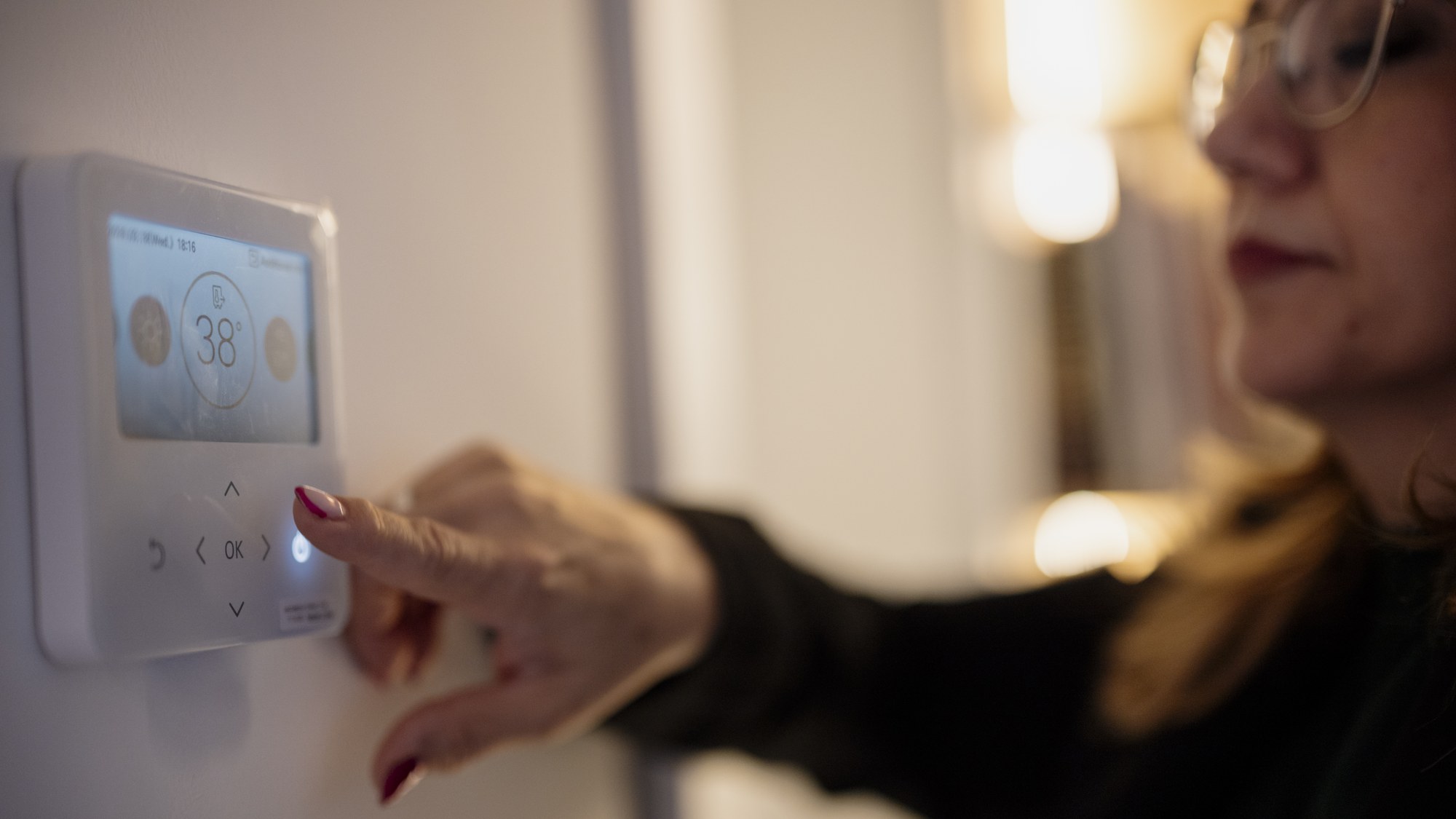
A federal spending law now carries a hard number attached to the nation’s home heating aid program: the U.S. Department of Health and Human Services must send at least 90 percent of the year’s Low Income Home Energy Assistance Program money to states by November 1. The requirement sits inside the same continuing appropriations act that keeps federal agencies funded past October 1, and it governs a program that reached roughly six million households last year, most of them older adults, people with disabilities and families on fixed incomes. Thirty-one U.S. senators told the Trump administration this month that the deadline should be treated as a floor rather than a target, given how quickly heating costs are climbing into the season.
A 90 Percent Release Requirement Written Into the FY2027 Spending Law
The Continuing Appropriations and Extensions Act for Fiscal Year 2027, Public Law 119-103, sets the funding level for the Low Income Home Energy Assistance Program for the year ahead and, along with it, a release schedule HHS has to follow. In a September 17 letter to HHS Secretary Robert F. Kennedy Jr., Senators Susan Collins of Maine, Jack Reed of Rhode Island and Lisa Murkowski of Alaska, joined by 28 colleagues, wrote that the law “requires the Department of Health and Human Services to distribute no less than 90 percent of its total LIHEAP allotment by November 1, 2026,” with the money itself becoming available to the department on October 1. The 31 senators asked Kennedy to release the funds well before that deadline, pointing to rising heating oil prices and a heating season that, for many states, effectively starts in October. Collins, Reed and Murkowski had earlier led the successful push on the Senate Appropriations Committee to keep the program funded at more than $4 billion after the administration’s FY2027 budget request proposed eliminating it entirely.
Free download: Property-tax freezes, exemptions and circuit-breaker credits, plus LIHEAP and shutoff protections, and what to gather before applying. Get the free property tax and utility relief finder.
What the Assurances in 42 U.S.C. Section 8624 Require
The 90 percent figure only moves once a state has met the underlying legal framework that governs the program itself. Section 2605 of the Low Income Home Energy Assistance Act, codified at 42 U.S.C. Section 8624, requires every state, territory and tribal grant recipient to certify a set of assurances before HHS will release a dollar of its allotment. Among them, grant recipients must submit a benefit matrix weighing income, household size and home energy costs, and must commit to prioritizing households with the “highest home energy needs,” a category the statute defines to reach households with an elderly or disabled member. HHS’s Administration for Children and Families laid out the current version of that requirement in guidance signed by Corine Frank, Director of the agency’s Office of Community Services, which confirmed that FY2027 state plans were due to the agency by September 1, 2026, and that each plan must include a crisis assistance component in addition to the standard heating, cooling and weatherization pieces of the program.
What Happens to Money a State Does Not Use
Federal law does not leave unspent money to sit indefinitely. Section 2607 of the Act, codified at 42 U.S.C. Section 8626, authorizes the HHS Secretary to reallot any portion of a state’s allotment that will not be used, shifting those dollars to states that can put them to work the same season. That reallotment authority is a separate mechanism from the 90 percent release requirement: one governs what HHS must send states in the first place, the other governs what happens afterward if a state cannot obligate its full share. Together, the two provisions are built to keep federal heating aid moving through the system during the months it is needed rather than sitting unobligated once winter has passed.
The Pattern the Program Has Followed in Recent Years
History shows the calendar date is not always hit even when the underlying 90 percent requirement is followed. For Fiscal Year 2026, HHS released a first tranche of about $3.6 billion, 90 percent of a $4.015 billion allotment, on November 28, 2025, roughly four weeks past a November 1 target, after a continuing resolution ending a prior government shutdown set that year’s funding level. The remaining 10 percent, about $421 million, did not reach states until April 20, 2026, the American Public Power Association reported, after the White House Office of Management and Budget filed for multiple 30-day extensions on releasing it. ACF’s own funding-release log shows first-tranche disbursements landing on or close to November 1 in most years going back over a decade, which makes last year’s later date the exception rather than the rule the senators are now trying to head off for FY2027.
Where FY2027 Funding Stands as the November 1 Date Approaches
As of September 20, the process of turning the legal deadline into money in states’ hands is not finished. ACF’s own guidance to grant recipients states that the agency will issue FY2027 funding only after three things happen: an appropriation from Congress, apportionment from the Office of Management and Budget, and acceptance of each grant recipient’s LIHEAP plan submission. All three sit ahead of the November 1 statutory deadline, and states have already cleared one of those steps by filing plans before the September 1 submission date. For an applicant, the practical effect of the law does not depend on the exact date HHS clears the remaining steps: because federal law pushes such a large share of a state’s yearly allotment out in a single certified block, the bulk of a state’s heating aid budget for the year is effectively committed before December, when the coldest stretch of the season typically drives the heaviest demand for both routine heating assistance and the program’s crisis assistance component for households facing an imminent energy shutoff. Corine Frank’s office, which reviews and accepts every state, territory and tribal plan before a dollar moves, remains the agency record of where that process stands for FY2027.
Heating Assistance and the Window to Apply
The federal deadline covered above sets when HHS has to send heating aid dollars to states, not when a household lines up which relief programs it can layer under a shrinking home energy budget. Property tax bills, utility shutoff protections and a state’s LIHEAP crisis assistance component often run on different calendars within the same state, and few materials put them side by side for a household trying to plan the fall and winter months at once.
The Senior Property Tax & Home-Cost Relief Kit is an 11-page kit covering the 5 kinds of property-tax relief, the circuit-breaker credit that includes renters, and heating, cooling and home-repair help, along with an application log and renewal calendar.
See the property-tax relief categories and the heating and home-repair assistance listed side by side in The Senior Property Tax & Home-Cost Relief Kit.
This article was researched and drafted with the assistance of AI and reviewed by an editor.