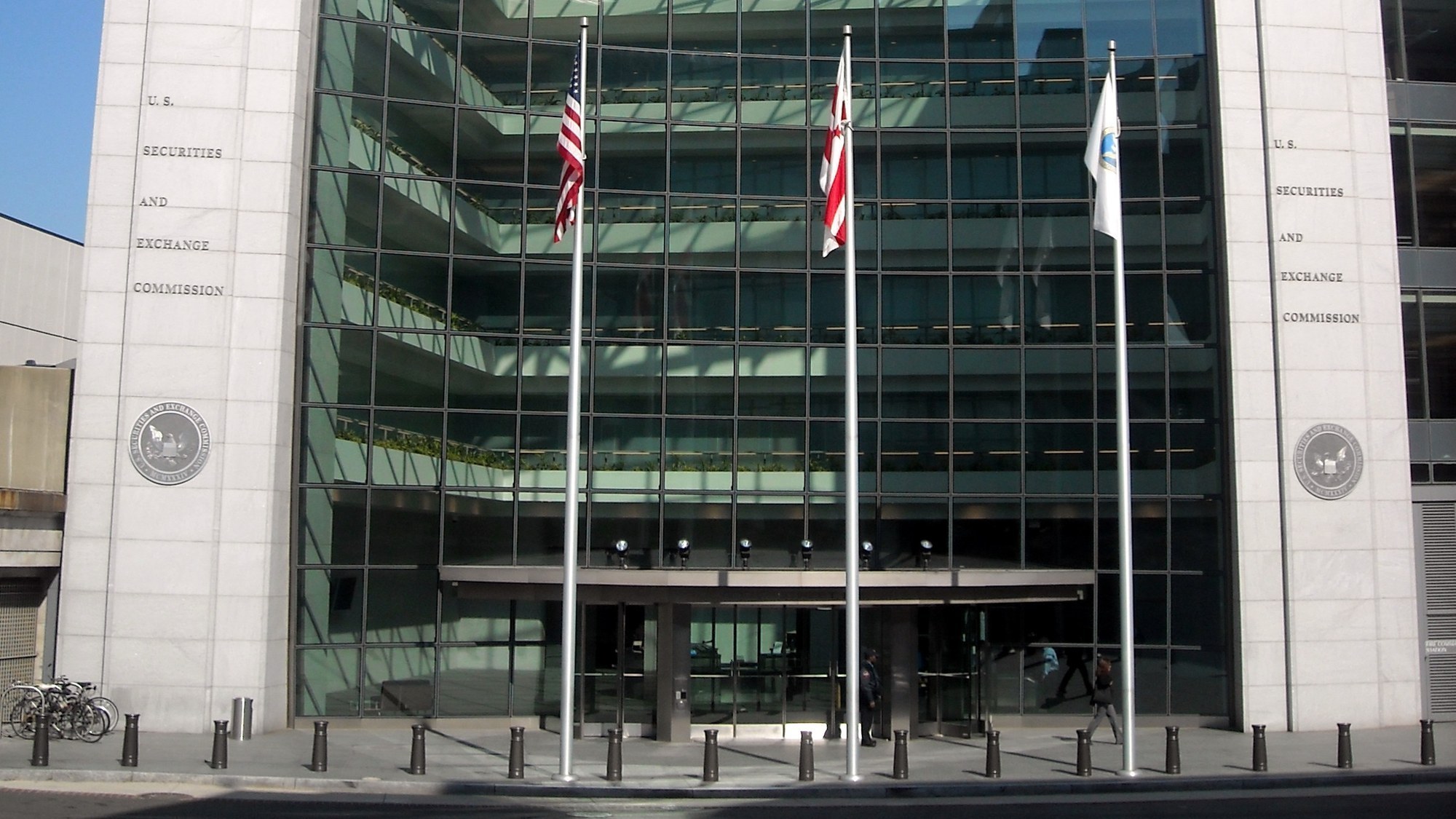
The Securities and Exchange Commission charged 38 firms in August with faking their way into legitimacy as investment advisers, using government filings and forged certificates to convince retail investors they were dealing with a registered, vetted business. Some of the defendants marketed themselves with fabricated documents that copied the look of an official SEC registration certificate, right down to numbers the agency had actually assigned them for an entirely different purpose. The scheme leaned on the exact promise older savers rely on when they hand money to an adviser: that someone in Washington already checked this firm out.
The SEC’s Case Against 38 Firms Posing as Advisers
On Aug. 27, 2026, the Securities and Exchange Commission announced it had filed civil complaints against 38 entities in the U.S. District Court for the District of Colorado, one case per firm, alleging each made material misrepresentations in Forms ADV filed with the Commission between 2025 and 2026 to portray itself as a legitimate advisory firm to U.S. investors, according to the SEC’s press release. Every one of the 38 has been charged, not convicted; the complaints ask a federal judge for injunctions and civil penalties, and none of the allegations has been proven in court.
The defendants named in the SEC’s simultaneous filings include Harbor Financial Institute Ltd, Wingspan Advisors LLC, Robin Markets Inc, Web3 University, LinkedIn Research Institute Ltd, Nova Academy of Finance Ltd and Quantum Financial Institute Ltd, among 31 others. The Commission’s own litigation release lists all 38 respondents by name alongside their individual case numbers in the District of Colorado.
Laura D’Allaird, chief of the SEC Enforcement Division’s Cyber and Emerging Technologies Unit, said the pattern behind the filings pointed overseas. “Our complaints allege large-scale abuse of SEC adviser filings by persons, several of whom are likely located overseas, exploiting interest in emerging technologies,” D’Allaird said. “When we find bad actors using fraudulent SEC filings to feign legitimacy with retail investors, we will act decisively to disrupt these operations.” The investigation was conducted by Arsen Ablaev and supervised by D’Allaird and Amy Flaherty Hartman; the litigation is being led by Michael Foster and Jonathan Polish.
Free download: The first-hour steps in order, who to call at banks, agencies and credit bureaus, and what to document. Get the free scam and identity-theft action card.
What the Fake SEC Registration Certificates Claimed
According to the SEC’s Office of Investor Education and Assistance, certain firms were marketed on websites that displayed a certificate stating the company was registered with the SEC. None of them actually held that status: every defendant filed as an exempt reporting adviser, a category the Commission never registers, according to the SEC’s investor alert on the case.
The fabrication was specific rather than generic. The fake certificates carried the Central Registration Depository number and SEC file number the Commission had actually assigned the firm when it filed its Form ADV, then paired those real numbers with an invented line stating that “SEC RIA permission” had been granted. That designation is one the agency does not issue to anyone, registered or not. An exempt reporting adviser only files limited information about advising private funds; the Commission does not review, approve or evaluate an ERA’s qualifications before that filing goes live on its website, and it hands out no certificate of any kind even to advisers it fully registers.
How to Check Whether an Adviser Is Really Registered
Investor.gov runs the tool built for exactly this problem. Typing a firm or individual’s name into the “Check Out Your Investment Professional” search redirects to the Investment Adviser Public Disclosure database, where a genuine record shows whether the person or firm is licensed with the SEC, with a state regulator, or with FINRA, plus any disciplinary history flagged as “Disclosures Reported.” Brokers who don’t turn up there route automatically to FINRA’s BrokerCheck.
A legitimate registration record lives inside that database as a searchable entry, not as a downloadable document a firm can email or post to its own site. Because neither the SEC nor any state securities regulator issues a certificate of registration to anyone, a firm that produces one, complete with official-looking file numbers, has already failed the first test: the genuine version of that document does not exist for any adviser to hand over, registered or not.
The Retirement-Sized Numbers Behind the Fake Filings
The false filings weren’t vague about the money at stake. Harbor Financial Institute Ltd’s Form ADV, cited in the SEC’s complaint against the firm, claimed it advised a single private fund holding $78,960,522 in gross assets across 89 investors, with a minimum investment commitment of $50,000. The complaint says at least 37 other defendants filed forms built from the same template, listing either $78,960,522 or $48,960,522 in assets (the two figures differ only in the first digit), either 89 or 33 investors, and a minimum investment of either $50,000 or $5,000.
Every one of those template filings claimed the same ownership split: 10% held by the adviser or related persons, 90% by foreign investors, and 50% by “funds of funds.” Harbor’s filing also named an auditor called Indicator Global, which the complaint says does not appear in any public registry of federal or state accountancy firms and separately runs a Mandarin-language website falsely advertising its own “approval” and “financial license” from the Commission. A $50,000 minimum is a meaningful slice of a retirement account, and the SEC’s complaint states the Commission could not verify that Harbor’s fund, its 89 investors or its audited financials existed at all.
What Happens Now for the 38 Charged Entities
None of the 38 defendants has been convicted of anything. The SEC’s complaints are civil, not criminal, and ask the court for permanent injunctions against future violations, an order barring each firm from ever filing another Form ADV as an exempt reporting adviser, and civil monetary penalties in amounts a judge would set. The cases remain pending in the District of Colorado.
The Commission has already acted on the filings themselves: all 38 entities’ ERA filings were pulled from the SEC’s website, and FINRA removed Harbor’s specific filing from the Investment Adviser Public Disclosure site on Aug. 24, 2026, at the Commission’s direction, three days before the complaints were filed. The SEC credited the FBI’s Operation Level Up for its assistance and noted that Commission staff tried certified mail, phone calls and email to reach the defendants before filing suit. Every attempt failed, with mail returned as undeliverable and phone lines disconnected.
Checking a Firm’s Registration Before Sending Money
The SEC’s case shows how convincing a fabricated registration record can look, complete with numbers that trace back to a real government filing. Spotting a fake certificate or reading a Form ADV only helps once someone already knows what a genuine record contains and what to do in the minutes after realizing a supposed adviser was never who it claimed to be. Retirement savers rarely have a plan ready for that hour.
The Senior Fraud Defense & First-Hour Recovery Kit is a 9-page kit built around the first-hour recovery plan, a family code word, and a fraud evidence and report log.
See the family code word and the first-hour recovery plan in The Senior Fraud Defense & First-Hour Recovery Kit.
This article was researched and drafted with the assistance of AI and reviewed by an editor.