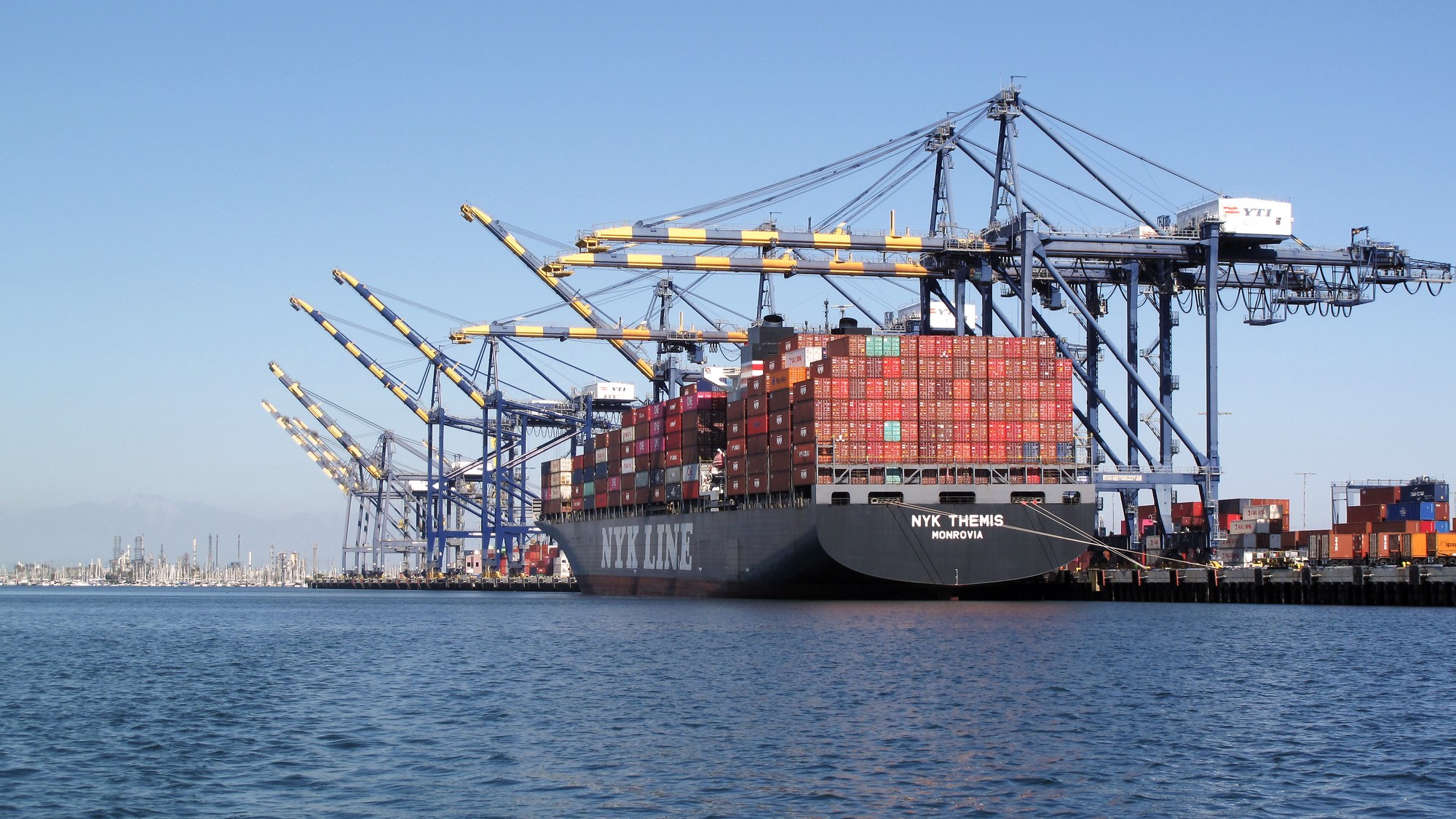
Customs officials are working through billions of dollars in tariff refunds seven months after a court ruled that President Trump’s use of emergency powers to impose the tariffs went beyond what the law allows, and a slice of that money remains stuck for a narrow, fixable reason: thousands of refunds have nowhere on file to be sent. Roughly $1.3 billion is sitting on 20,184 individual refunds that customs officials say cannot move until the businesses owed the money provide their bank account details. The stuck money is a small fraction of a much larger refund effort that has already moved well over $100 billion out the door, but the 20,184 refunds represent real businesses still waiting on a specific administrative step only they can complete.
The Court Ruling That Started the Refund Process
The Supreme Court found, as a news account of the ruling summarized it, that “the implementation of tariffs by way of IEEPA was an overreach of executive power,” striking down the tariffs on February 20, 2026, and setting off the refund process still running today. Refunds did not begin moving immediately: the same news account describes CBP’s process launching in phases, with “Phase 1” opening April 20, 2026 for entries filed in the first quarter of 2025 and recently liquidated entries, and “Phase 2” following in June 2026 to add entries flagged for reconciliation. Customs law separately gives an importer “180 days from liquidation to file a protest challenging certain CBP decisions,” a deadline that runs alongside, not instead of, the refund process itself.
Inside the kit: A federal refund program that pays importers, not shoppers, does nothing for the property tax bill or the heating bill that arrives this fall regardless of how the tariff dispute ends, which is where the kit’s circuit-breaker credit for renters and its heating and cooling assistance section apply instead. Open The Senior Property Tax & Home-Cost Relief Kit.
$122 Billion Sent, $1.3 Billion Stuck on 20,184 Refunds
U.S. Customs and Border Protection’s own numbers, filed in a sworn declaration by CBP Executive Director Brandon Lord with the U.S. Court of International Trade on September 15, 2026, and relayed by customs broker GHY’s trade-compliance page, show the agency had accepted “approximately $134.7 billion in potential and certified refunds for processing” as of September 11, 2026, with “approximately $122 billion in refunds, including duties and interest,” already certified and sent to the Treasury Department for disbursement. Of what remains, the declaration states that “20,184 refunds totaling approximately $1.3 billion had not been transmitted to Treasury because the importer of record or authorized CBP Form 4811 designee had not provided ACH account information” — a missing-paperwork problem rather than a dispute over whether the money is owed. CBP’s own IEEPA-refunds webpage returned a server error on repeated direct requests around the date of this report, so this account relies on the broker’s relay of Lord’s sworn court filing rather than CBP’s page directly. The $122 billion already sent to Treasury and the $1.3 billion still stuck are both subsets of the larger $134.7 billion CBP says it has accepted for processing, meaning the vast majority of the refund total — better than 90 percent of it — has already cleared the missing-paperwork problem that is holding up the remainder.
Refunds Go to Importers, Not to Shoppers
The refunds move to the businesses that imported goods and paid the struck-down tariff at the border — GHY’s page describes the payments as “consolidated by IOR (or designated refund party),” meaning importer of record — not to the individuals who paid a higher shelf price for a Canadian, Chinese or other affected import while the tariff was in effect. That distinction matters for anyone who has seen coverage of the refund fight and assumed a check might eventually reach consumers: it will not, at least not through this program. A separate news report on a different, proposed household tariff-dividend payment puts a different pair of figures on that unrelated proposal — “a milestone $100 billion in tariff refunds through the end of July” against an amount owed the report puts at $166 billion — numbers that describe a separate consumer-facing tariff-dividend plan, not the CBP importer-refund program this article covers. Conflating the two is an easy mistake: both involve tariff money, both involve billions of dollars, and both trace back to the same underlying tariffs, but only the CBP program described here has a court filing, a processing phase and a stuck-refund count behind it.
CAPE Phase 3 Opens October 6
CBP’s next stage of processing, described in the same court filing, is “CAPE Phase 3,” which GHY’s relay says “will launch October 6, 2026” and which the earlier news account characterizes as covering finally-liquidated entries subject to court-ordered reliquidation — a category the same news account describes as “less self-service friendly” and “more litigious” than the Phase 1 and Phase 2 claims CBP has already worked through. Nothing in the filing sets a date by which the 20,184 stuck refunds will be resolved; they remain pending until the importer or its designee supplies the missing ACH account information CBP says it needs. The broker’s relay of the court filing does not describe what happens to a refund whose ACH details are never provided, only that the money stays uncertified and unsent to Treasury until they are.
The Refund Fight Doesn’t Reach a Household Budget
A stalled batch of struck-down-tariff refunds is held up on thousands of accounts for lack of banking details, but once released, that money goes to the importer that paid the tariff at the border — not to a household that paid more at checkout while the tariff was in place. A property tax bill, a utility bill or a heating cost doesn’t wait on that refund process to resolve, and none of it is covered by the same federal program.
The Senior Property Tax & Home-Cost Relief Kit lays out the circuit-breaker credit that includes renters and separate help with heating, cooling and home-repair costs, the expenses that keep moving no matter how the refund dispute is eventually settled.
See the circuit-breaker credit in The Senior Property Tax & Home-Cost Relief Kit.
This article was produced with AI assistance and checked against the primary sources linked above.