A dashboard warning light only helps if it comes on when it is supposed to. FCA US, the Jeep brand’s parent, has told federal regulators that a software error in nearly 202,000 Grand Cherokee, Wagoneer and Cherokee models can keep the tire-pressure monitoring system from detecting a genuinely low tire, leaving the warning lamp dark even as pressure drops. Dealers will correct the flaw with a free software update, but the repair requires an in-person visit rather than an over-the-air push. A tire that loses air gradually rather than all at once is exactly the scenario a functioning TPMS light is meant to catch, since a driver has no other routine way to notice a slow leak before it becomes a blowout.
The Software Flaw Behind A Silent Warning Light
Recall campaign 26V559 describes “a software malfunction” in the vehicle’s radio-frequency hub that can cause the tire-pressure monitoring system to fail to detect low pressure and fail to illuminate the dashboard warning light, according to the recall record filed with NHTSA. The filing ties the defect directly to Federal Motor Vehicle Safety Standard 138, the rule requiring vehicles to warn a driver when a tire drops significantly below its recommended pressure. NHTSA’s consequence statement is blunt: “A TPMS warning light that fails to notify the driver of low tire pressure increases the risk of a crash.” The radio-frequency hub is the same component that receives signals from each tire’s pressure sensor, so a software error there does not just delay a warning; it can suppress it entirely for as long as the flawed software remains installed.
FMVSS 138 exists because a slow leak is one of the hardest tire problems for a driver to catch on sight, and the standard requires an automatic dashboard alert precisely so a driver does not have to rely on periodically checking each tire with a gauge. By tying the recall directly to that federal standard rather than describing the defect only as a display glitch, NHTSA’s filing signals that the flawed software is treated as a safety-standard failure, not a cosmetic dashboard issue.
Inside the tracker: A claim log and payment tracker, plus a step-by-step filing walkthrough, are built for exactly the kind of open recall paperwork this campaign leaves behind, noting when a Jeep went in for the software update and confirming the dealer’s work order matches campaign 26V559. Open The Settlement & Refund Recovery System.
Seven Model Lines Under One Recall
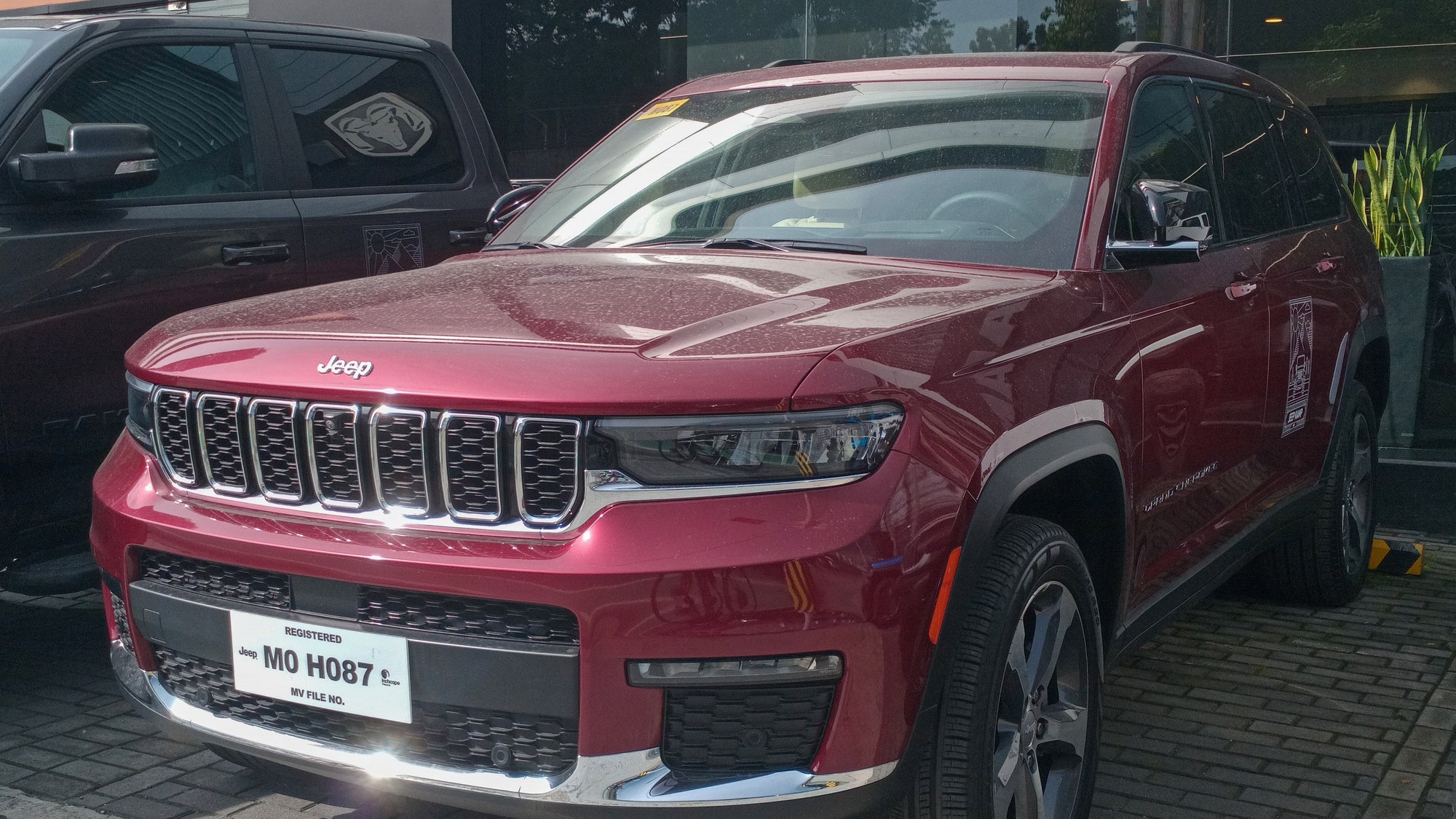
The 201,976 vehicles covered span the 2024–2025 Jeep Wagoneer, the 2024–2026 Grand Cherokee (including the L and 4xe variants), the 2024 Grand Wagoneer, the 2025–2026 Grand Wagoneer L, the 2025 Wagoneer L, the 2026 Jeep Cherokee and the 2026 Grand Wagoneer L PHEV. Spreading across seven separate model-year and trim combinations is part of why FCA filed a single recall rather than several: the radio-frequency hub at issue is shared hardware across the current Jeep SUV lineup, so the fix applies the same way regardless of which nameplate an owner drives. The Grand Wagoneer and Grand Wagoneer L, Jeep’s largest and most expensive SUVs, sit in the same recall as the smaller Cherokee, underscoring that the defect tracks the electronics platform rather than a vehicle’s size, price or trim level.
Including the plug-in hybrid Grand Wagoneer L PHEV alongside conventional gasoline models in the same campaign further shows the defect lives in the shared radio-frequency hub rather than in any powertrain-specific wiring, since a hybrid drivetrain and a standard V8 would otherwise be expected to route tire-sensor signals differently. That breadth is also why FCA opted for one recall number rather than splitting the filing by trim or drivetrain, even though the seven affected lines span three separate Jeep nameplates.
FCA’s Free Fix And Its Rollout Timeline
FCA reported the underlying defect to NHTSA on January 9, 2026, and the covered VIN range became searchable on NHTSA.gov on September 9, 2026, with owner notification letters beginning distribution September 17, 2026, per the same agency record. The remedy itself is a dealer-installed radio-frequency hub software update, performed at no cost, and owners can reach FCA customer service at 1-800-853-1403 using recall number 54D. The eight-month gap between the report date and the mailed letters reflects the time FCA needed to prepare the software fix, not a change in whether the defect is covered. An owner who has already noticed pressure warnings behaving oddly does not need to wait for the letter either; calling the recall line directly and citing 54D can confirm whether a specific VIN is included and when a local dealer expects the update to be ready.
The two-month lag between the September 9 VIN-searchable date and the September 17 letter-mailing start is short by comparison with some software recalls, where a fix can take months to validate across every affected trim. FCA’s filing does not attach any cost estimate or part number to the repair because the remedy is a software flash rather than a physical component swap, which is also why the campaign lists no separate parts-availability timeline the way a hardware recall typically would.
The Extra Risk Of Driving On Low Air Without Knowing It
Underinflated tires wear unevenly, run hotter and raise the odds of a blowout, and they also quietly reduce fuel economy, costs that fall on the owner whether or not a dashboard light ever flashes. A TPMS system exists so a driver does not have to check pressure manually before every trip, and NHTSA’s own consequence language ties the defect directly to crash risk rather than simple inconvenience. For an owner on a fixed income who depends on a Grand Cherokee, Wagoneer or Cherokee for daily driving, the free software fix removes both the safety exposure and the slower, harder-to-notice cost of tires wearing out before they should. That is a meaningful distinction for anyone stretching a vehicle’s usable life further into retirement, since replacing a set of tires early because a warning light never flagged the problem is an expense the free recall repair is specifically designed to prevent. Because the software update itself carries no charge and requires no separate diagnostic fee under the recall, the only real cost to an owner is the time spent scheduling the dealer visit, a modest ask compared with the price of a blown tire or an unplanned roadside repair.
The Eight-Month Gap Between Filing And Fixing
FCA’s tire-pressure software recall covers nearly 202,000 vehicles, but the distance between the January 2026 defect report and the September 2026 owner letters is the kind of timeline detail that is easy to lose track of once a letter finally shows up in the mail. Confirming a dealer’s software update actually matches campaign 26V559, and keeping that confirmation somewhere retrievable, is left entirely to the owner.
The Settlement & Refund Recovery System includes a large-print quick-start and a claim log and payment tracker meant for exactly this kind of multi-month paperwork trail, where the notice, the appointment and the confirmation do not all arrive at once.
Compare the timeline against the notice using The Settlement & Refund Recovery System.
This article was produced with AI assistance and checked against the primary sources linked above.